
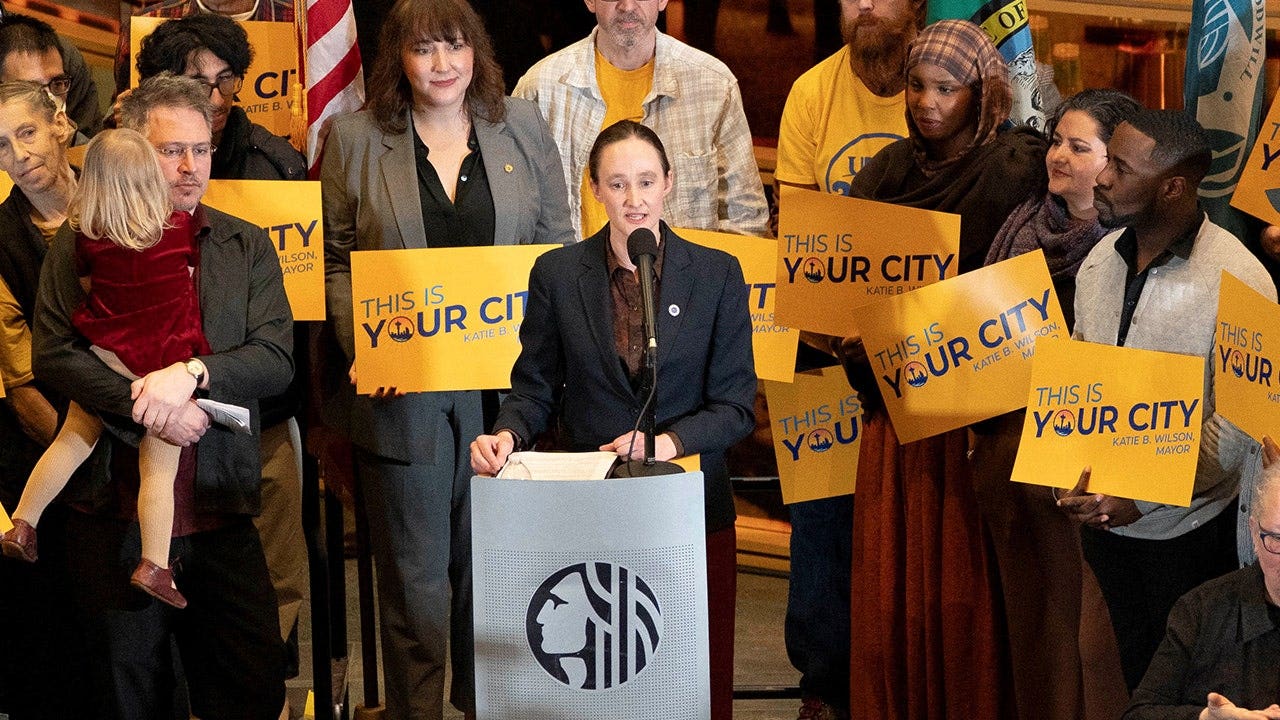
Seattle’s new mayor publicly shrugged as wealthy residents and businesses start leaving after Washington Democrats pushed a new income tax, and that shrug matters. This piece looks at the laugh, the tax plan, the legal gambit to rewrite the state constitution, the exodus of employers and founders, and what that means for ordinary taxpayers. The danger is clear: policy that targets the rich now can drop the bill on everyone else later.
At a public forum the mayor said, “I think the claims that millionaires are going to leave our state are like super overblown,” and followed with, “And the ones that leave, like, bye”.” That casual dismissal hit a nerve because governing requires taking responsibility for revenue, not cheering when dollars walk out the door. Laughing about departures looks tone deaf in a city already stretched by rising costs and shrinking services.
The state just passed a so-called Millionaires Tax that slaps a steep levy on households over $1 million, and critics see it as only the first act. Behind the scenes lawmakers openly discussed overruling decades of precedent established by Culliton v. Chase, which treated income like property and barred progressive income taxes. Those internal messages make it obvious this was designed as a constitutional test, not a narrow revenue tweak.
Senate leadership wrote plainly, “I would like to force the Washington Supreme Court to reconsider its caselaw that considers income to be property.” In the same thread they asked for “thoughts and comments about what will give us the best shot to have Culliton overruled.” Counsel in the Attorney General’s Office put it bluntly too: “the overall legislative goals, it seems to me, are to have our Supreme Court overturn Culliton v. Chase.”
This is not theory. The state already has capital gains taxes, payroll levies and business taxes that bite whether firms are profitable or not. Seattle layers on high sales taxes and special payroll taxes labeled for housing, and businesses feel the squeeze from every direction. When policy piles up, companies and founders shop for friendlier ground, and the predictable result is jobs, payrolls and investment moving away.
We’re already seeing that play out. High-profile departures and relocations have started, including founders choosing lower-tax states. Corporate investment decisions have shifted, with large firms moving job counts and capital to places where governments don’t cheer their exit. When headquarters or expansion plans leave, they take payroll taxes, corporate contributions and local spending with them.
The mayor has tried to separate rhetoric from action, saying, “Being a progressive doesn’t necessarily mean that we keep layering on spending, and we never stop doing things.” Yet her campaign and early governance have cheered labor picket lines and backed tax increases that pile new costs onto employers. Words and deeds here are moving in opposite directions, and the result is predictable: less capital, fewer taxpayers underwriting city services.
Leaked discussions make it plain the millionaires label was a foot in the door, not the final line in the sand. Officials privately hinted the real aim is broader taxation down the road, and that plan changes the calculus for middle-class households when revenue gaps widen. Once the highest earners are gone, politicians still need money, and history shows tax targets shift downward until the burden lands on ordinary families and small businesses.
Seattle citizens can like the politics or not, but math is indifferent. Roads, shelters and emergency services don’t operate on slogans or applause; they run on stable tax bases. If the wealthy and major employers keep leaving, the city will either cut services or raise taxes on people who can’t easily move. That’s the trade-off voters should weigh when leaders treat departures like punchlines rather than problems to solve.
City life survives on people and businesses that pay the bills, and policies that drive them away come with real costs. Laughing in public while your tax base erodes is a risky brand of governance, and Seattle’s leaders have put that experiment to the test. Residents might want to decide whether smiling through the exits is a plan worth backing when the bill starts arriving at their door.
