
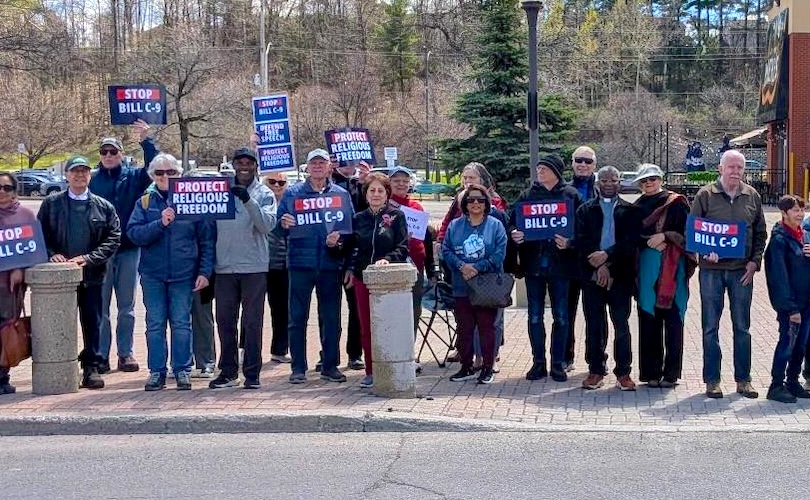
Canadians gathered on May 1 outside roughly 44 Liberal MPs’ offices to push back against Bill C-9, a measure seen by many as a direct attack on free speech and religious conscience because it would criminalize quoting passages of the Bible about homosexuality. The protests were loud and unapologetic, aiming to make clear that ordinary citizens refuse to let politicians rewrite the rules for public conversation. This is a fast-moving cultural fight that touches faith, law, and basic liberties.
Bill C-9 is framed as hate-speech legislation, but in practice it threatens to turn private religious belief into a prosecutable offense when those beliefs are shared in public. Pastors, teachers, and citizens who cite Scripture could find themselves entangled in investigations or worse, all for repeating longstanding religious teachings. That kind of chilling effect is exactly what people at the protests came to resist.
Standing outside Liberal offices, protesters made a political point that goes beyond one bill: free expression and religious conscience are fundamental to a free society. Conservatives, especially those with a Republican view of limited government, see this as an example of the state overreaching into personal faith and moral discourse. The message was clear — when government starts policing belief, the balance of liberty starts to tip.
People on both sides of the Atlantic should take notice: the legal language of bills matters more than the press release spin. Words like “incitement” and “hate” can be written broadly, and broad language invites broad enforcement. For citizens who care about faith-based speech, vigilance is necessary because legal uncertainty is the enemy of open discussion.
The crowd outside the MPs’ offices wasn’t made up of radicals but ordinary folks who value their right to speak and to teach their faith. They understand that criminalizing speech tied to religion sets a precedent where disagreement can become a criminal matter. That precedent threatens not only churches and religious schools but anyone who wants to speak publicly about moral questions.
From a Republican perspective, this is less about partisan scoring and more about defending structural freedoms that keep government small and individual conscience protected. Lawmakers should be wary of creating statutes that empower prosecutors and bureaucrats to police sermons, classroom quotations, or conversations on social media. The rule of law should protect both vulnerable groups from real harm and citizens from punitive overreach.
Protesters delivered their message to roughly 44 Liberal MPs to force accountability and to show that silence is not an option. They want clearer limits on what constitutes unlawful speech so that heartfelt, religious convictions are not swept up in criminal law. In a free country, citizens should be able to quote scripture without fearing criminal charges, and lawmakers should respect that boundary.
This moment calls for steady civic engagement: write to representatives, support legal challenges that defend speech and conscience, and keep public pressure on officials who favor expansive definitions of criminal speech. Canada’s future depends on whether its institutions will protect pluralism or let the state pick winners and losers in moral debate. Voters on all sides should insist that religious liberty and free expression remain firmly protected.
