Samsung is retiring its Samsung Messages app this summer and steering Galaxy owners toward Google Messages, a move that brings Rich Communication Services support and tighter integration across Android devices. This change affects newer Galaxy phones and comes with a July 2026 end-of-service window, some device exceptions, and a few practical things to watch for during the switch. The shift aims to standardize texting features and security, and it nudges users onto a platform that supports richer messaging already used across the broader Android ecosystem.
For years Samsung shipped its own messaging client on Galaxy phones, offering a familiar texting experience for millions of users. That started to change in 2021 when Samsung began preinstalling Google Messages on new models, and now the company is closing Samsung Messages entirely. The result is a clearer path for Google’s messaging stack to become the default across most Galaxy handsets.
Samsung didn’t explicitly reveal why it is closing down its messaging app. Still, the practical effects are easy to see: users who stick with the older app will miss out on newer features, and Samsung wants to simplify the software lineup on its devices. The company will keep Samsung Messages available for emergency use, but general consumer messaging will be routed toward Google’s solution.
One big reason this matters is RCS, the modern messaging standard that replaces many of SMS and MMS’s limits. RCS adds end-to-end encryption between Android users, higher-quality media transfers, read receipts, and more reliable group chat behavior. Google Messages already supports RCS broadly, so moving people to that app unlocks those improvements without relying on carrier-specific rollouts.
Beyond RCS, consolidating around Google Messages helps create a more consistent experience across brands and carriers, which is important in an ecosystem with huge device variety. It also reduces fragmentation for developers and for users moving between phones, since a single app can deliver a predictable feature set. For anyone tired of the old limitations of plain SMS, the switch to Google’s app is a meaningful upgrade.
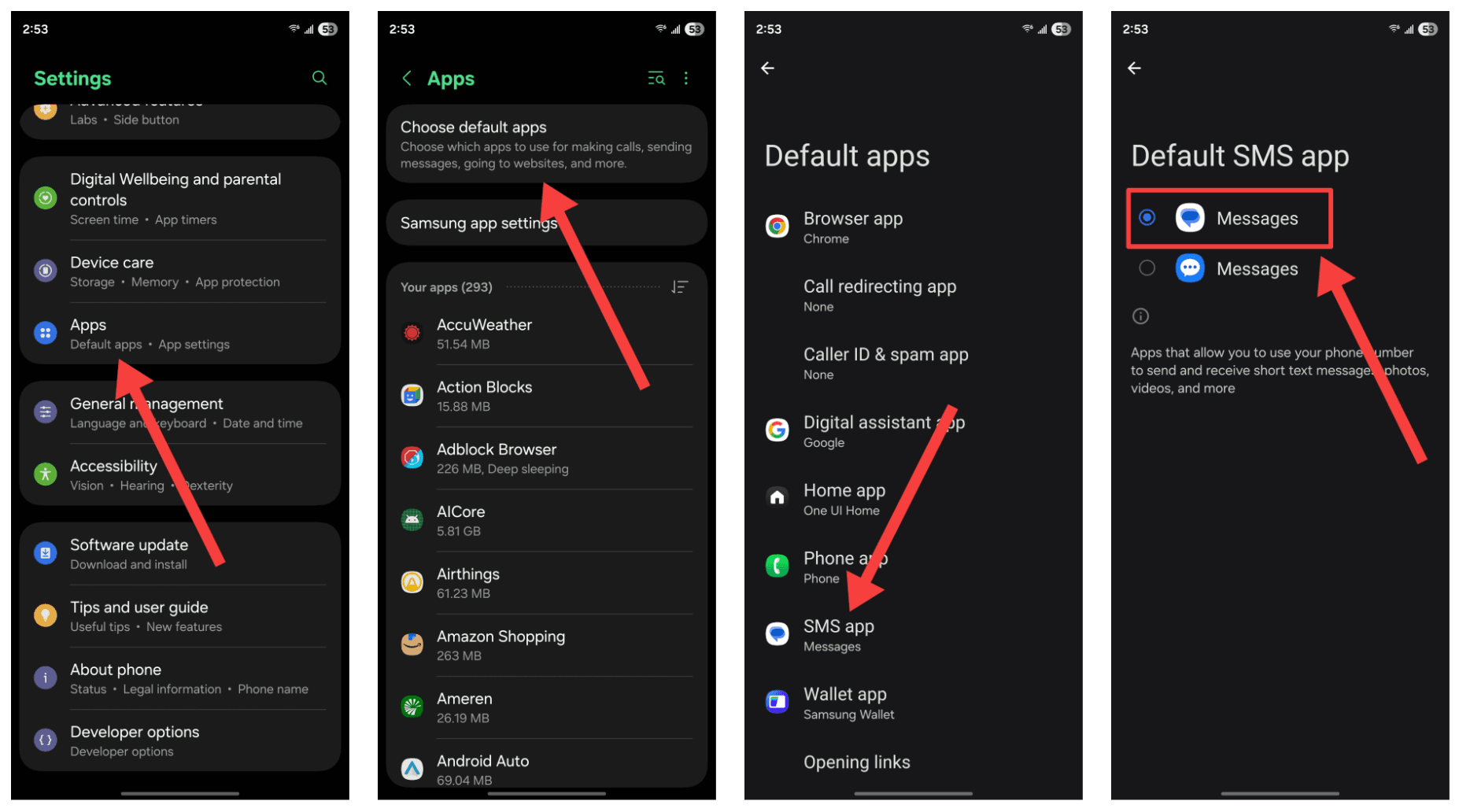
If you’re wondering what you need to do, the basic idea is simple: make sure the modern messaging app is installed and active on your Galaxy phone before the shutdown hits. That means checking your apps and confirming which client handles SMS and RCS features so you don’t miss messages or lose richer chat functionality. In most cases newer Galaxy phones will already have Google Messages present and may even switch automatically when Samsung phases out its app.
There are a few important exceptions to keep in mind while you prepare for the change. Older Galaxy devices running Android 11 or earlier will not be affected and can keep using Samsung Messages as they always have. Some users on Android 12 and 13 might need a small, manual adjustment to update the dock shortcut or confirm the default messaging app after the migration is complete. Emergency functionality in Samsung Messages will remain accessible even after the general shutdown.
The rationale behind the move likely includes technical and strategic elements. Google has invested heavily in RCS and acquired capabilities that let it push the standard forward across carriers and devices, and partnering with Samsung makes that push easier. At the same time, deeper collaboration between Samsung and Google on things like wearable platforms and XR hardware shows the companies are aligning parts of the Android experience for consistency and competitiveness.
For users, the change is mostly a nudge toward a modern messaging experience that supports richer media, stronger security between Android devices, and features that feel on par with what other platforms offer. It’s a transition that will require a brief period of attention from some owners but should simplify messaging for most people on Galaxy phones once it’s complete. Keep an eye on your device notifications and settings as July 2026 approaches so your messages keep flowing without missing a beat.