
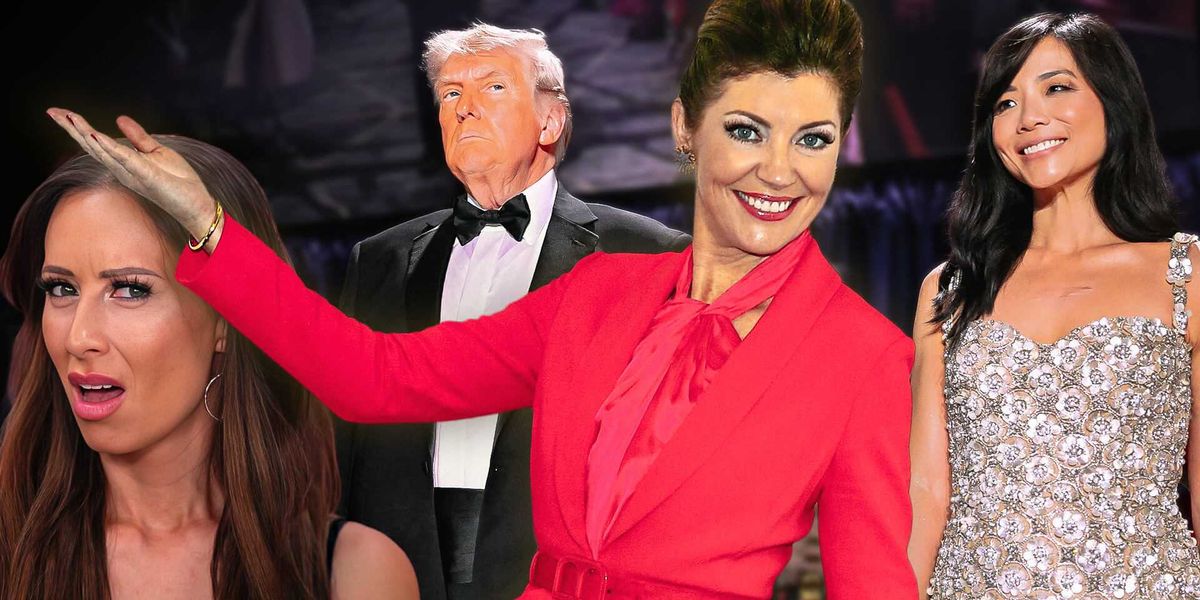
Sara Gonzales rips into the media after an attempted assassination at a White House Correspondents’ Dinner, arguing journalists turned a near-tragedy into another show about themselves and their supposed victimhood. She calls out specific reporters and moments that, in her view, prove a pattern of bias and self-absorption that feeds hostility toward President Trump. The piece examines Gonzales’ critique, highlights key quotes from reporters and anchors, and questions how coverage may influence real-world consequences. Embedded below is the original clip Gonzales references.
The scene at the White House Correspondents’ Dinner was tense, and the room was full of journalists who should have been focused on what happened. Sara Gonzales doesn’t buy that they did the job viewers needed; she says they turned it into another chance to tout how endangered they feel. “You would think that when he was almost assassinated again and they were there to witness it, that maybe they might be able to fairly and accurately cover the story, but no, actually, they can’t,” Gonzales says.
She goes even harder, arguing the media’s reflex is to center themselves even during a crisis that involved the president’s life. “That’s actually just how bad they are and how evil they are. They just, in true arrogant, narcissistic fashion, they just wanted to make it about them,” she continues, setting the stage for a clip she says proves the point. The clip focuses on CBS News’ Weijia Jiang and her remarks as law enforcement cleared the room.
In the clip, Jiang tells colleagues, “This is a room full of reporters. So, I know you’ve already seen the president’s tweet. My apologies, his post on Truth Social,” and notes that “law enforcement has requested that we leave the premises consistent with protocol.” The follow-up was framed around the press’s duty and fragility. “I said earlier tonight that journalism is a public service because when there is an emergency, we run to the crisis, not away from it. And on a night when we are thinking about the freedoms in the First Amendment, we must also think about how fragile they are,” she continued.
Jiang closes by praising colleagues: “I saw all of you reporting, and that’s what we do,” she added, and Gonzales wastes no time skewering that tone. Mocking the sense of wounded sanctity, Gonzales repeats the air of self-importance: “’Our job is so dangerous,’” Gonzales comments, mocking Jiang. “‘It’s all about us. … Our freedoms are under attack. The right for us to do our jobs is under attack.’”
Gonzales draws a hard line: the press’s coverage, not the president’s rhetoric, is to blame for stoked violence. She says their repeated distortion and sensationalism recruit fringe actors and escalate threats against public figures. “Actually, lady, the reason that we are in the position that we are in, where people are after the president as much as they are, is because you guys continue to misrepresent and distort reality and stir up a bunch of little activists who go on to then try to murder Donald Trump,” she continues.
She refuses to accept moral equivalence for journalists and points out a CNN comment that suggested Trump “figuratively” wants “journalism dead,” which Gonzales cites as part of the toxic environment. “So, I’m just not having it from you. I’m really not,” she adds, making clear her view that media behavior has consequences. The critique shifts to specific personalities she says exemplify the problem, and Gonzales names names.
Her hardest hits land on what she calls disingenuous anchors who weaponize tragedy into gotcha moments. She singles out Norah O’Donnell’s interview and the way a manifesto excerpt was read to the president as tone-deaf and morally offensive in the aftermath. “The so-called manifesto is a stunning thing to read, Mr. President. He appears to reference a motive in it. He writes this quote, ‘Administration officials, they are targets.’ And he also wrote this, ‘I am no longer willing to permit a pedophile, rapist, and traitor to coat my hands with his crimes.’ What’s your reaction to that?” O’Donnell asked Trump in an interview.
Trump’s response, played in full by Gonzales, is defensive and cutting: “Well, I was waiting for you to read that, because I knew you would. Because you’re horrible people. Horrible people,” Trump responded. “Yeah, he did write that. I’m not a rapist. I didn’t rape anybody.” He followed up plainly: “You should be ashamed of yourself reading that because I’m not any of those things.”
Gonzales wraps those clips into a larger argument that journalists aren’t neutral witnesses but active participants in the political theater that can inspire violence. “We all know what you’re doing,” Gonzales says, referencing O’Donnell. “He knows what you’re doing.” She insists that accountability for reckless framing matters as much as celebration of a free press, especially when reporting might fuel real-world threats.
