
This piece argues for keeping Labor Day as America’s working-class holiday and resisting efforts to import May Day’s Marxist baggage, tracing the history, spotlighting the Haymarket roots of May Day, and warning against a politicized replacement that turns workers into pawns. It explains why Labor Day’s nonpartisan celebration matters, calls out modern leftist efforts to normalize May Day, and urges Americans to protect their traditions without surrendering holidays or freedoms.
Labor Day grew out of American labor traditions in the 1880s as a simple day to honor honest work, not a political cause to divide citizens. By contrast, May Day carries a darker history tied to violent episodes and ideology that turned a date into a rallying point for international socialism. That difference matters because holidays shape identity; one honors labor, the other can demand loyalty to a political movement.
On May 4, 1886, the Haymarket Affair in Chicago became a watershed moment when a bomb exploded amid a labor protest, killing officers and civilians and fueling an era of radical politics. That violent flashpoint helped cement May 1 as a symbol for Marxists who wanted labor turned into a political instrument. Americans intentionally chose a different path to avoid consecrating a day marked by bloodshed and ideological coercion.
LABOR SEC CHAVEZ-DEREMER: OUR PLAN TO RESCIND THE BIDEN INDEPENDENT CONTRACTOR RULE
By the 1890s, lawmakers faced a choice: enshrine May Day or create an American Labor Day in September that celebrated workers without tying them to foreign political projects. The decision to back a September holiday reflected a desire for unity rather than class warfare. Labor Day became the family barbecue, the last swim of summer, a day to thank neighbors for honest work, not a political litmus test.
FROM SOVIET REFUGEE TO AMERICAN PATRIOT: WHY WE MUST GUARD AGAINST SOCIALISM’S DANGEROUS CREEP INTO OUR CITIES
May Day abroad often means unified political blocs and state-led displays of class struggle, where the worker is a symbol of a movement instead of a citizen with a family and a mortgage. Here, the American ideal is that workers come from every political stripe and deserve recognition without being forced into an agitator’s role. Turning our holiday into a political cudgel would tear at the social fabric that respects individual freedom and private success.
REVOLUTIONARY TOURISM:: INSIDE THE $600M MARRIAGE OF DARK MONEY AND FAR-LEFT AGITPROP
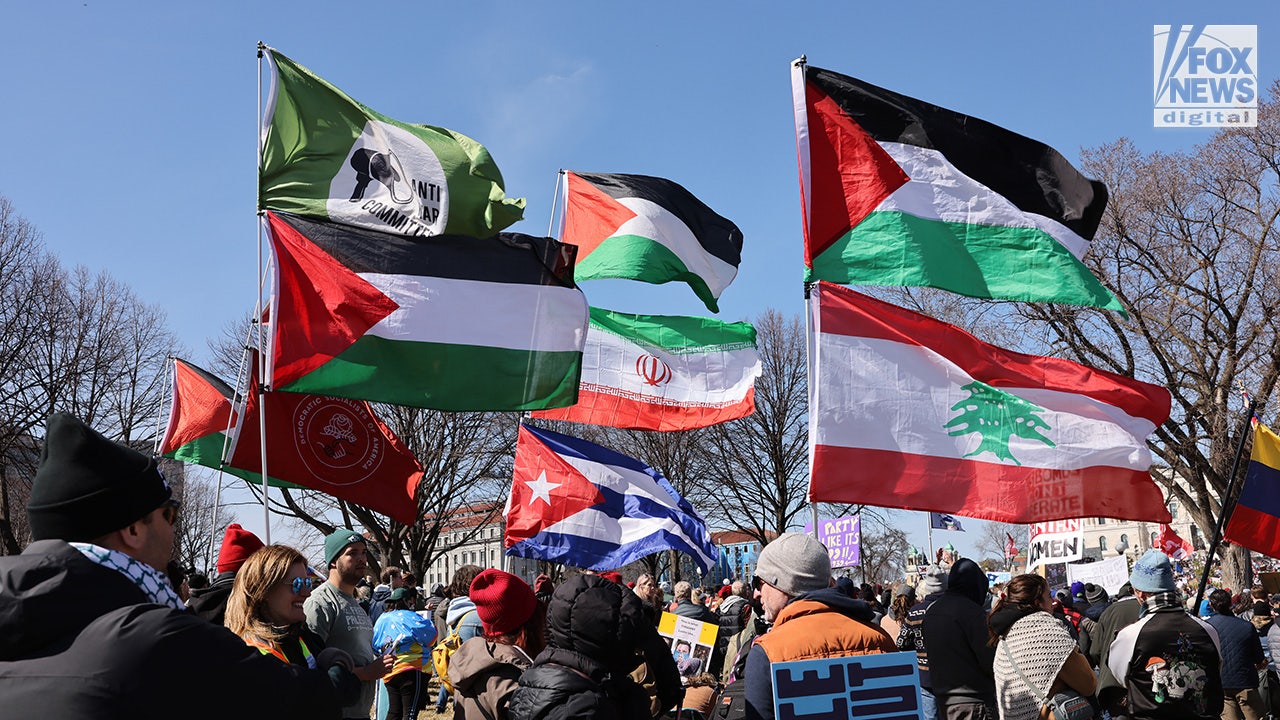
Modern leftist organizers have tried to normalize May Day in pockets of America, and some school districts have even entertained swapping holidays. That push isn’t innocent civic engagement; it’s a cultural and political rebranding aimed at converting civic rituals into recruitment events. When institutions adopt dates tied to radical history, they normalize extreme ideas and marginalize mainstream workers who just want their day off.
When you look at how politics shows up in sports and culture overseas, teams and fan bases often map onto class lines in ways that feel foreign to American pluralism. In the U.S., allegiances cross tax brackets and backgrounds, and that shared experience keeps our communities less volatile. Replacing a neutral national day with one that encourages class identity politics would import divisions we already reject.
SOROS-BACKED ‘NO KINGS’ RALLIES THREATEN AMERICA’S CITIES WITH PLANNED CHAOS
There’s also a modern strain of globalism that isn’t the trade-focused variety many think of; it’s ideological globalism that sees borders as suggestions and civic traditions as obstacles to a one-world campaign. A few politicians and activists talk as if cities and customs fall under some vague international authority, and that rhetoric lines up with efforts to rebrand holidays to fit a global left agenda. Citizens who value sovereignty and local norms should be wary.
Workers are neighbors, family members and entrepreneurs, not chess pieces in a class struggle designed by ideologues. Attempts to make May Day common here would not expand worker rights; they would weaponize a holiday to push protest, rhetoric and sometimes chaos into everyday life. Keeping Labor Day as our day says loud and clear that the American worker will not be folded into an imported political identity.
JASON CHAFFETZ: 2028 ELECTION WILL BE A REFERENDUM ON OUR AI-DOMINATED FUTURE
We should preserve the American tradition of Labor Day: a simple, inclusive pause to honor work, sweat and sacrifice without turning it into a recruitment drive for foreign ideologies. The fight over a date might seem small, but it reflects a larger tug-of-war over who gets to define our culture and holidays. Come September, keep the grill hot, pass the hot dogs, and keep the day about family and labor, not flags and factionalism.
