
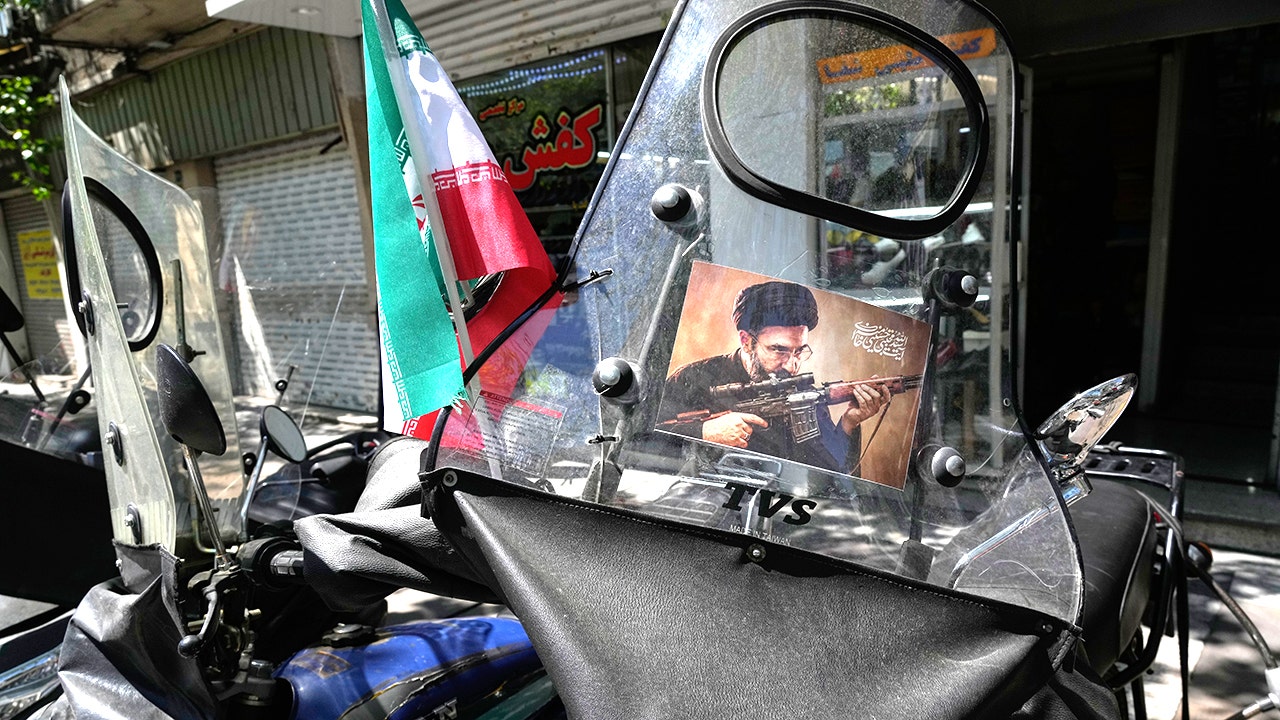
The Tehran power struggle is out in the open, with competing security factions, a hidden royal hand and a regime more interested in survival than governing. This piece looks at the shadow leadership, the suspicious secrecy around Mojtaba Khamenei, the role of the IRGC in stalling diplomacy, and why time has become Tehran’s favored weapon. I argue from a straightforward Republican perspective: this regime is decaying from the inside and needs to be met with steady resolve, careful pressure and clear-eyed strategy.
What we see in Tehran is not tidy politics. Ahmad Vahidi runs with the IRGC’s weight and acts like a shadow leader while Mohammad Bagher Ghalibaf’s parliamentary faction pushes back and Mohammad Zolghadr’s circle quietly pulls strings. Power has ossified into a small, protected clique that treats governance like a survival game for insiders. That kind of arrangement breeds corruption and strategic blindness rather than responsible statecraft.
The mystery around Mojtaba Khamenei is part theater and part strategic obfuscation. Rumors about his condition and his public absence are being used as a chess piece by Tehran’s managers, who want to shape perceptions at home and abroad. Even when clerical bodies insist on one version of reality, suspicion persists because secrecy has replaced transparency. In a system that answers to few and hides everything, trust evaporates quickly.
International intelligence agencies have been cautious about declaring certainty on key figures and motives inside Tehran. That caution is warranted, but it also plays into Tehran’s hands when it buys time. The regime’s rise of certain individuals to top posts remains opaque, and that opacity makes negotiations unreliable. For those watching, the core question is whether these sequences are deliberate deception or evidence of chaos.
Inside this structure, ideological slogans like “absolute guardianship of the jurist” and rhetoric about “pure Muhammadan Islam” are used to justify arbitrary rule. Those phrases are less about faith and more about a framework that excludes democratic accountability and normal political contestation. When ideology trumps constituency, the state becomes a machine serving itself rather than the people it claims to represent. That’s not reformable; it is structural decay.
From a Republican vantage point, diplomacy with a system that thrives on psychological warfare has to be careful and clear. Tehran’s leaders prefer a war of attrition rather than a direct fight because prolonging the standoff helps them preserve control. That is why a posture of steady pressure, backed by allied strength and clear goals, is preferable to open-ended concession. Time is one of their main tools, and the United States should not hand it to them as a political gift.
The IRGC’s public posture often sounds like bargaining but lacks credible commitment. They use ambiguous statements to keep opponents guessing and to signal strength at home while avoiding hard choices. This tactic wears on international patience and on domestic legitimacy simultaneously. For U.S. policymakers, seeing through that fog is essential so leverage does not slip away.
Strategically, Tehran relies heavily on proxies, the nuclear program and regional networks to feel powerful. Those levers are dangerous, but they are also brittle if the regime itself is fractured. The real weakness is that those tools do not translate into sustainable governance or popular support. If the regime cannot deliver basic stability or a coherent foreign policy, its options narrow and its choices become increasingly reckless.
The visible infighting and secrecy signal that Iran’s ruling class is fighting to avoid an existential reckoning. This is not a contest over policy details; it is a scramble for survival inside a decaying order. For the United States and allies, the lesson is straightforward: combine vigilance with principled pressure, support credible opposition where appropriate, and avoid policies that simply hand Tehran more time to stage its next propaganda play. The stakes are stability in the region and the credibility of American policy.
