
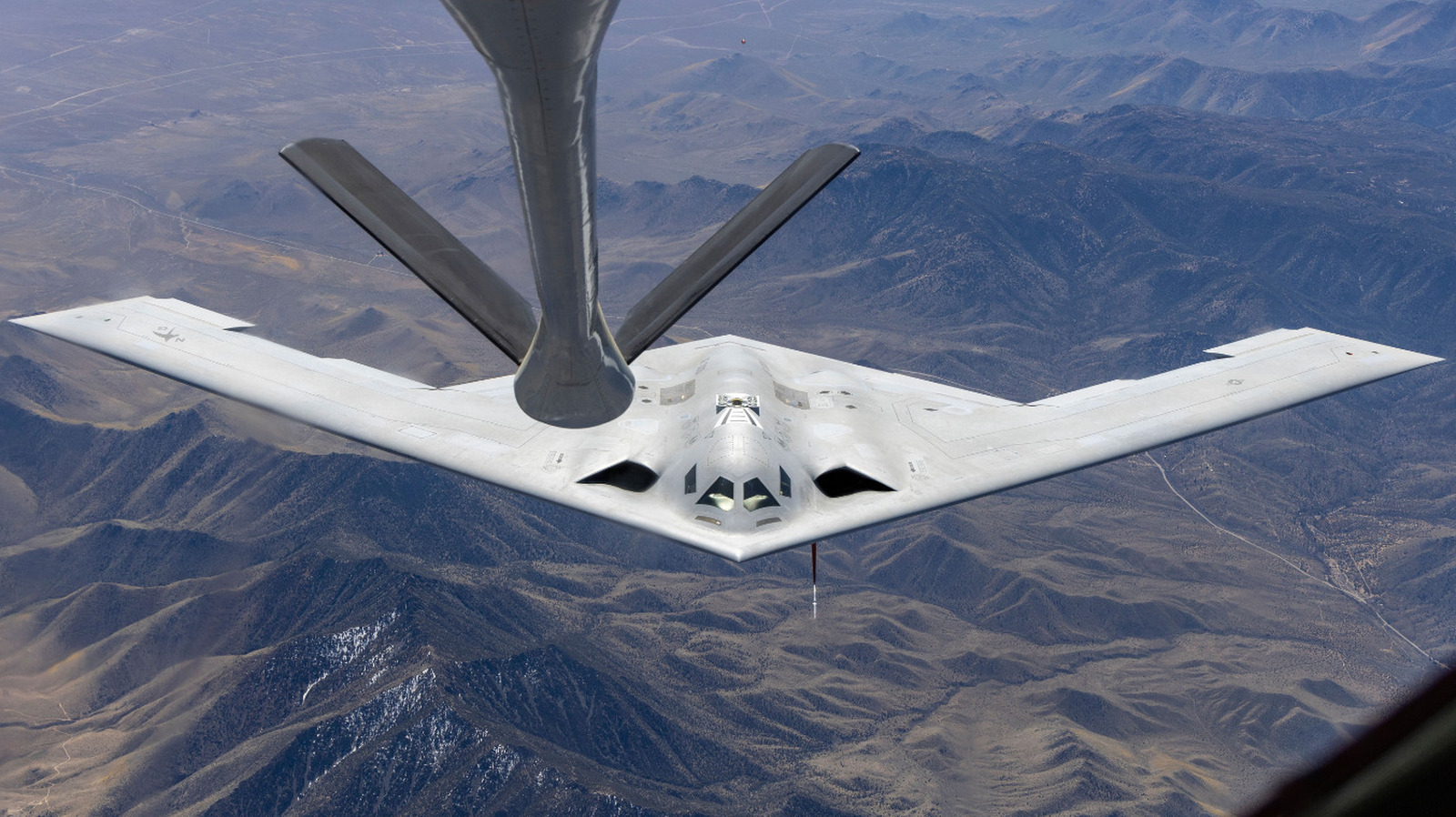
The U.S. Air Force’s B-21 Raider stealth bomber is deep in flight testing as engineers and flight crews push the program toward scheduled deliveries to USAF bases in 2027. Tests are working through performance, avionics and systems integration while factories prepare to move from prototypes to initial production. This piece walks through the program’s testing milestones, technical profile, industrial posture and what base deliveries next decade will mean for operations.
Recent sorties have focused on expanding the flight envelope and validating key low observable characteristics under real-world conditions. Pilots and testers are logging hours on avionics suites, navigation systems and the interface between sensors and mission planning tools. Each sortie aims to reduce risk and collect data to refine software and handling across mission profiles.
The Raider’s design prioritizes survivability and long-range strike, pairing a low observable airframe with internal payload capacity to limit exposure to modern air defenses. Its sensor and communications architecture is intended to share battle-space information with other platforms, enabling coordinated missions rather than solo runs. That approach is meant to give commanders options for deep-penetration strikes while preserving the aircraft against advanced integrated air defense systems.
Industry has been working to shift from prototype builds to steady production, and suppliers are standing up lines for major components and systems. The prime contractor has emphasized workforce growth, factory workflow and quality control as keys to meeting 2027 delivery targets. Managing the supply chain and sustaining skilled technicians will be crucial as serial aircraft move beyond flight test assets.
Delivery to USAF bases in 2027 will require more than finished airframes; bases need upgraded infrastructure for maintenance, training and security. New training syllabi will phase in with the arrival of initial aircraft so squadrons can build proficiency without compromising readiness. Logistics hubs and spares pipelines will be established ahead of the first operational aircraft to limit gaps between handover and mission-capable status.
Operationally, the B-21 is intended to complement, not immediately replace, the existing bomber force while providing new options for deterrence and response. Planners see it as a tool for penetrating contested airspaces and supporting long-range strike packages that include manned and unmanned assets. Its integration into broader force structures will involve tactics development and joint mission rehearsals to leverage its stealth and connectivity.
Testing is not a straight line and engineers expect iterative improvements as flight data reveals unexpected behavior or integration quirks. Software updates, sensor calibration and structural tweaks are normal parts of moving from a test program to production deliveries, and each change is verified through regression flights. That cycle of test, adjust and retest is designed to ensure reliability when the aircraft reaches operational units.
Preparing aircrews and maintainers will be a parallel effort to aircraft production, with simulators and classroom time forming the backbone of initial training. Sustainment plans will emphasize modular repair, predictable supply chains and periodic updates to electronics and stealth treatments to keep aircraft relevant over decades. The architecture is also being built with future growth in mind, allowing new systems and weapons to be integrated without major airframe changes.
As the B-21 progresses through flight testing and industrialization, milestones will be about more than individual sorties or factory outputs; they will measure the program’s ability to produce capable, maintainable aircraft on a predictable schedule. Meeting the 2027 delivery window will depend on coordinated work across test ranges, production facilities and USAF bases. The coming months of testing and preparations will determine how smoothly the Raider transitions from experimental program to a working part of the bomber force.
