
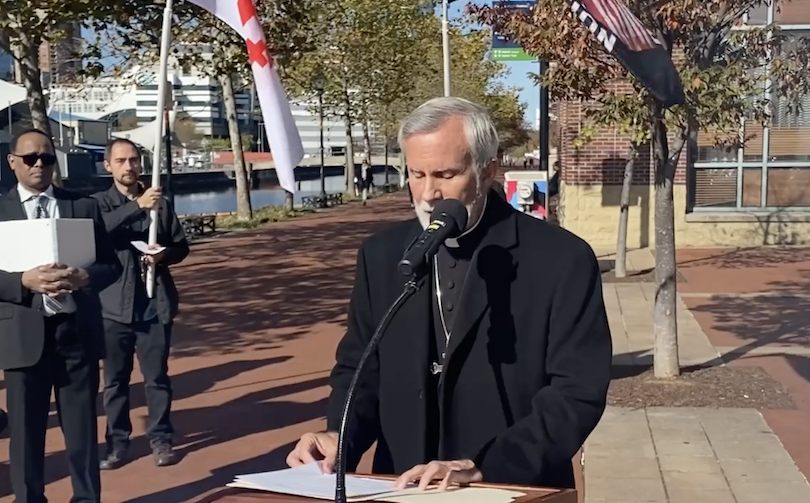
Bishop Joseph Strickland, writing from the seat of a successor to the Apostles, offered a clear, charity-driven rebuke after news that the Vatican received the newly appointed female archbishop of Canterbury. He framed his remarks as a duty to speak plainly about doctrine and pastoral consequences while urging faithfulness to historic Catholic teaching. The statement sparked debate over how Rome engages with Anglican developments and what such gestures mean for sacramental integrity and ecumenical relations.
Strickland begins from identity and duty: as one who stands in apostolic succession, he says he cannot remain silent when core beliefs are at stake. He stressed that his tone is not meant to wound but to provide “clarity born of charity.” That phrasing sets the moral frame he uses to challenge contemporary moves he sees as departures from established doctrine.
The Vatican’s reception of a woman holding the title of archbishop broke with long-standing practice and raised immediate questions about what that welcome signifies. For many Catholics concerned about sacramental theology, the incident suggests a softening in how Rome differentiates between unity and doctrinal compromise. Observers noted that formal gestures of hospitality can be read as endorsements, whether intended or not, and that sends mixed signals to the faithful.
At the heart of the matter is a theological knot: if apostolic succession and the priesthood are understood in traditional terms, then recognizing clergy who stem from ordination practices the Catholic Church has not accepted is fraught. Strickland and others argue this touches sacramental validity and the Church’s teaching on who may preside at the Eucharist. Those worries are not merely academic; they shape how ordinary Catholics experience and trust their liturgy and sacraments.
Beyond theology, there are pastoral repercussions. Parishioners look to bishops for moral clarity and stability, especially when global church leaders take gestures that can seem confusing. Strickland warned that inconsistency risks alienating believers who expect continuity and clear teaching from Rome. That pastoral angle explains why his words carry weight with those who fear a drift from long-established norms.
Ecumenical aims complicate the picture. Dialogue with the Anglican Communion has long been part of Rome’s broader strategy for Christian unity, but unity efforts can be undermined if one side interprets hospitality as capitulation. Critics of the Vatican’s move say meaningful ecumenism requires honesty about differences, not symbolic closeness that blurs them. The balance between reaching out and holding firm on doctrine is proving to be delicate and controversial.
Reactions within the Church have varied, ranging from support for Strickland’s call for clarity to concerns that his public rebuke undermines collective episcopal solidarity. Some clergy emphasize the need for private channels to address sensitive issues, while others insist that public statements are necessary when faithful perceptions are at stake. This division reflects broader tensions about how to handle disagreements at the leadership level without fracturing communion.
Politically neutral observers noted the ripple effects on international church relations, with diplomatic nuances now intertwined with theological debate. The Vatican must weigh the ecumenical value of warm receptions against the practical fallout among Catholics who monitor such gestures closely. Whatever decision-makers choose next, the episode has already shaped perceptions about how Rome navigates modern challenges to tradition.
In his closing tone, Strickland appealed to conscience and fidelity rather than to polemic, urging a return to clarity in teaching accompanied by pastoral charity. He framed the issue as one where the stakes include sacramental trust and the spiritual care of souls. The conversation now moves forward with many watching for how Rome and other leaders will address the balance between outreach and doctrinal consistency.
