
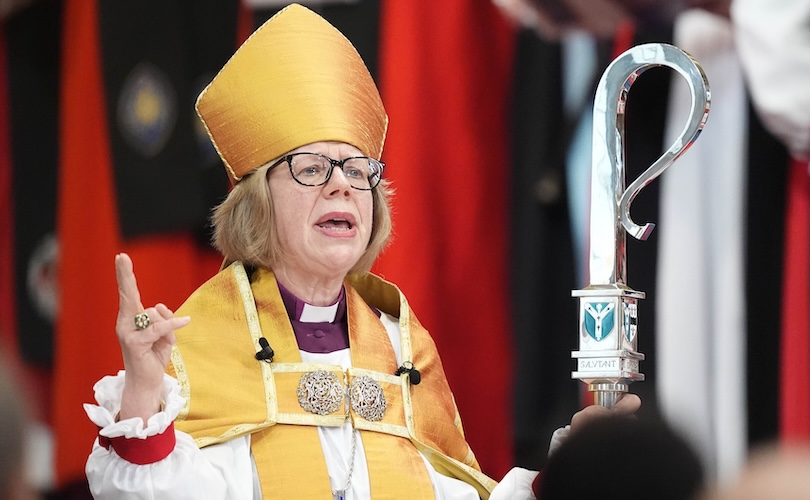
Pope Leo met with Sarah Mullally, the Anglican leader styled by some as an archbishop, and offered a blessing meant to underscore continuity and service. The exchange has stirred conversation about relationships between Rome and Canterbury, the role of women in church leadership, and what gestures like this mean for ecumenical work. This brief account captures the essentials of the meeting, the words exchanged, and the wider reactions they have prompted.
The gathering itself was compact and symbolic, a private moment that moved quickly into public notice because of who was involved. Meetings like this are rarely purely casual; they are read as signals by clergy and laity alike. People on different sides of church debates watched closely to see what would be said and how it would be framed.
What drew immediate attention was a short, pointed blessing delivered by the pope. He chose language that appealed to spiritual continuity and vocation in the church. The phrasing was familiar and meant to reassure those who prioritize grace and service across denominational lines.
‘I pray that the same Holy Spirit will remain with you always, making you fruitful in the service to which you have been called,’ Pope Leo told female Anglican ‘Archbishop’ Sarah Mullally. Those exact words were captured and repeated because they summarize the tone of the encounter: pastoral, affirming, and ecumenical. The preserved quote has since circulated in news summaries and social feeds.
For many observers, the meeting was an image of cooperation rather than confrontation. Rome and Canterbury have a long, complicated history, and even small gestures can be amplified. Supporters of closer ties welcomed the warmth, seeing it as an opportunity to build shared witness on social and moral issues.
At the same time, traditionalists in both communions registered caution. The presence of a woman in the top post at Canterbury remains a contentious point for some who see ordination as settled only within certain theological frameworks. That disagreement means gestures between leaders can be praised by some and questioned by others.
Clergy on the ground interpret such encounters through pastoral lenses as well. Parish priests and congregation members often measure leadership by practical impact rather than high-level symbolism. A blessing that speaks to fruitfulness and service can resonate simply because it addresses the daily work of ministry.
Media outlets quickly picked up on the optics, which is part of why the wording mattered. Short, clear phrases travel fast and form the headline frame for how people understand complex relationships. That dynamic forces church leaders to choose words carefully, knowing they will be parsed and quoted.
Ecumenists point out practical opportunities that follow gestures like this. Joint efforts on humanitarian relief, education, and public witness can gain momentum when leaders show goodwill. Those projects, rather than theological agreement, often become the meat of partnership between denominations.
The meeting also spotlights the internal debates within Anglicanism itself, where different provinces and communities take different paths on ordination and liturgy. Figures like Mullally are both symbols and working leaders, balancing pastoral responsibilities with broader institutional roles. How she is received by other churches will influence future conversations.
Observers outside church circles sometimes read these moments as cultural signposts about how institutions adapt. When a pope meets an Anglican leader with visible approval, secular audiences may see it as evidence of institutional flexibility or of a softer public face. That perception can shape public trust and media narratives.
Those focused on ecclesial identity worry about blurred lines. For them, titles and orders matter because they anchor sacramental theology and ministry. A single sentence of blessing does not settle those deeper debates, but it does add a public moment that will be analyzed in light of long-standing convictions.
Clergy and theologians will continue to pore over the language and posture of the encounter. Seminars, commentaries, and pulpit remarks will take up the themes of vocation, fruitfulness, and the Holy Spirit’s guidance. Each of those settings reframes the meeting for different audiences and priorities.
For ordinary parishioners, the practical question often comes down to whether such high-level gestures change local life. Will there be joint initiatives, visits from other leaders, or new cooperation on concrete needs? Answers to those questions will matter more day to day than diplomatic tone alone.
The meeting was small but consequential in its ripples. Leaders on all sides will watch how the moment is used in broader conversations about ministry, authority, and partnership. The words spoken will continue to be cited as evidence by those with differing aims.
Whatever one’s stance, the exchange reminds everyone that church leadership is both symbolic and functional. Public gestures like this sit alongside ongoing pastoral labor, institutional negotiation, and the contested work of defining identity in a diverse Christian landscape.
