
By OBBM Network Editorial Staff
Derived from an episode of Securing America.
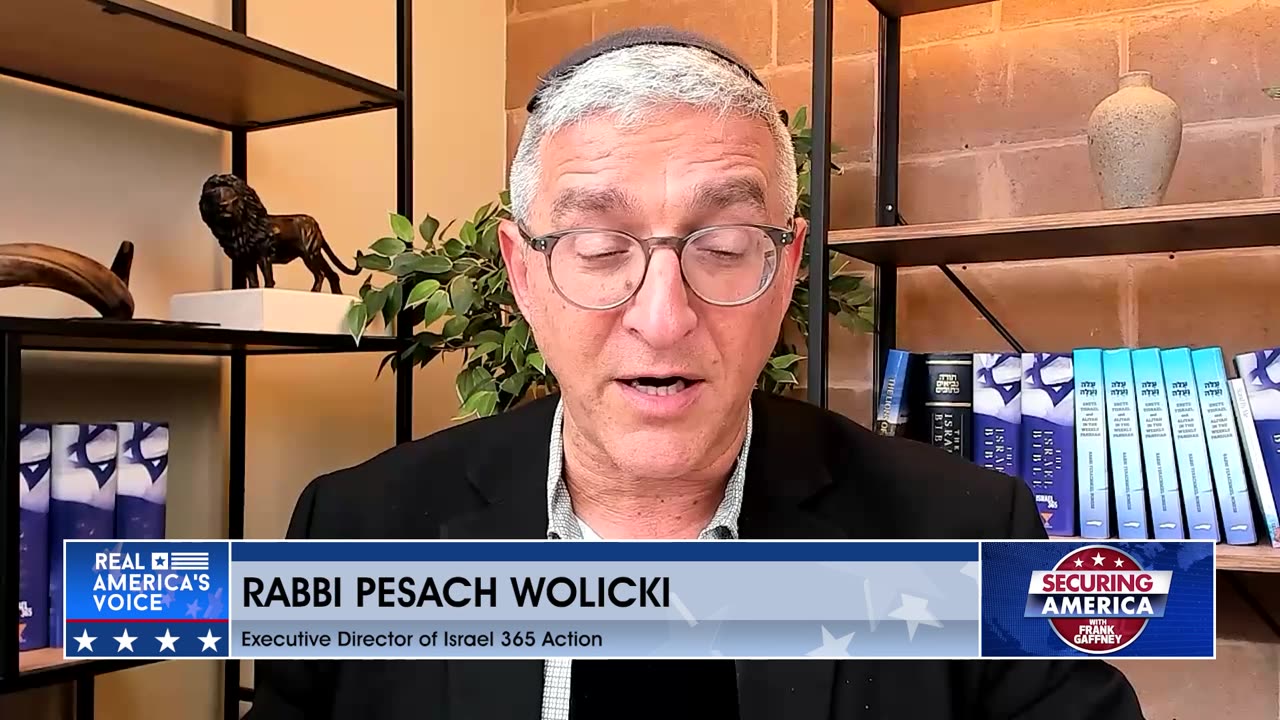
Ceasefires are often hailed as steps toward peace, yet Rabbi Pesach Wolicki proposes a contrarian view: they can sometimes hinder long-term resolutions by offering a breather to the losing side. In a conversation with Frank Gaffney on Securing America, Rabbi Wolicki explores how such dynamics play out between Israel and its neighbors, particularly focusing on the recent developments involving Lebanon.
Understanding the Ceasefire’s Impact
During the broadcast, Rabbi Wolicki discusses the complexity of the ceasefire between Israel and Lebanon. While ceasefires are typically seen as peaceful intermissions, Wolicki explains that they often serve as a tactical pause for the losing party to regroup. “The function of a ceasefire is to help the party that is losing,” he states, highlighting a perspective that suggests these pauses may not always lead to peace.
Strategic Objectives in Southern Lebanon
Wolicki articulates that Israel’s actions in southern Lebanon are driven by strategic imperatives. Despite the official ceasefire, military operations continue as Israel aims to maintain operational control south of the Litani River. The goal is to secure Israeli territory from Hezbollah threats. “Israel controls the airspace,” Wolicki notes, emphasizing the strategic advantage Israel holds, even as tensions simmer.
The Political Dimension
Frank Gaffney questions Wolicki on the political motivations behind Israel’s territorial maneuvers. Wolicki clarifies that holding territory serves a crucial political purpose, pressuring the Lebanese government to address Hezbollah’s presence. “It’s the only language these people understand,” Wolicki asserts, indicating that territorial gains are a means to compel political action in Lebanon.
A Broader Geopolitical Context
The discussion extends to the broader geopolitical implications, with Wolicki connecting the local dynamics to larger regional interests, particularly involving Iran. The ceasefire and military actions are interlinked with strategic moves against Iranian influence, a point Wolicki highlights as critical to understanding the full picture.
The Complexity of Peace and Security
In synthesizing these insights, Gaffney and Wolicki illuminate the multifaceted nature of the Israeli-Lebanese ceasefire. While diplomacy is often seen as the pathway to peace, the on-ground realities present a more complicated picture, where strategic and political considerations frequently overshadow simplistic narratives of ceasefire agreements.
The full episode of Securing America is available on OBBM Network TV.
