
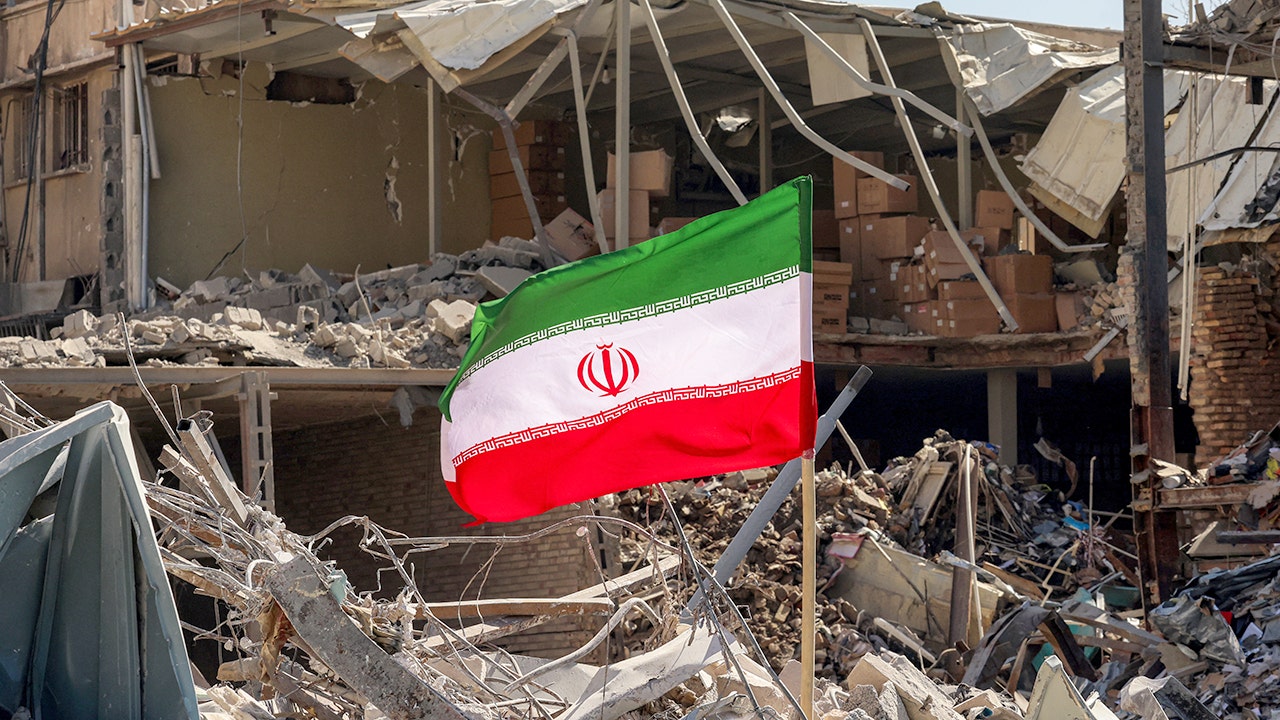
The debate over any deal with Iran keeps circling familiar checkpoints — nukes, missiles, proxies, and verification — but one element rarely gets honest, sustained attention: the Iranian Constitution. This piece argues that the text of that constitution drives Tehran’s behavior, explains its global ambitions, and must be part of any serious bargaining. Treating the charter as a political curiosity instead of a blueprint for expansion leaves the United States and its allies dangerously underprepared. Americans should demand that constitutional substance be on the table before any agreement is accepted.
<pTalk about the usual negotiation checklist: limits on enrichment, missile bans, and stricter inspections. Those are necessary but not sufficient because they address tools rather than the goals that make Iran pursue those tools in the first place. A regime that sees nuclear capability as a means to hasten a global mission will always try to exploit technical pauses and sunset clauses.
Regime change gets tossed around with wildly different meanings, from overthrowing the 1979 order to swapping leaders and hoping new rulers choose cooperation. Some believe economic pressure and diplomatic isolation will nudge Tehran toward moderation, while others hope internal political shifts will do the heavy lifting. History warns that cynical optimism about predictable, benign outcomes from leadership changes is unreliable.
What has been largely ignored in public debate is the constitution that guides Iran’s statecraft and ideology. A piece of paper alone does not reform hearts and habits, but letting the constitution stand unchanged is effectively signing off on the regime’s aims. If negotiators do not press for explicit constitutional revisions, any deal risks becoming a pause rather than a reset.
“The Constitution will strive with other Islamic and popular movements to prepare the way for the formation of a single world community (in accordance with the Koranic verse ‘This your community is a single community, and I am your Lord, so worship Me’ [21:92]), and to assure the continuation of the struggle for the liberation of all deprived and oppressed peoples in the world.” That sentence in the charter is not diplomatic bluster; it is a plan. It explains why Tehran funds proxies and champions revolutionary causes around the globe.
“with all the hope that this century will witness the establishment of a universal holy government and the downfall of all others.” Those words, written into the constitution, set an ideological horizon incompatible with Western pluralism and national sovereignty. They clarify why the regime seeks leverage, whether through soft power, sectarian influence, or military deterrence.
The document also defines instruments of power in explicitly ideological terms: the army and the Revolutionary Guards “will be responsible not only for guarding and preserving the frontiers of the country, but also for fulfilling the ideological mission of jihad in God’s way, that is, extending the sovereignty of God’s law throughout the world…” That line makes clear that Tehran sees its forces as tools of exportable revolution, not mere national defense. Any negotiation that ignores those institutional roles misses the point.
“With due attention to the Islamic content of the Iranian Revolution, the Constitution provides the necessary basis for ensuring the continuation of the Revolution at home and abroad.” The charter goes further, endorsing global outreach, “…framing the foreign policy of the country on the basis of Islamic criteria, fraternal commitment to all Muslims, and unsparing support for the freedom fighters of the world.” Those clauses explain why Iran supports militants and interferes across borders.
The constitution even ties governance to eschatological belief, citing “the return to God in the Hereafter, and the constructive role of this belief in the course of man’s ascent towards God.” It names the Twelver Ja’fari Shiite school as official, and that school is to “remain eternally immutable.” Those theological commitments shape policy in ways routine diplomatic checks cannot reverse.
Negotiations are always messy and fraught with hidden constraints, but the public has a right to know what it is being asked to accept. Throughout history, we have learned to trust how adversaries describe their goals; the Iranian Constitution describes Tehran plainly. If America and its allies hope for durable change, pressuring for constitutional reform should be nonnegotiable in any credible deal.
Any agreement that overlooks these clauses will amount to tacit acceptance of a revolutionary charter that seeks the downfall of rival systems and the expansion of its own. Changes to a document do not guarantee behavioral shifts, but leaving the constitution intact virtually guarantees the endurance of the regime’s mission. Public attention must force constitutional accountability before any final agreement is signed.
