
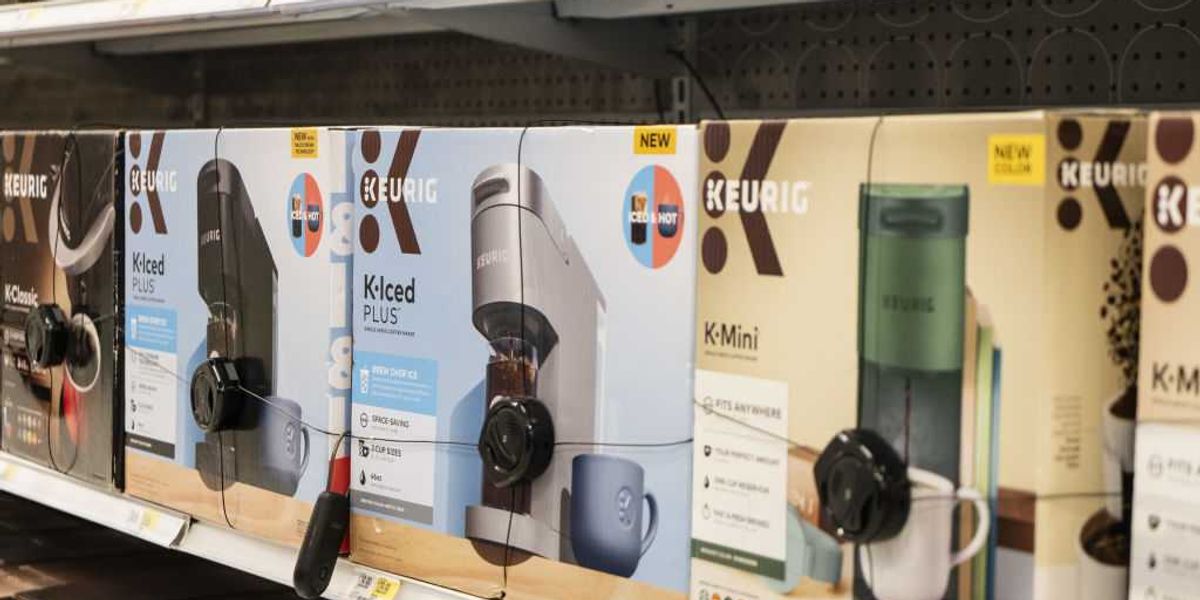
The debate over Maine’s expanded PFAS law blew up after a Republican gubernatorial candidate warned Democrats were effectively targeting Keurig-style coffee makers. This article walks through the video that went viral, what the law actually says, how manufacturers are reacting, and why the issue has become a flashpoint for concerns about unintended consequences.
Former state Senate GOP leader and current Maine gubernatorial candidate Garrett Mason appears in a video walking down a coffee maker aisle and pointing at machines while saying, “Banned, banned … absolutely banned.” His tone is blunt and confrontational, the kind voters expect when someone wants to call out what they see as overreach.
Mason doubles down in the clip: “That’s right, ladies and gentlemen,” and adds, “Democrats are coming for your coffee maker. … So while they were busy banning plastic bags and increasing your grocery bills and increasing your housing costs and increasing your energy bills, they had a secret plan to ban your morning cup of coffee.” Those lines landed for many viewers who feel fed up with top-down rules that touch everyday life.
The controversy traces back to a state push against PFAS, often called forever chemicals. An early 2021 bill focused on carpets and rugs and planned phased restrictions starting in 2023, but the law was expanded in a later version signed in 2024 to cover lots more products.
The amended law broadened regulated categories to include items such as adult mattresses, artificial turf, cleaning and cosmetic products, and notably, cookware products. The statute defines cookware products as “a durable houseware product intended to be used to prepare, dispense or store food, foodstuffs or beverages, including, but not limited to, a pot, pan, skillet, baking sheet, baking mold, tray, bowl, and cooking utensil.”
https://x.com/garrettmason/status/2044450291966148847?s=20
The provisions of this law went into effect on January 1, 2026, and that effective date is what has factories and retailers nervously reinterpreting the language. On its face the definition does not explicitly call out coffee makers, but the broad wording leaves room for expansive readings by regulators and enforcement officials.
Some lawmakers and interpreters have applied a sweeping definition that, according to reporting at the time, can be read to include “a toaster and a coffee pot.” That interpretation is what fuels claims that popular single-serve machines could be swept up in the ban if their internal parts run afoul of PFAS limits.
Manufacturers have cautioned regulators that many coffee makers “rely on PFAS-containing internal components such as tubing, gaskets, solenoid valves, and vibrating pumps,” parts that serve heat, pressure, and durability roles inside machines. Those companies warn they need realistic timelines to redesign and retool or face losing shelf space in Maine before new parts are certified and supply chains adapt.
Steve Burns of the Cookware Sustainability Alliance put it plainly: “The legislation was drafted in a way that, unfortunately, other states around the country have done as well. And in an attempt to remove harmful PFAS, they extend it with language like anything that stores or prepares food or beverages.” His concern mirrors what consumers and small manufacturers fear—rules written with good intent but broad enough to upend common products.
“Essentially, since it was enforced in January of this year, three months ago, technically, we believe that it might make almost every type of coffee maker that’s on a shelf or in a restaurant in Maine right now unlawful,” Burns added. For voters who want practical protections against dangerous chemicals, this is a warning that policy must be precise or it will hit ordinary people first.
The GOP angle here is straightforward: watch how laws are written and who pays the price when they are vague. Legislators can ban harmful substances without tangling up morning routines, but that requires careful drafting and sensible exemptions so families and businesses are not collateral damage in a regulatory sweep.
