
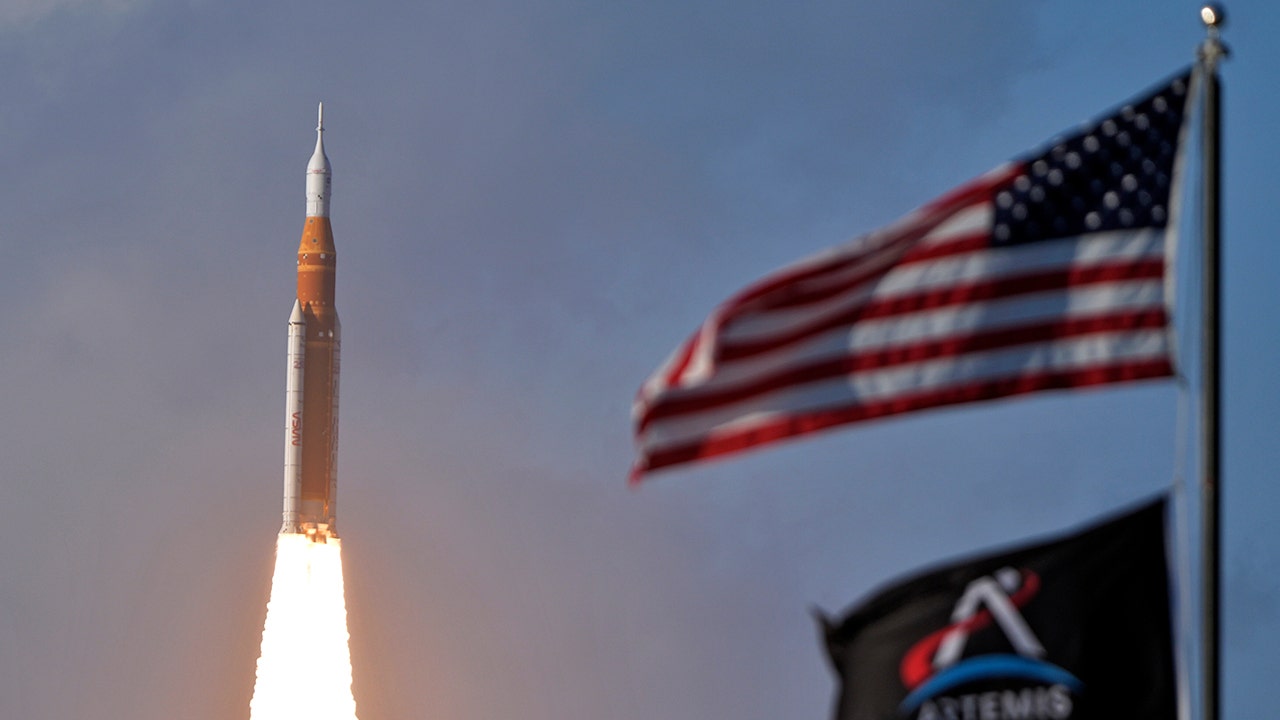
NASA’s recent moves under Administrator Jared Isaacman raise a simple, urgent question: can America still beat China back to the moon with the architecture now in place? This piece examines Isaacman’s warnings, the enthusiasm around Artemis II, growing technical alarm bells from experts, and why the White House deserves a straight answer on whether Plan B is needed. The stakes include strategic advantage, resource access, and long-term energy potential that matter to national security and prosperity.
Isaacman warned plainly during his Senate testimony: “We are in a great competition with a rival that has the will and means to challenge American exceptionalism across multiple domains, including in the high ground of space. This is not the time for delay, but for action, because if we fall behind, if we make a mistake, we may never catch up, and the consequences could shift the balance of power here on Earth.” Those are not throwaway lines; they are a national-security call to arms.
Even so, some recent statements from Isaacman have sounded softer on deadline and harder on timeline slack, with talk of a future paced “go to the moon with frequency” approach rather than a hard 2028 landing commitment. That shift matters because strategic momentum can be lost in vague scheduling, and rivals like China are building their own momentum without hesitation. We should expect leadership to match its rhetoric with an engineering plan that actually delivers.
There is real reason for worry among people who know rocket science. Voices within the space community have pointed to the program’s complex staging and fueling choreography as a fragile architecture that invites delay. A once-straightforward concept of launching crew and lander together has been replaced by an elaborate sequence of launches, orbital refueling steps, and rendezvous operations that multiply risk and cost.
Critics have not minced words. A headline that gained traction called out “NASA’s Orion Space Capsule Is Flaming Garbage,” and that blunt assessment reflects a wider anxiety about legacy systems grafted onto new plans. If systems underperform or require repeated redesign, political commitments will strain under delays and cost overruns, and the strategic window to beat an assertive competitor could close.
Former officials who served during earlier Trump administrations have cautioned that the current Starship-dependent plan “is extraordinarily complex. It, quite frankly, doesn’t make a lot of sense if you’re trying to go first to the moon, this time to beat China.” Complexity is not an asset when time and global competition are counting against you; it is a liability that invites programmatic failure.
Artemis II and its crew have done a powerful thing: they reminded the country and the world how inspiring human spaceflight can be. That public surge of excitement is valuable, but it must not be allowed to mask technical shortcomings or to justify complacency. Inspiration should be paired with ruthless honesty about schedules, capabilities, and backup plans.
America’s strategic interest in lunar resources only heightens the urgency. The moon’s surface holds helium-3 in quantities that could transform energy production, and the geopolitical value of lunar access extends well beyond science and symbolism. To leave that field of competition to another power would be a self-inflicted strategic error.
President Trump has issued a clear national space policy and framed moon return as a security priority, and the country deserves frank answers about execution. Here’s a simple question for his space team: With our current architecture, will we beat China back to the moon? If not, what is your “Plan B” — one that we need to implement immediately?
