
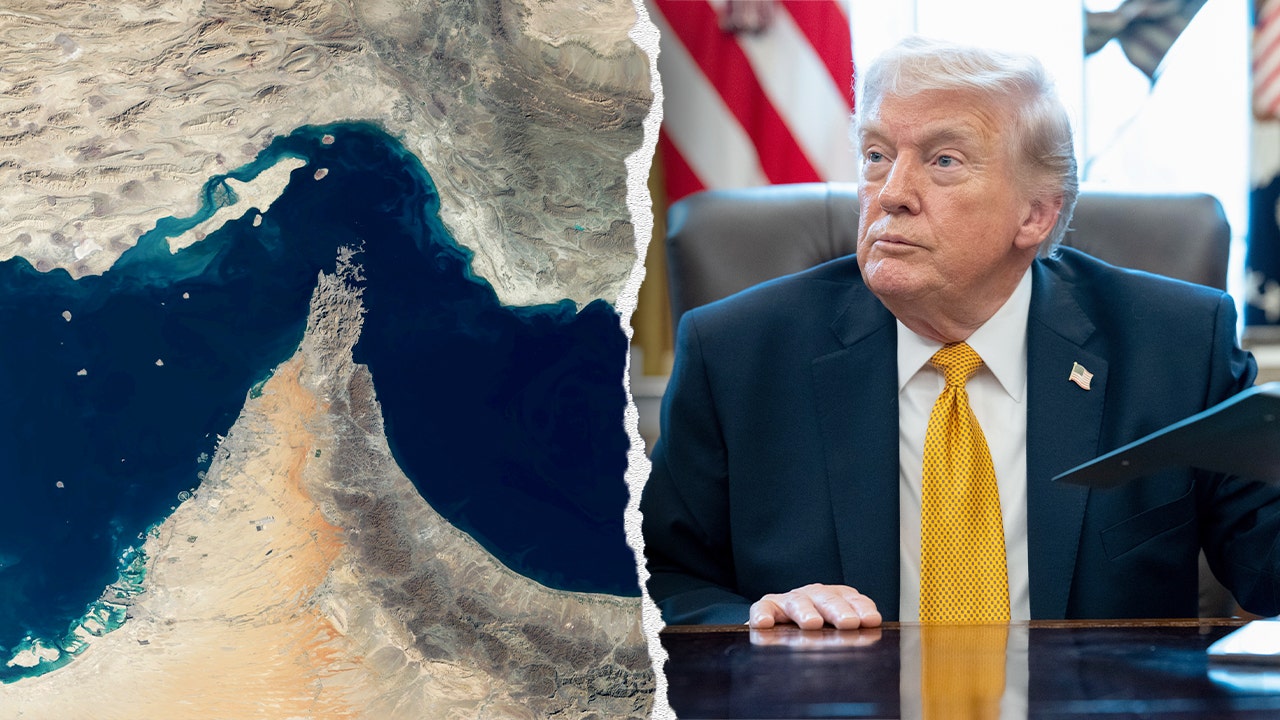
“It won’t be long now.” President Trump’s blunt timeline for reopening the Strait of Hormuz sets the tone: decisive U.S. action, pressure on Iran, and a push to get commerce moving again. This piece looks at why the strait matters, how U.S. forces are responding under Operation Epic Fury, the tactical hazards there, and the tools Washington will use to secure shipping lanes. Expect direct action, layered surveillance, and a firm message to allies and adversaries alike.
The Strait of Hormuz is a chokepoint that shapes global energy markets and geopolitical power. On a busy day roughly 130 ships transit the waterway and about 20 million barrels of petroleum products move through the region. China takes roughly 40 percent of that flow, and most of the oil transiting the strait heads to Asian markets, while U.S. crude imports through Hormuz sit near historic lows.
Recent disruptions pushed some flows onto longer Red Sea pipelines and left many large tankers idled as insurers raised premiums. From March 1 to 9 only an estimated ten tankers and thirty-nine cargo vessels transited, with a handful of Indian tankers and shadow-fleet ships slipping through. The pause shows how insurance and risk calculations can close off the lanes even when naval power is present.
Underwriting fears go back to the tanker wars of the 1980s, when Iranian attacks sank or damaged many commercial vessels. Insurers recall incidents like the burning of the Norman Atlantic after coordinated strikes in 1987, and that memory tightened markets today. That risk premium kept very large crude carriers sidelined until naval protection and intelligence reduce the hazard.
Operation Epic Fury has already degraded Iranian capabilities at sea, striking dozens of hostile vessels and complicating Tehran’s ability to sustain attacks. With more than 100 Iranian ships destroyed so far in Operation Epic Fury, there is practically no way Iran can sustain naval attacks. In fact, no ship has been targeted since March 12, which signals a meaningful drop in successful harassment efforts.
Still, the geography favors the attacker if defenders aren’t vigilant. The strait is about 104 miles long and narrows to roughly 21 miles at its tightest point, and the official shipping lanes are only two miles wide in each direction. As Trump warned, “literally a single terrorist can put something in the water, or shoot something, or shoot a missile, a small missile, and it’s really close range, because it is a tight area.” That vulnerability demands persistent monitoring and quick reaction times.
Washington has publicly pushed for broader burden sharing and made its frustration plain. On the diplomatic front Trump said he would “strongly encourage other nations whose economies depend on the strait far more than ours” to step up, and he noted, “We thought that Europe would help, because they do have some minesweepers,” before adding, “I think it’s very unfair to the United States.” Those comments make clear the administration expects partners to carry more of the load.
U.S. Central Command is preparing a plan built around surveillance and rapid countermeasures rather than old-school convoys. The approach favors layered sensors, air and sea patrols, and targeted interdiction over long columns of escorted ships. That model reduces exposure while letting naval and air assets pick off threats before they reach merchant traffic.
Technology will do the heavy lifting. Maritime moving target indicator systems on aircraft and high-altitude drones can separate small boats from coastal clutter and track hostile craft in real time. Airpower provides a quick-response option to neutralize drones, shore-based launchers, or small surface threats, complementing the surveillance picture and delivering lethal precision when needed.
Mines remain a constant concern, so mine countermeasure ships with unmanned systems will be central to clearing lanes and deterring emplaced devices. Underwater drones from compact MK 18 Mod 2 Kingfish units to larger autonomous systems will hunt bottom and moored mines without risking crews. Finally, Marine expeditionary units afloat give commanders options for interdiction, boarding, and rapid strikes, backed by F-35Bs and shipborne firepower.
Global shipping won’t snap back overnight, but the combination of naval pressure, improved surveillance, and focused mine-clearing will restore confidence quickly if sustained. The United States has the assets and the will to secure the lane, and that posture sends a clear signal: the strait is under watch and disruption will not be tolerated. China and other consumers of Hormuz traffic will have to account for a U.S. presence that means business.
