
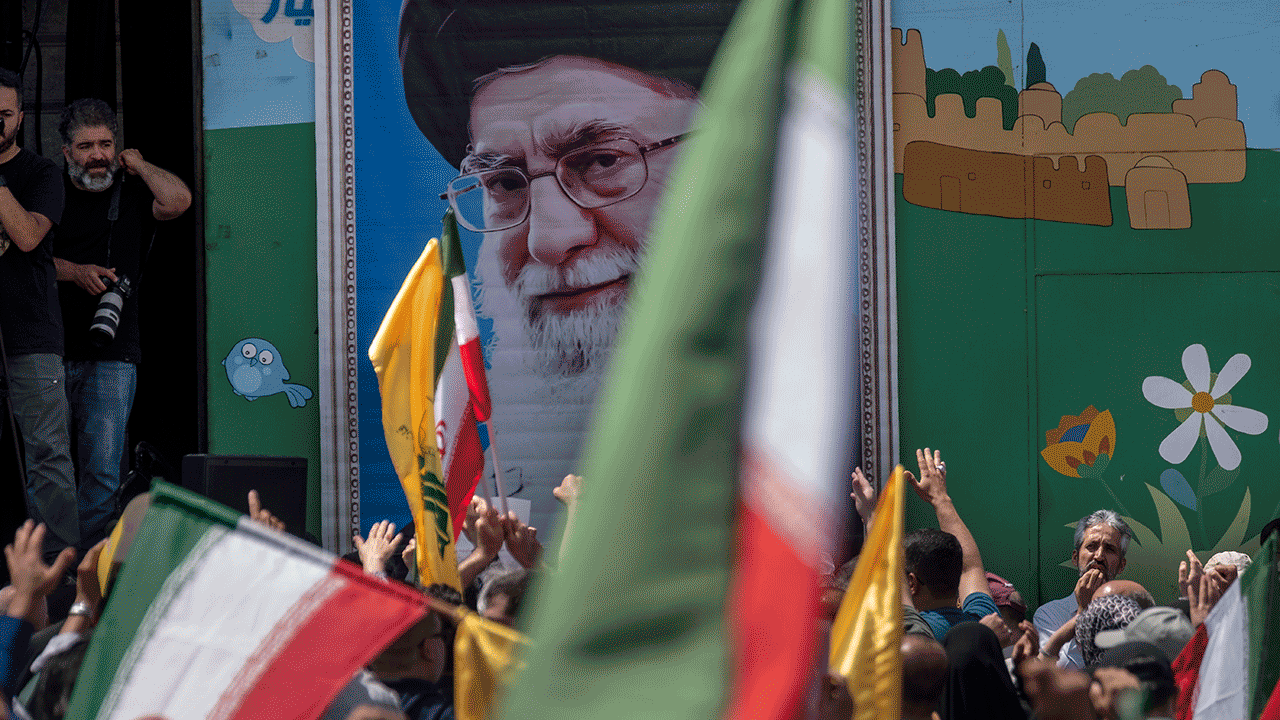
The strikes against Iran have opened a door many thought shut, and the reaction from Iranians at home and abroad is raw and electrifying. This piece looks at why the moment matters to Iranians, how the policy aims to protect America, what the costs and limits of intervention should be, and why this is a real chance for people yearning for freedom. It argues from a Republican perspective that decisive action, not endless appeasement, delivered a historic opening. The focus is on facts, resolve and the role Americans should play without occupying another nation.
Watching Iranians flood streets with the lion and sun flag, singing banned songs and crying with disbelief is powerful. They have paid the ultimate price for liberty in families torn apart by repression, and their reaction is not theatrical. For many, cheering strikes on their soil is a desperate expression of hope because they know what liberation costs and they are ready to take it.
Some critics dismiss the moment as “another war for oil” or accuse the United States of ulterior motives, but that view misses the point. This intervention is aimed at ending a half century of a regime that exports terror and seeks nuclear weapons. It is a targeted strategy meant to remove military capacity that threatens Americans and our allies while empowering internal pressure for change.
MIKE POMPEO: OPERATION EPIC FURY IS RIGHTEOUS, AND REGIME CHANGE MUST FOLLOW
President Trump has never framed policy as regime change for the sake of regime change. The clear priorities were stopping Iran from going nuclear and curbing its terrorism network across the region. Strikes that undercut the regime’s military arm are intended to create space for Iranians to reclaim their country without U.S. boots in Tehran.
The president made it plain to the Iranian people that the burden of rebuilding is theirs. America can provide moral support, diplomatic backing and technical assistance, but we will not occupy or reconstruct Iran from the outside. That restraint matters; it respects Iranian agency and avoids the mistakes of prolonged nation building.
IRANIAN CROWN PRINCE MAKES NEW APPEAL TO TRUMP TO WEAKEN AYATOLLAH’S REGIME AS KILLING CONTINUES
Iran is not a failed patchwork of tribes; it is a nation with a deep history and many educated citizens who remember life before the theocracy. Decades of censorship, imprisonment and brutality have hardened resolve rather than erased identity. Tens of thousands have suffered jail, torture or execution, and brave women and students have openly defied dress codes and murderous crackdowns.
These protest movements are not spontaneous only; they are the accumulated fury of a people forced into silence and then pushed to act. Journalists have disappeared for telling the truth and activists have been killed for chanting “death to the dictator.” That kind of trauma produces a population hungry to seize a moment when power shifts and the regime is weakened.
Let’s be clear about history. The Islamic Republic declared hostility decades ago when militants seized our embassy and held 52 Americans for 444 days. Since then, Tehran has backed attacks on U.S. troops, allies and civilians across the Middle East through proxies, bombings and assassination plots. Their export of terror has been a core strategy to maintain control at home and project power abroad.
For too long, successive administrations accepted limited tolerance or awkward deals that failed to curb Tehran’s ambitions. President Trump chose a different path with partners in the region by confronting the threat directly. That posture does not guarantee instant success, but it changed the balance and opened a window for Iranians to push harder for freedom.
There are real strategic gains from a nonnuclear, less aggressive Iran: fewer threats to American forces, more stability for neighbors, and a blow to global terrorism networks. But the end state should be shaped by Iranians themselves, not an external blueprint. Supporting their courage without imposing control is the right conservative approach to backing liberty while safeguarding American interests.
Across capitals and communities from Tehran to Los Angeles the reaction is unmistakable and intense. This moment will test whether policymakers hold firm to a strategy that pressures bad actors while empowering the oppressed. That mix of strength and restraint, plain and simple, is what conservative foreign policy should look like now.
