
Nearsightedness is climbing worldwide and researchers are zeroing in on surprising triggers beyond screens. New work from SUNY optometry suggests dim indoor lighting, combined with prolonged close-up focus, could be nudging eyes to elongate. This piece walks through the biology, the SUNY hypothesis, the limits of the study, and what it might mean for everyday habits and future research.
Myopia rates have jumped sharply over recent decades, and health groups warn nearly half the planet could be nearsighted by midcentury. The trend has been blamed largely on heavy use of phones, tablets and computers, especially when people spend long hours focusing up close. Researchers are now asking whether the lighting in those near-work environments plays a role too.
In labs, scientists can trigger myopia in animals by blurring the image or altering lenses, and they can slow its development by boosting light exposure. Outdoor time has emerged repeatedly as protective, and that clue helped shape the SUNY team’s thinking. They wondered whether the amount of light reaching the retina while focusing nearby changes how the eye grows.
Nearsightedness happens when the eyeball grows too long from front to back, so light falls in front of the retina and distant objects blur. That physical elongation is the core mechanical problem, and anything that nudges growth during childhood and adolescence matters. The American Optometric Association describes this simple anatomical issue as the basis of myopia.
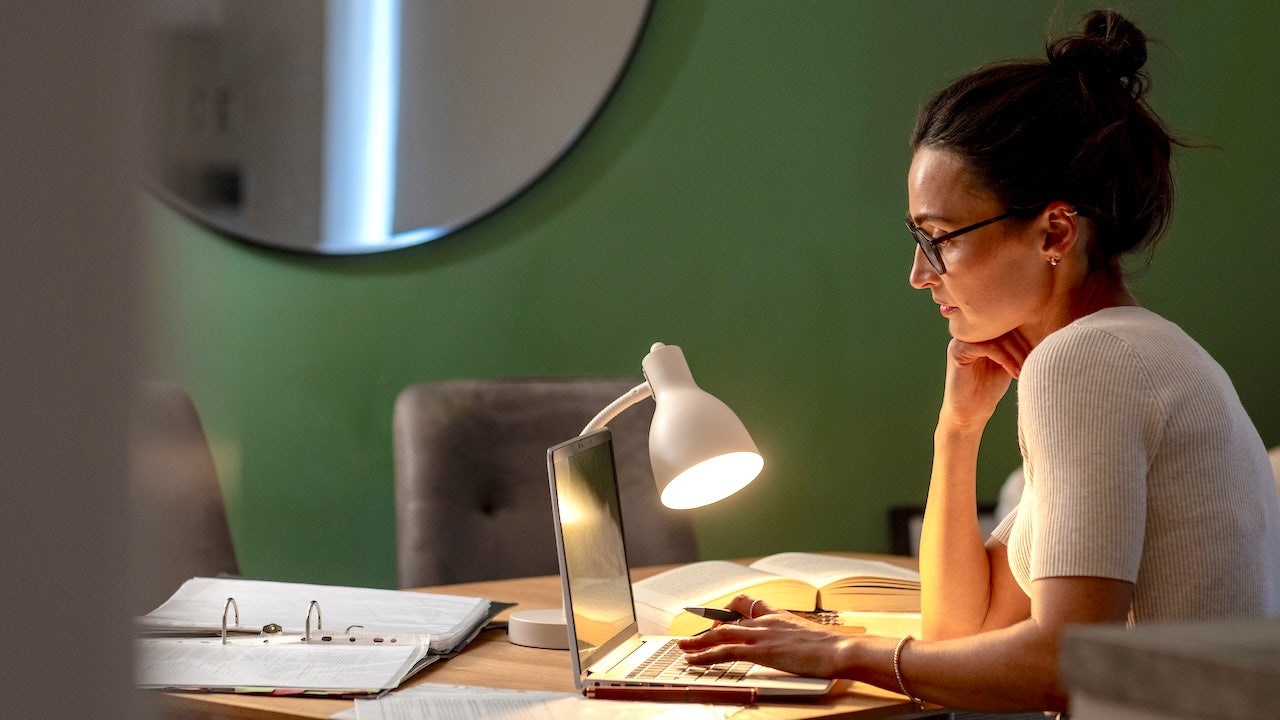
The SUNY study homed in on a basic physiological response: pupils constrict when you look at something close. That constriction happens outdoors too, but bright sunlight still floods the retina. Indoors, when the lights are low and the pupil tightens to sharpen near detail, much less light reaches retinal cells.
“In bright outdoor light, the pupil constricts to protect the eye while still allowing ample light to reach the retina,” Urusha Maharjan, a SUNY Optometry doctoral student who conducted the study, said in a press release.
“When people focus on close objects indoors, such as phones, tablets or books, the pupil can also constrict — not because of brightness, but to sharpen the image,” she went on. The team argues that dim conditions plus sustained close work could reduce retinal illumination enough to change the biochemical signals that tell the eye when to stop growing.
If the retina’s activity falls too low during prolonged near tasks, the researchers suggest the eye might interpret that reduced stimulation as a sign to elongate. In their view, low retinal illumination could fail to generate the “stop growing” signal the developing eye needs. That idea links behavior, ambient lighting and basic optics into a single, testable chain.
The contrast with being outdoors is striking: even when pupils narrow to focus on something close, sunlight intensity keeps retinal signaling robust. That continuous, strong stimulation may help maintain normal growth patterns in children who spend time outside. So the protective effect of outdoor light might be about sheer illumination as much as it is about distance viewing.
The authors were careful to point out limitations: their subject group was small and some internal lens changes couldn’t be measured with standard gear because bright backgrounds made pupils too small for the instruments. “This is not a final answer,” Jose-Manuel Alonso, MD, PhD, SUNY distinguished professor and senior author of the study, said in the release. “But the study offers a testable hypothesis that reframes how visual habits, lighting and eye focusing interact.”
The study appears in the journal Cell Reports and opens practical questions for parents, educators and device designers. Larger trials and new measurement methods will be needed to confirm whether boosting indoor light or altering near-work routines can change myopia trends. Meanwhile, the SUNY hypothesis gives researchers a clear pathway to follow: connect retinal illumination, sustained focus and eye growth in controlled human studies.
