
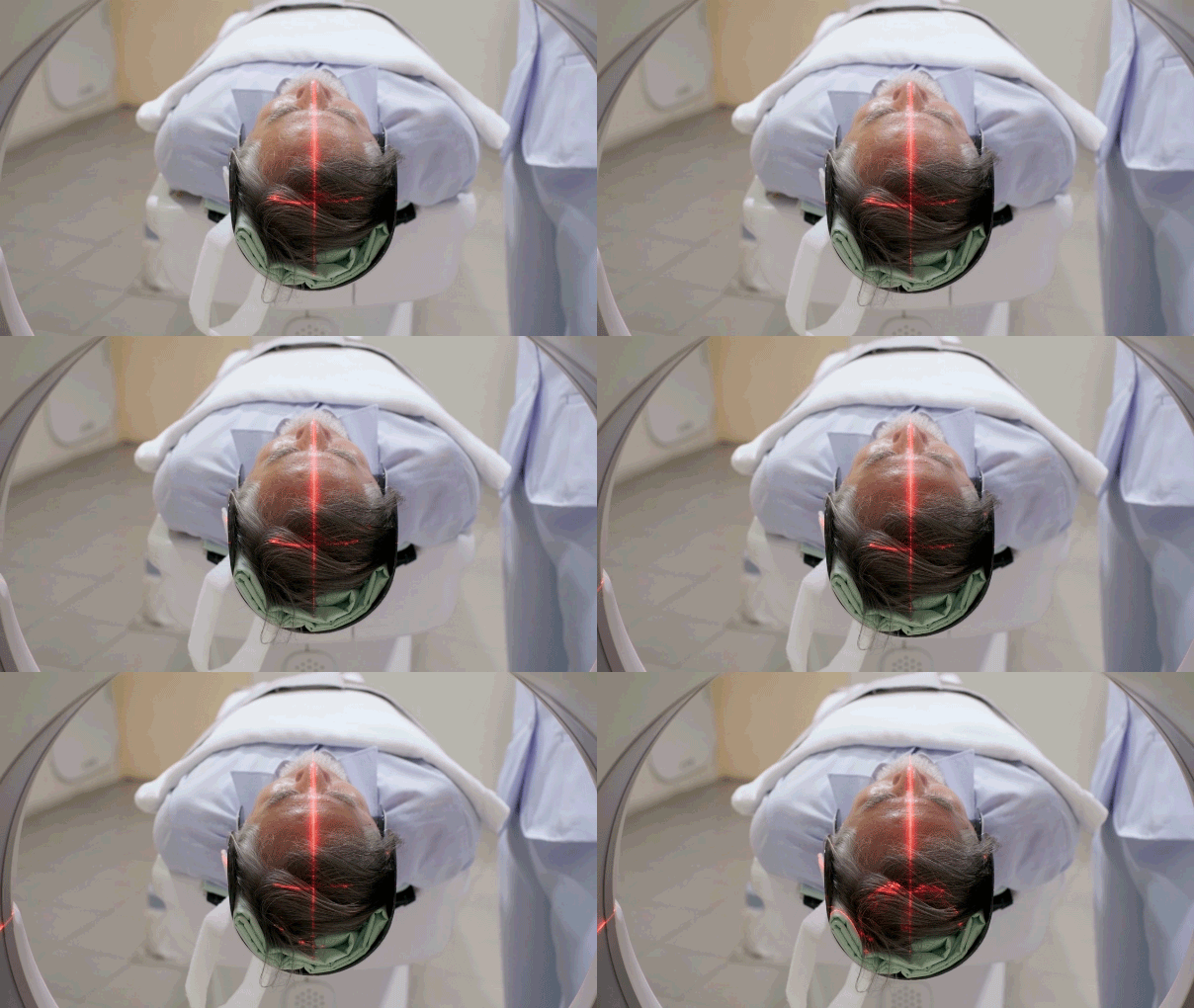
New research flags cerebral amyloid angiopathy, a little-known disorder where protein builds up in brain blood vessels, as a major dementia risk factor in older adults; a large Medicare-based analysis found substantially higher dementia diagnoses among people with CAA even when stroke was not present, though the study is preliminary and has limitations tied to administrative data and lack of imaging confirmation.
Cerebral amyloid angiopathy, or CAA, happens when sticky protein collects along the walls of tiny brain blood vessels and slowly weakens them. For many older people this buildup causes no obvious symptoms, but it can quietly change how the brain handles blood flow and waste. In more advanced cases the weakened vessels can rupture and cause a brain bleed or stroke, which is one way the condition becomes clinically obvious.
The new analysis examined records for nearly two million adults aged 65 and over who were covered by Medicare between 2016 and 2022. Researchers separated people into four groups: those with neither CAA nor stroke, those with CAA only, those with stroke only, and those with both CAA and stroke. Tracking who went on to receive a dementia diagnosis revealed sharp differences across those groups.
By five years, about 42% of individuals coded as having CAA received a dementia diagnosis, compared with roughly 10% of people without CAA, a nearly fourfold gap. Notably, the elevated dementia risk persisted even among people with CAA who had no recorded history of stroke. That pattern suggests CAA itself may drive cognitive decline through mechanisms beyond obvious bleeding events.
“What stood out was that the risk of developing dementia among those with CAA without stroke was similar to those with CAA with stroke, and both conditions had a higher increase in the incidence of dementia when compared to participants with stroke alone,” study author Samuel S. Bruce, an assistant professor of neurology at Weill Cornell Medicine in New York City, said in a press release. The quote underlines a surprising finding: stroke is not required for CAA to be tied to dementia risk.
Researchers acknowledge important limits. The study used diagnosis codes from Medicare claims instead of direct clinical assessments or brain scans, and those administrative codes can miss or misclassify conditions. “These codes are an imperfect proxy for clinical diagnoses, and misclassifications can occur,” he said in the release, which raises caution about interpreting the exact numbers without confirmation from imaging or clinical charts.
Because imaging data were not available, the team could not verify CAA or stroke diagnoses with MRI or PET scans, tools that would provide clearer evidence of protein deposits or small vessel disease. The research was presented as preliminary work at a major stroke conference and may be refined during peer review, so the findings should prompt further investigation rather than immediate changes in practice. Still, the scale of the dataset makes the association hard to ignore.
Estimates from clinical centers show that moderate to severe CAA is not rare in older adults; published figures suggest around a quarter of people over 50 may have moderate to severe deposits. Given that frequency, even a modest effect on dementia risk translates into a substantial public health concern if confirmed by future studies with imaging and clinical verification.
Clinicians might start to pay closer attention when older patients develop new memory problems, unexplained cognitive slowing, or experience a brain bleed or stroke that could be linked to small vessel disease. Screening and monitoring could help identify cognitive change earlier and allow teams to address modifiable risks while research continues to clarify how amyloid protein in blood vessels contributes to dementia.
