
I’ll make the case that empathy matters, explain how critics miscast it as weakness, retell a World War II episode that shows empathy as courage, and explain why that story still matters for how we treat opponents today.
Empathy has lately been painted as a liability, a way to be swayed into accepting things you would otherwise reject. Critics call it a Trojan horse for softness and manipulation. That description misses what empathy actually does.
True empathy is not agreement and it is definitely not surrender. It is a refusal to flatten someone into a cartoon version of themselves, and a recognition that people make choices for reasons we might not immediately see. That stance can sharpen, not dilute, our convictions.
A story from World War II remains one of the clearest demonstrations of that idea. On Dec. 20, 1943, in the chaos above Europe, two men on opposite sides made a decision that has been measured and debated ever since. The episode forces a simple question about what we owe one another as human beings.
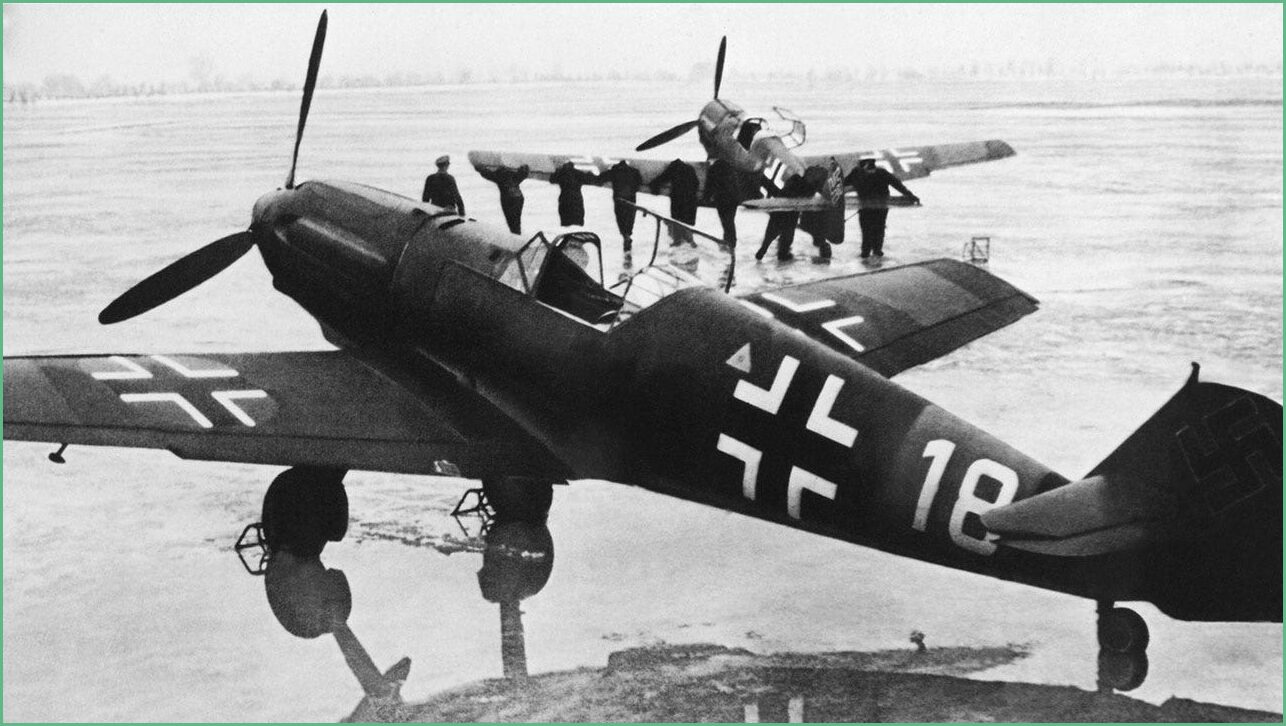
Charles Brown was a 21-year-old West Virginian piloting a B-17 when his crew’s bomber was ripped open by enemy fire. Bullets had torn through the fuselage, several crewmembers were badly hurt, and the plane was struggling to hold altitude. They were a vulnerable, limping target in hostile skies.
Waiting nearby was Franz Stigler, a 28-year-old German fighter ace whose orders and instincts pushed him toward the kill. In a conflict where survival was rare for German pilots, every opportunity to down an enemy mattered; of roughly 40,000 German fighter pilots in the war, only about 2,000 lived to see the end. For Stigler, the rules of engagement and the pressure to perform were intense.
When Stigler pulled alongside Brown’s failing bomber, Adam Makos later wrote in “A Higher Call.” that the expected violence did not happen. Instead of opening fire, Stigler escorted the damaged aircraft, flying close enough to shield it from other fighters and guiding it away from danger. He made that choice while fully aware of the costs.
Stigler sacrificed what could have been the Knight’s Cross one more kill would have secured, and he violated orders that risked his career and possibly his life. For decades both militaries kept the incident secret, and Stigler was warned not to speak of it under threat of severe punishment. The episode survived only because people later told the story.
Whatever you call it, the action was an act of human recognition: seeing people on the other side as people. Stigler could have reduced the Americans to targets and moved on, but he did not. That choice altered two lives and left an ethical echo that outlives the weapons and the uniforms.
We live in a culture that often rewards outrage and simplification, where opponents are painted as caricatures and the loudest voices win attention. That environment encourages the idea that empathy equals weakness, when really it asks for the opposite—moral courage to treat rivals as human beings. Choosing restraint is hard, especially when doing so runs counter to group pressure.
WWII VET BECOMES PUBLISHED SONGWRITER AT 101 WITH ‘IF FREEDOM WAS FREE’ Empathy in practice looks messy and costly, but it also preserves dignity and opens space for unexpected mercy. The World War II encounter reminds us that a moment of restraint can break a cycle that violence keeps feeding.
WWII NURSE, AGE 106, DONATES BULLET FROM HUSBAND’S HEART TO PEARL HARBOR MUSEUM When you encounter someone you dislike or disagree with, you face Stigler’s choice: reduce them to a symbol or remember their humanity. That decision matters in private acts and in public life, and it shapes whether we respond with dehumanization or with the hard work of understanding.
