
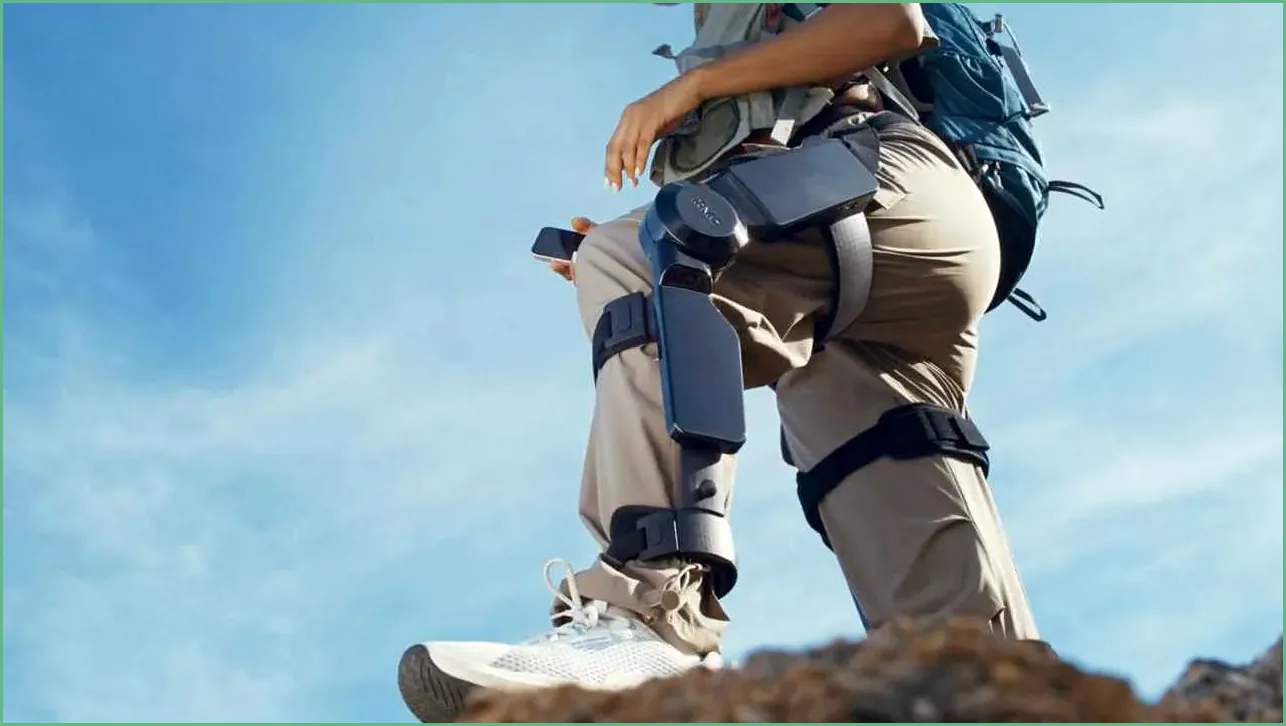
The IRMO M1 exoskeleton is a new wearable that combines AI, camera and LADAR sensing, and compact robotics to give walkers and hikers real-world leg support. It predicts terrain and adapts power before your foot lands, aiming for smoother assistance than older reactive systems. The design promises meaningful knee relief, multiple activity modes, and a range of consumer tiers on a crowdfunding rollout. This piece walks through how the M1 works, what it weighs, how it performs, and what to watch for if you consider backing it.
The M1 straps to your waist and legs using modular, fast-release bands so users can don and doff it quickly. Each leg module is fairly light at roughly 2.2 to 2.6 pounds, keeping the system wearable for extended days outdoors. A central 1,000 W motor supplies power with claims of up to 45% assist per stride, which translates into noticeable help on long treks.
At the heart of the unit is a nine-axis IMU paired with an AI engine that studies gait patterns in real time and tunes each push to the individual wearing it. That continuous learning differentiates it from simpler supports that only react after impact. The AI works with sensor fusion to keep assistance feeling natural rather than abrupt or robotic.
Where the M1 tries to leap ahead is its forward-looking sensing suite: a camera and laser-rangefinder sweep a four-foot radius to read the ground before your foot arrives. This terrain awareness lets the system predict how much boost or dampening you’ll need for stairs, sand, slopes, or uneven trail. By preparing the output rather than waiting to react, the device aims for smoother transitions and fewer jolts to the joints.
The company says the M1 can shift into different behaviors depending on what it sees, adding power for climbs, absorbing impact for jumps, and increasing control for descents. Users can allegedly switch from assist to resistance if they want a training effect to build strength. IRMO cites knee-impact reductions, claiming predictive control can cut impact as much as 60% and that the system can take roughly 50 pounds off knee stress in some situations.
On the practical side, battery and durability matter. IRMO reports up to eight hours of runtime thanks to energy recovery tech, and the hardware is rated to run in a wide temperature band from –4°F to 104°F with up to IP67 waterproofing. Those specs suggest weekend hikers and urban users could use the M1 for long excursions without frequent recharges or immediate fear of light weather exposure.
Functionality is delivered through an app that handles mode switching, battery status, and performance metrics so users can tune the experience and monitor use. The hardware supports multiple activity types, from hiking and running to more dynamic sports like basketball or tennis, according to the product brief. That multimode approach nudges the M1 beyond a single-use hiking tool toward a more versatile mobility device.
The M1 is being offered via a crowdfunding campaign with tiered pricing that starts at $399 for the entry M1 Neo level and scales up to Pro and Ultra versions with stronger motors and lighter frames. Each pledge tier lists included components such as main units, straps, charger, and battery, with estimated shipping windows targeted for mid-2026. As with any crowdfunded hardware, backers should check refund terms, shipping details, and production risk statements before committing.
For people who have felt limits on steep routes or long outings, the M1 is pitched as a way to extend range and reduce fatigue while protecting knees. It also offers a resistance option for athletes who want to train, not just be assisted, turning the package into a tool for endurance and balance as well as recovery. Early adopters will be the first to test how well the theory holds up in diverse, real-world terrain.
Expect a learning curve as predictive sensing meets messy outdoor conditions; cameras and LADAR can be challenged by dust, glare, or dense brush. Real-world durability, software updates, and after-sale support will determine whether the M1 becomes a practical everyday aid or a niche gadget. If you consider backing experimental wearable tech, weigh those uncertainties against the potential gains in mobility and reduced joint stress.
