
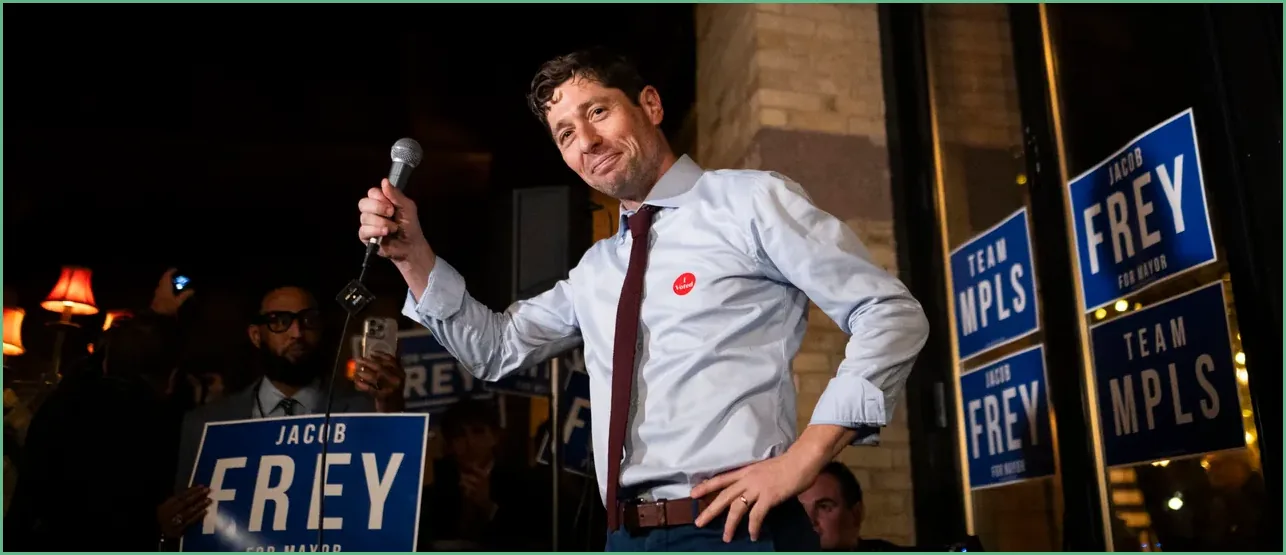
Minneapolis Mayor Jacob Frey’s third-term victory speech included a stretch spoken in Somali, and that choice set off a wave of conservative backlash. Critics called the moment proof of political pandering and raised questions about language, loyalty, and how city leaders prioritize communication with residents.
Frey stood before supporters after securing another term and spent nearly a minute addressing part of the crowd in Somali, repeatedly thanking them in their native language before moving back to English. The brief foreign-language segment was captured and shared widely on social platforms, and it became the focal point for sharp criticism from right-leaning commentators. For opponents, the move was less about outreach and more about message and optics during an election win.
“The pandering here is insane,” conservative influencer Paul Szypula. “Mayor Jacob Frey, as he won reelection, spoke almost a minute in Somalia then said Minneapolis belongs to Somalia.” Those words underline how some Republicans see this moment: not as multicultural celebration but as a politician choosing symbolism over clear, unified communication. The reaction shows the raw political electricity that language choice can spark in a diverse city.
Frey’s victory came against Omar Fateh, a challenger who ran to his left and drew support from progressive circles allied with Rep. Ilhan Omar and local socialist groups. High-profile endorsements from establishment Democrats helped Frey lock in support across broader party lines, even as conservative critics argued those alliances signal a city leadership direction they distrust. Voters now face a mayor who mixes establishment backing with targeted outreach to specific communities.
During his remarks Frey invoked Somali place names and tried to send an inclusive message to that sizable immigrant community. “This election means this is a moment for unity, where the entire Somali community can come together and say, ‘This is our people. This is our city. We are united behind each other,” Frey said. For supporters, those lines were meant to reassure recently arrived residents that Minneapolis welcomes them and that their voices matter at city hall.
Conservative voices pushed back hard, characterizing the language choice as humiliating or inappropriate for an official victory address. Gerry Callahan labeled the speech “the most humiliating thing I’ve ever seen,” while others argued that public officials should default to English when addressing the entire city. The debate quickly turned into a broader question about whether targeted appeals during public, official moments strengthen communities or undermine shared civic language.
At the same time, comments from some critics moved into policy territory, calling for tougher immigration enforcement and more visible federal action locally. “I don’t know how large ICE’s presence in Minneapolis is, but it needs to be much, MUCH larger,” commentator Nick Sortor. That response shows how a short speech can be used to justify wider calls for immigration crackdown, tying language choices to enforcement debates.
This is not the first time Frey has faced heat for messaging in Somali; critics pointed to an earlier campaign ad delivered in that language as a similar flashpoint. The repeated pattern has hardened views on both sides: supporters see outreach and respect, while opponents see strategic identity politics and a misread of what unites a city. As Minneapolis moves forward, language and messaging will remain a charged part of local politics and a flashpoint for national conservative commentary.
