
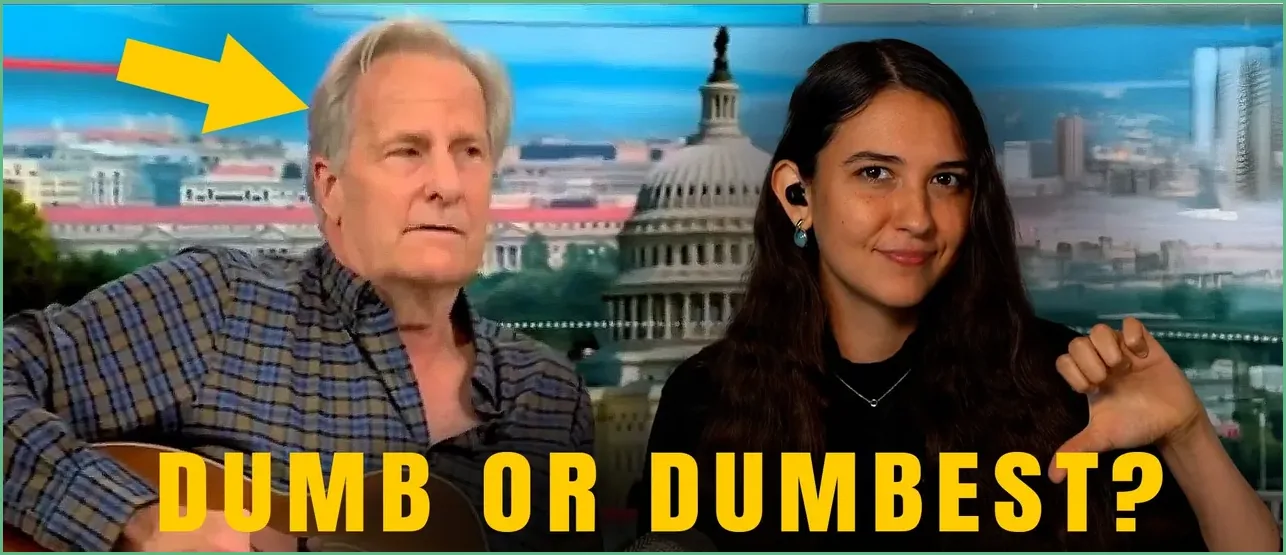
The actor Jeff Daniels turned a TV interview into a small viral moment this week, singing a self-penned ballad about politics and privilege while talking to a cable news host. The scene landed squarely in the middle of ongoing debate about protests, media bias and the boundaries between celebrity and civic life. This piece breaks down what happened, why it landed poorly with many conservatives, and what the episode reveals about performers who trade on cultural authority. Expect a clear-eyed, direct take that doesn’t shy away from calling out theatrical moralizing when it appears.
“Dumb and Dumber” star Jeff Daniels appeared Tuesday on MSNBC with Nicolle Wallace, complaining about President Donald Trump and monarchy in the wake of the “No Kings” protests. He showed up with a tune he reportedly wrote to make sense of the moment, then performed it for the host. That blend of celebrity lament and political sermon is becoming a familiar pattern on elite media outlets.
The performance felt staged and slightly desperate, as if an actor worried about relevance decided the fastest route back to headlines was a two-minute cultural indictment. Daniels has a long and respectable career in film and theater, but talent doesn’t immunize someone from looking out of touch when they step into political preaching. When actors move from character work to political commentary, they trade on cultural capital and invite scrutiny from people who care more about actions than feelings.
The “No Kings” protests themselves are an odd mix: performative outrage, symbolic gestures and plenty of media amplification. Conservatives see those protests as signaling virtue, not solving problems, and the Daniels episode only underscored that perception. When public figures respond with melodrama rather than practical ideas, it amplifies the sense that our culture is drifting toward spectacle instead of accountability.
MSNBC, where the segment aired, is already a predictable stage for celebrity moralizing, and the host’s giggling approval was part of the performance package. Viewers on the right saw the exchange as confirmation that major outlets prefer monologue to debate. That plays into a broader distrust of media institutions that selectively elevate entertainers as political authorities while dismissing dissenting voices.
There’s a deeper irony in an actor who made millions playing slapstick characters now positioning himself as a moral guide on national leadership. The contrast between on-screen absurdity and on-air gravitas is jarring for anyone skeptical of performative wokeness. Conservatives will point out that cultural status doesn’t equal political insight, and fans of limited government will prefer arguments grounded in policy over celebrity lamentation.
The ballad itself was simple, earnest and easily lampooned, which is why it spread on social feeds so quickly. Talent aside, sincerity doesn’t win every argument; context matters. If your solution to a political dispute is to sing about feelings on cable TV, you shouldn’t be surprised when your performance becomes the story instead of the underlying issues.
Critics on the right saw Daniels’ turn as another example of Hollywood elites assuming a superior posture toward ordinary voters. That posture fuels alienation and political backlash because it suggests cultural gatekeepers are lecturing without listening. Americans who value clear speech and straightforward leadership respond poorly to theatrical moralizing, especially when offered as a substitute for substance.
There’s a practical point here for public figures who want to influence politics: pick your forum and your message carefully. A TV ballad will get attention, but it won’t persuade undecided voters or change policy. If the goal is to mobilize people, campaigns and coalitions built around concrete proposals beat symbolic performances every time.
Finally, the episode is a reminder that the culture wars aren’t just about policy; they’re also about style, tone and authority. When celebrities insist on playing the role of cultural arbiters, they risk alienating half the country they’re trying to reach. For conservatives, Daniels’ MSNBC serenade was emblematic of an activist elite that prefers theatrical rebukes to honest debate.
[Screenshot/MSNBC/Daily Caller]
const observer = new MutationObserver((mutations) => { const adDivToHide = document.querySelector(“#dailycaller_incontent_1”); if (adDivToHide && dc_noads_page) { adDivToHide.classList.add(“hide-premium”, “hide-free”); observer.disconnect(); console.log(“Ad div found and hidden”); } }); observer.observe(document.body, { childList: true, subtree: true });
