
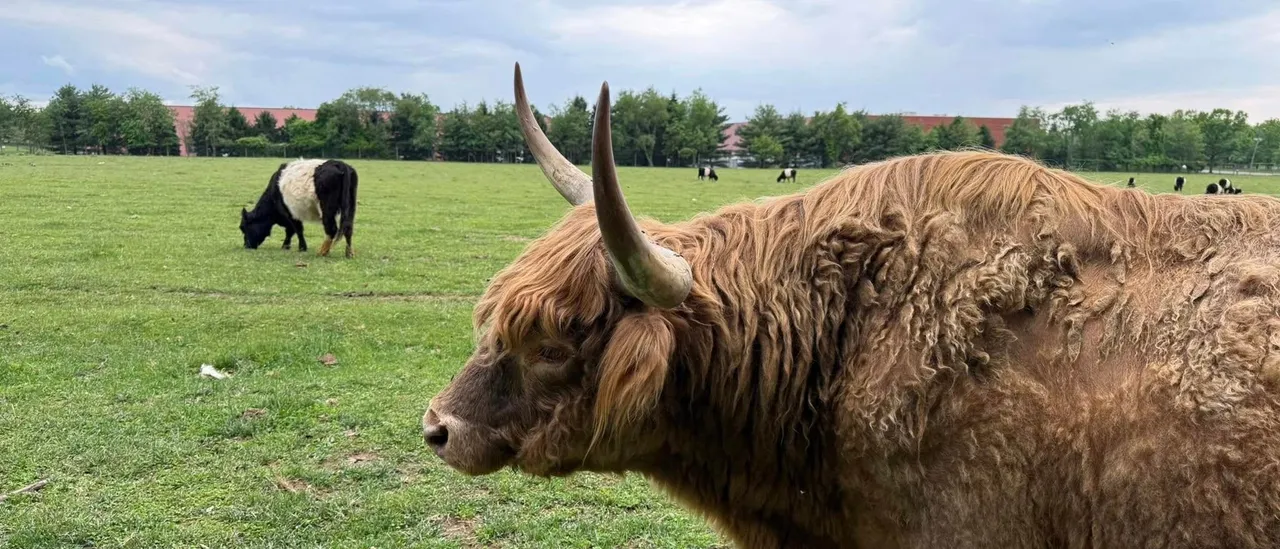
A historic New Jersey family farm, standing for 175 years, is on the brink of disappearing as local authorities plan to transform it into affordable housing. The Cranbury Township Committee has informed Andy Henry, one of the farm’s owners, that he must relinquish the 21-acre property or face possible legal action. This move has sparked national interest, raising questions about the underlying motives of the township committee.
Andy Henry, along with his brother Christopher, co-owns the property, a legacy from their great-grandfather dating back to 1850. Despite residing in New Mexico, the brothers have maintained the farm’s operations by leasing it to a tenant named Tom, who manages the livestock. The Henry brothers are committed to preserving their family’s heritage and have no intention of selling the farm.
In June, Henry initiated legal proceedings against the township committee, challenging their attempt to use eminent domain to acquire the farm. This legal doctrine allows the government to seize private property for public use, provided fair compensation is given. Henry argues that the farm’s current conditions do not justify such action, as it is fully functional and not in a state of disrepair.
The farm’s location, surrounded by industrial developments and far from essential amenities, raises doubts about its suitability for housing projects. Yet, the township seems resolute in its decision, as they plan to proceed with an appraisal of the property. Henry has until the end of August to officially challenge the township’s plans in court.
A former Cranbury Township Mayor, Jay Taylor, has voiced concerns about the transparency of the committee’s actions. The Henry farm was not initially included in the list of potential properties for development. It was only after other landowners refused to sell that the committee turned its attention to the Henry property.
When contacted in April, Andy Henry discovered that the township had already partnered with Walters Apartment Group for the development project. Taylor finds this collaboration suspicious, as the developer had been involved in site selection, a process not previously conducted behind closed doors.
Historically, Cranbury has collaborated with non-profit organizations like Cranbury Housing Associates for affordable housing initiatives. These partnerships have resulted in numerous housing units built at reasonable costs. However, the current shift toward a for-profit developer for the latest housing round is unprecedented.
The township’s latest venture involves constructing 190 units, with significant funds allocated for land acquisition. The finalized costs are contingent upon the property’s appraised value, a detail yet to be disclosed by the township’s mayor.
Concerns over potential financial gains for Walters Apartment Group have been raised, with Taylor alleging that the company stands to earn millions from the approved plan. The choice of a for-profit developer over the long-established non-profit option adds to the controversy surrounding the project.
Taylor questions the motives behind the committee’s actions, though he acknowledges that Walters’ involvement appears legally sound. From a business perspective, Walters’ inclusion is advantageous, yet Taylor remains skeptical from a taxpayer’s point of view.
The struggle to preserve this historic farm is emblematic of broader debates over property rights and community development. While the committee’s intentions may align with public housing goals, the loss of a cherished family farm raises important ethical considerations. As the legal battle unfolds, the Henry family remains steadfast in their resolve to protect their legacy.

1 Comment
Never give an inch to these greed monger sneaky bureaucrats that piss all over such a long standing heritage and family Americana piece of local history with the Henry Farm being their ancestral land and should not be infringed upon at all! What rotten people run that area of the country!