
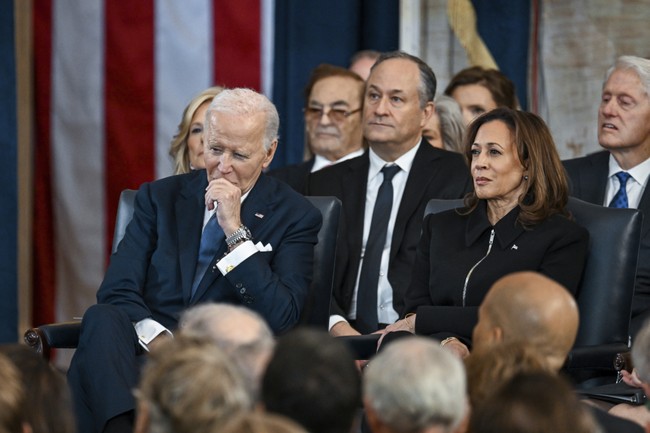
Democrats often express strong disdain for lobbying and influence-peddling, yet their actions sometimes tell a different story when they find themselves benefiting from such practices. This paradox was highlighted recently when Doug Emhoff, the former Second Gentleman, quickly transitioned into a new role as a partner at the prestigious law firm Willkie Farr & Gallagher LLP.
As the firm announced, Emhoff will now focus on advising corporations on complex litigation, a task that seems to align closely with lobbying, despite any attempt to label it otherwise.
Willkie Farr & Gallagher LLP made it official today, welcoming Douglas C. Emhoff as a partner. Emhoff, who brings over thirty years of experience as a litigator and trial lawyer, will split his time between Los Angeles and New York. His extensive experience, including representing the United States on the global stage, positions him as a valuable asset to the firm. Firm Chairman Thomas Cerabino expressed excitement about Emhoff joining during a period of significant growth, noting his leadership skills and broad range of expertise.
The firm’s announcement refrained from using the word “lobbying,” but advising corporate boards on complex legal matters seems to suggest similar activities. Emhoff’s previous focus was on intellectual property and entertainment law. Interestingly, these areas weren’t highlighted in the announcement, raising questions about the specific nature of his new role. Willkie Farr’s framing of his past experiences, including his time as Second Gentleman and adjunct professor, further hints at lobbying.
Emhoff’s tenure as the Second Gentleman included a broad portfolio, representing the United States at major events and advocating for legal reforms. His work combatting antisemitism was also highlighted, though this aspect carries a cautionary note. The administration’s approach during that period involved cozying up to radical figures within the party, a move not easily forgotten by many.
Despite the obvious connections, Willkie Farr avoids labeling Emhoff as a lobbyist. This omission is curious given the legality of lobbying and the absence of restrictions on Emhoff, who was never an elected official. The situation bears resemblance to past arrangements like Biden Inc and the Clinton Global Initiative, where influence and connections were subtly leveraged.
Emhoff’s move into this sphere may serve to maintain Kamala Harris’s relevance for any future political endeavors. The connections he fosters could prove advantageous in upcoming elections, potentially bridging clients and power. Willkie Farr appears poised to play a strategic role in this dynamic, much like the Clinton Global Initiative did in its time.
In this context, the decision to avoid the “lobbyist” label seems more about optics than legality. The alliances and networks built through Emhoff’s position could indeed serve dual purposes, benefiting both clients and political aspirations. The firm stands to gain from Emhoff’s high-profile associations and the doors they might open.
The parallels with the Clinton Global Initiative are intriguing. Emhoff’s involvement in the lobbying scene, or what might be more diplomatically termed as consultancy, keeps Kamala Harris in the loop for potential future campaigns. This dual benefit of connecting power to clients and vice versa could be a strategic move for both personal and professional gains.
Importantly, this arrangement sidesteps any direct legal barriers, given Emhoff’s non-elected status. This enables a form of influence-peddling that, while not overt, operates within a familiar framework seen in political circles. His transition underscores a pattern where influence and connections are valuable commodities in both political and corporate arenas.
The broader implications for future political landscapes are significant. Maintaining relevance through strategic partnerships can be crucial for political figures eyeing future opportunities. Emhoff’s new role may serve as a bridge, ensuring continued influence and relevance for Kamala Harris.
This development also highlights the complex interplay between law, politics, and business. The lines between these spheres often blur, creating opportunities for individuals like Emhoff to capitalize on their unique positions. The potential benefits for both Willkie Farr and Emhoff are clear, offering a mutually advantageous relationship.
Navigating these waters requires skill and subtlety, traits Emhoff seems to possess. His ability to leverage past experiences and connections will be critical in his new role. The firm’s investment in Emhoff suggests confidence in his capacity to deliver results in this intricate landscape.
As this story unfolds, it raises questions about the broader implications for political figures transitioning into corporate roles. The balance between leveraging connections and maintaining ethical boundaries remains a delicate one. Emhoff’s journey is a testament to the enduring value of influence in both corporate and political realms.
Willkie Farr’s decision to bring Emhoff on board reflects a strategic move to harness his experience and connections. This partnership not only benefits the firm but also positions Emhoff as a key player in the ongoing intersection of politics and business.

1 Comment
LOL
Fascists looking out for each other’s interests.