
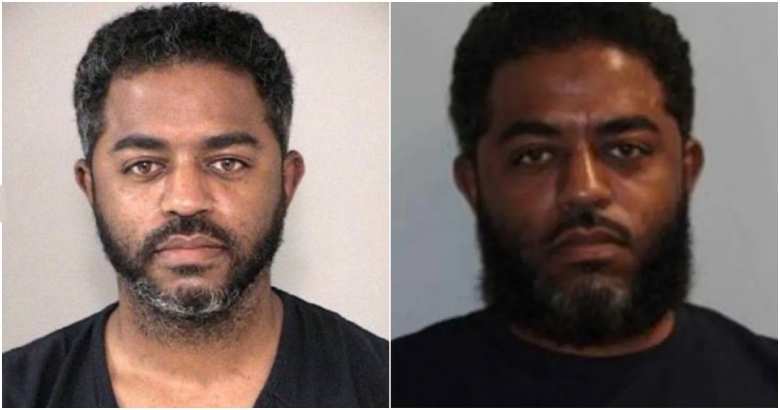
The Masjid Bilal ISGH mosque in Houston, Texas, reportedly attended by New Orleans terrorist Shamsud-Din Jabbar, has come under fire for instructing its members not to cooperate with FBI investigators. Instead, the mosque advised its congregation to refer all inquiries to the Council on American-Islamic Relations (CAIR) or the Islamic Society of Greater Houston (ISGH). Critics have condemned the move, labeling it an obstruction to justice during a critical counter-terrorism investigation.
Shamsud-Din Jabbar, a 42-year-old U.S. Army veteran who converted to Islam before carrying out a deadly attack in New Orleans, is believed to have been associated with Masjid Bilal ISGH. According to family members, Jabbar’s behavior had become increasingly erratic in recent years, leading to strained relationships and limited access to his children. His ex-wife’s husband, Dwayne Marsh, recounted disturbing changes in Jabbar, including drastic grooming alterations and unpredictable actions that raised alarm.
Jabbar’s transition into a predominantly Muslim community north of Houston approximately a year ago coincided with his attendance at the mosque. Following the New Orleans attack, which is being investigated as an act of terror, the FBI began examining Jabbar’s background and potential connections to radical influences in the area, including Masjid Bilal ISGH.
In the wake of the New Orleans tragedy, Masjid Bilal ISGH issued a statement to its congregation through Facebook, sparking outrage and criticism. The message, signed by mosque leadership, urged members to avoid speaking to both the media and the FBI. It instructed individuals contacted by law enforcement to redirect inquiries to CAIR or ISGH.
The full statement reads:
Alaikum Brothers and Sisters,
I’m sure many of you have heard about the tragic events that took place in New Orleans this morning that are now being classified as an “act of terror” by the FBI.
I want to emphasize the importance of everyone to stay very vigilant and aware of your surroundings.
The safety of our community is the most important thing.
If anyone is contacted by the media, it is very important that you do not respond. If approached by the FBI and a response is necessary, please refer to CAIR and ISGH.
It is crucial that we stay united at this time as we condemn these terrible acts. Please stay safe.
JazakAllahu Khairun,
Masjid Bilal Management
Critics argue that the mosque’s directive undermines law enforcement’s ability to gather critical information and raises concerns about transparency within the community.
The mosque’s decision to involve CAIR—a group with a history of controversial ties to extremist organizations—has intensified scrutiny. Some community leaders and counter-terrorism experts view the guidance as an attempt to shield potential connections from public and governmental examination.
“This type of response erodes trust between law enforcement and communities. It obstructs justice and hampers investigations that are vital to national security,” said a former FBI agent specializing in domestic terrorism.
The controversy has also reignited debates about the balance between civil liberties and counter-terrorism efforts. Advocates for the mosque argue that the directive was intended to protect the rights of its members, while critics contend that it casts suspicion over the institution and its leadership.
The investigation into Jabbar’s life has revealed troubling details about his transformation from a U.S. Army staff sergeant to a radicalized terrorist. Discharged from the Army Reserve in 2020, Jabbar’s family described his descent into erratic behavior and isolation following his conversion to Islam.
His move to the Houston area placed him in a predominantly Muslim neighborhood, where he reportedly began attending Masjid Bilal ISGH. FBI investigators have since descended on the mosque, questioning its potential role in Jabbar’s radicalization and exploring links to extremist groups.
The attack in New Orleans, which left multiple victims dead and injured, is being treated as a premeditated act of terror. Law enforcement officials continue to examine whether Jabbar acted alone or was influenced by broader networks.
The FBI and local law enforcement agencies are urging greater transparency and cooperation from Masjid Bilal ISGH. Meanwhile, public discourse surrounding the incident has heightened scrutiny of organizations like CAIR and ISGH, with critics demanding accountability for their alleged ties to radical ideologies.
The tragic events in New Orleans and the subsequent controversy surrounding Masjid Bilal ISGH highlight the challenges of balancing community relations, religious freedom, and national security. As the investigation unfolds, questions remain about how to effectively address the risks of radicalization while fostering trust and cooperation between law enforcement and local communities.
The post Houston Mosque Advises Members Not to Speak to FBI, Refers to CAIR appeared first on Daily News Cycle.
