
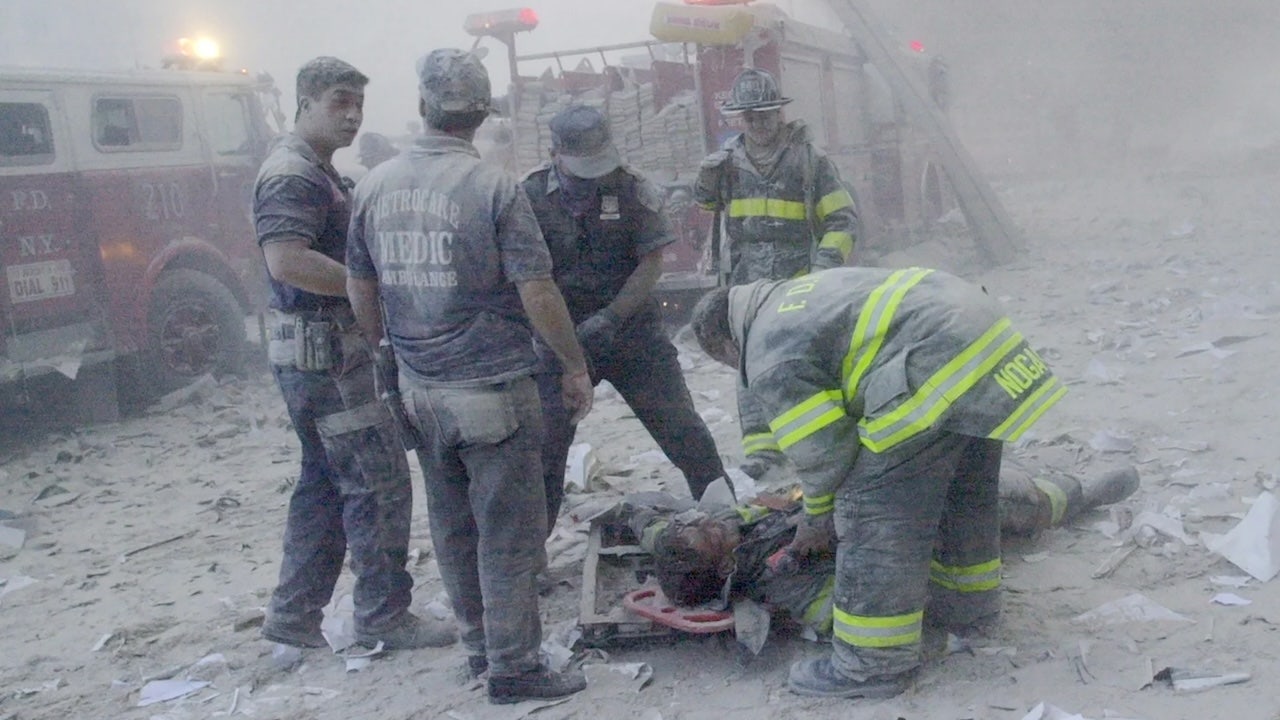
Ground Zero left scars that never really faded, and for some responders, the damage only became obvious years later. A volunteer EMT who rushed into the chaos after Sept. 11 later faced worsening breathing trouble, repeated hospital stays and surgery after doctors tied his condition to that day’s toxic exposure.
Those who were in Lower Manhattan on 9/11 were hit with a brutal mix of dust, debris and dangerous air. More than 400,000 people were exposed to contaminants, physical hazards and high-stress conditions in the aftermath, and many of those health problems are still surfacing now.
Mordechai Shedrowitzky, a Queens native and volunteer EMT, was living in Brooklyn when the attacks happened. After helping in his own neighborhood for much of the day, he went into Lower Manhattan that evening to join the response, a move that would haunt his health for years.
He remembers the city as dark and disorienting, with no lights and no electricity as he came in from Brooklyn. Inside the tunnel, swirling debris filled the air, and when he reached South Street Seaport, the scene was so thick with dust that even the ambulance seemed to struggle through it.
Like many responders, he did not fully grasp the risk at the time. He and others spent long stretches outside the ambulances, talking with people and working through the wreckage, breathing in air no one yet understood was dangerous.
At first, he believed the ordeal was behind him. But over time, his asthma got worse, the coughing lingered longer, and what had once been a seasonal nuisance turned into something far more serious and disruptive.
Eventually, the symptoms escalated into frequent infections and hospitalizations. He began needing oral steroids, and even the strongest medications were no longer enough to keep the problem under control.
After years of worsening breathing issues, he was connected with the World Trade Center Health Program, where doctors classified his condition as 9/11-related. That led to a diagnosis of tracheobronchomalacia, a weakening of the windpipe and major airways that can make breathing painfully unstable.
Doctors later determined the condition was likely tied to years of severe asthma and repeated steroid use. In 2024, he underwent a tracheobronchoplasty, a procedure designed to reinforce the trachea and bronchi so they would not collapse as easily during breathing.
Recovery has brought real relief, even if it has not erased everything. Two years after the procedure, he said he felt much better and hoped to return to work as a physical therapist, though he still deals with the occasional infection.
The effects reached far beyond his own body. As a father of six and grandfather of two, he said the illness made it hard to lift his children, talk to them for long periods or stay present during the years when they needed him most.
Dr. Denise Harrison, who has worked in post-9/11 care since 2002, said the health problems tied to the attacks remain active and complicated. She explained that the dust from Ground Zero was highly alkaline and irritating to the airways, with particles affecting both the upper and lower respiratory tract.
She also noted that the fallout was not limited to one type of illness. Patients often show up with asthma, sinus problems, COPD and reflux-related issues, while others deal with PTSD at the same time, making treatment more tangled than a simple one-disease fix.
The World Trade Center Health Program has grown into a massive long-term care system, with more than 130,000 enrolled members as of March 31, 2025. It continues to operate through major health systems across the region, and experts say the medical consequences from that day are still unfolding.
Shedrowitzky wants other responders to take their symptoms seriously and not brush them off. His advice is blunt: get checked, stay monitored and do not assume the problem will simply disappear with time.
Harrison said the research is still moving, and the symptoms are still showing up decades later. For many survivors and responders, the story of 9/11 is not sealed in the past, because their lungs, energy and daily lives are still paying the price.

1 Comment
why keep report secret & released now why not earlier IE 2004