
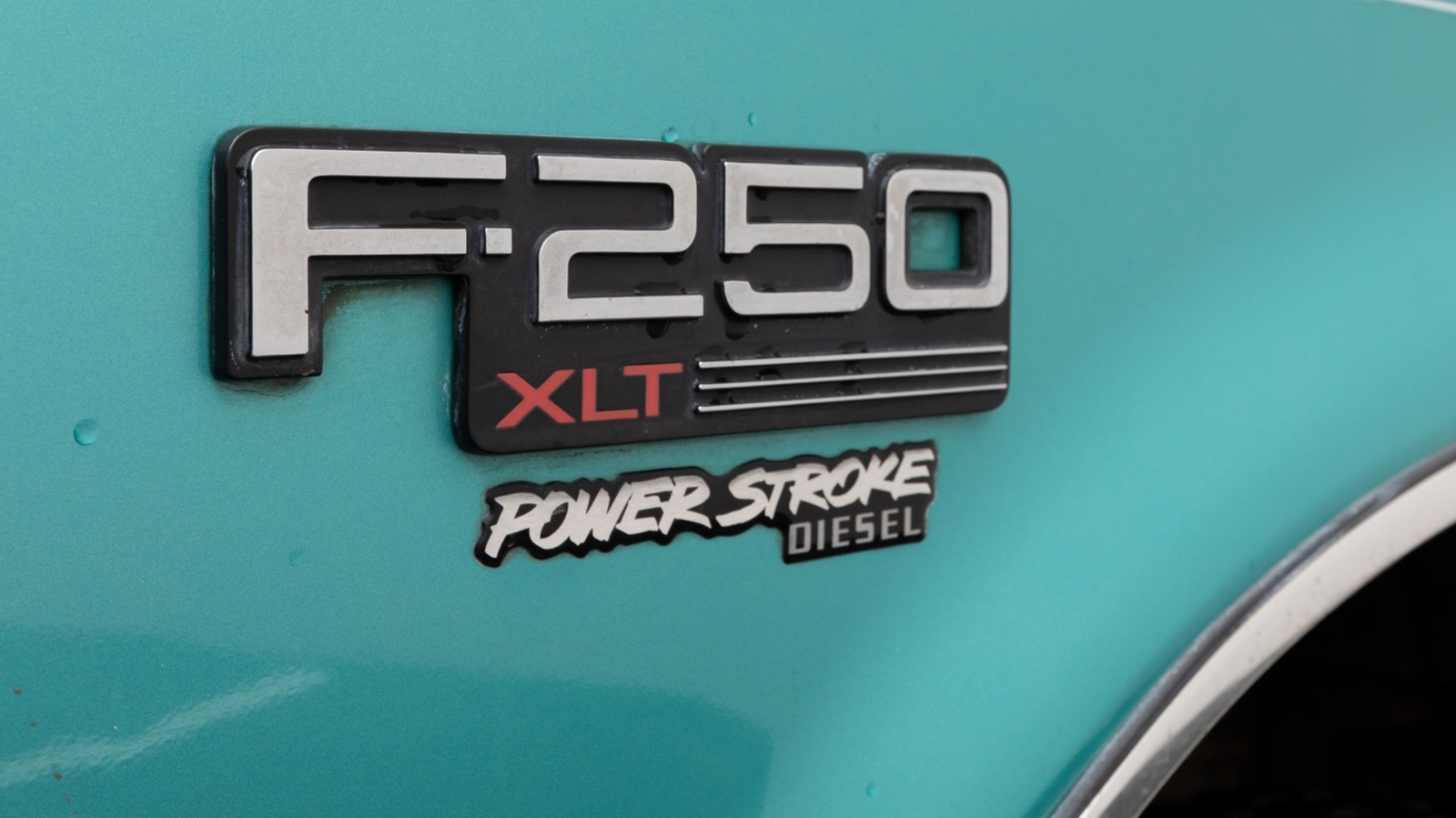
The Ford 6.0 and 7.3 Power Stroke diesels sit in a weird sweet spot for truck fans. One is remembered for stout reliability and old-school toughness, while the other brought more power but also a long trail of headaches that still follows its name around.
The 7.3 Power Stroke earned its reputation the hard way. It arrived in 1994 as Ford’s first engine to wear the Power Stroke badge, continuing the company’s partnership with Navistar, and it quickly became one of the most respected American diesel engines ever built.
The 6.0 came along in 2003 to replace it, and on paper it looked like a clear step forward. Even with less displacement than the 7.3, it delivered stronger numbers by the end of its run, reaching 325 horsepower and 570 lb-ft of torque.
That jump in output came from a few big changes under the hood. Ford used a variable-geometry Garrett turbocharger, added four valves per cylinder, and ran a direct injection setup at up to 3,600 psi to squeeze more power and cleaner combustion out of the smaller engine.
The problem was that some of those upgrades also opened the door to trouble. Carbon buildup could make the turbo vanes stick, dirty oil could mess with the injectors, and the head bolt design became infamous for leading to blown head gaskets.
That last issue is a major reason the 6.0 has such a rough reputation. The engine became known for its “Six Point Blow” nickname, and for plenty of owners that was not just a joke, but an expensive reality.
Even so, the 6.0 was trying to do more than just make horsepower. It was one of the first Ford and Navistar diesels to face tougher emissions rules, which meant more complexity and more pressure to balance power, cleanliness, and durability at the same time.
The 7.3, by contrast, kept things more straightforward. It did not need diesel exhaust fluid, it did not rely on a diesel particulate filter regeneration cycle, and its fixed-geometry turbo avoided the sticky vane problem that could plague the 6.0.
That does not mean the 7.3 was flawless. Final-year engines could suffer from camshaft position sensor failures, turbo issues, fuel filter housing leaks, overheating, and plenty of noise, while earlier versions had their own wiring harness problems.
Still, the 7.3’s flaws were usually easier to live with. Many of its issues were nuisance-level problems instead of the kind that send an owner straight into a teardown, and that matters a lot when a truck is supposed to work for a living.
The 7.3 also has a strong track record for simple, durable performance. Early versions made 210 horsepower and 425 lb-ft of torque, and later updates nudged those numbers upward to a high point of 275 horsepower and 525 lb-ft with a manual transmission.
That means the 7.3 never chased power quite as hard as the 6.0, but it aged better because of it. Less complexity usually meant fewer surprises, and fewer surprises are exactly what diesel buyers tend to want when they are hauling, towing, or piling on miles.
So the contrast is pretty clear. The 6.0 brought more muscle and better modernized breathing, but the 7.3 kept the cleaner reputation because it stayed closer to the kind of diesel design that owners could trust without constantly bracing for a costly repair.
