
BMW has spent decades proving that good design can hit hard without shouting. From elegant roadsters to track-bred coupes and practical wagons, the brand has kept finding new ways to make a familiar badge feel fresh, sharp, and worth staring at a little too long.
What makes these cars stand out is not just age or rarity, but attitude. Some lean into graceful curves, some go full-on angular aggression, and a few manage to sit right in the sweet spot where performance, proportion, and style all come together without trying too hard.
The BMW M1 still feels like a rolled-up lightning bolt from the late 1970s. Giorgetto Giugiaro gave it a low, wedge-shaped nose, tiny kidney grilles, and clean sides that made it look built for speed even when parked, which is exactly why it still turns heads so easily.
The 1 Series M Coupe brought that same spirit back in a smaller, tougher package. Wide arches, big intakes, and a serious front end gave it a street-fighter vibe, and the whole car looked like BMW had taken a compact coupe and turned the aggression dial all the way up.
The 507 Roadster is a different kind of knockout, one that wins with pure elegance. Its long hood, flowing fenders, and smooth roadster shape made it one of the prettiest European cars of the 1950s, and its rarity only makes the design feel even more special.
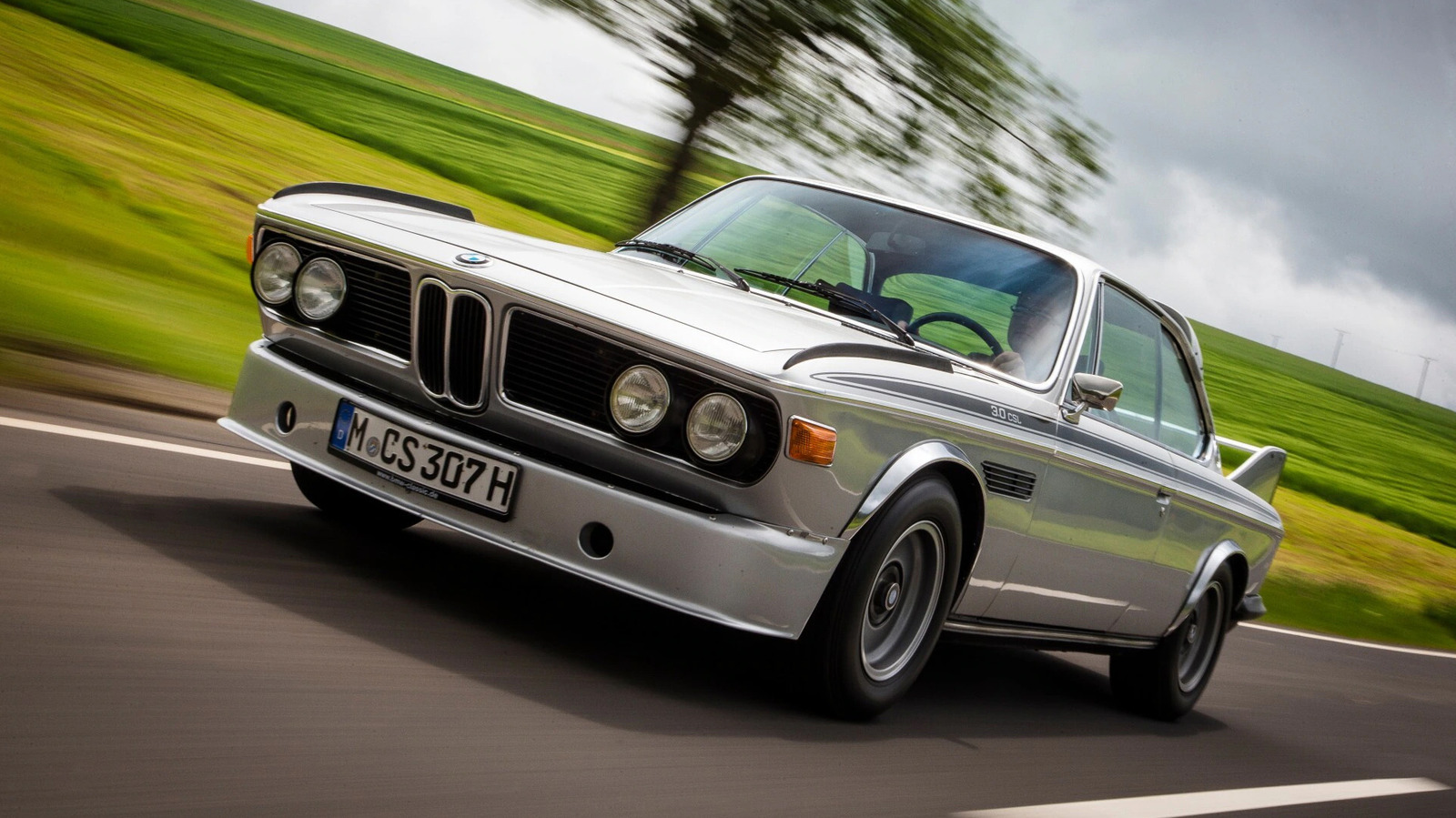
Then there is the E9 3.0 CSL, which added attitude to BMW’s grand touring formula. The shark nose front end, the finned bodywork, and the big rear wing on the batmobile version made it look like a car that had escaped from a racing fantasy and decided to stay on the street.
The first 8 Series, the E31, took that wedge theme and made it more refined. It had the same low, sleek presence and slim grille treatment, but the details were smoother and more restrained, giving it a high-end look that still feels cool because it never tries to overpower you.
The original E30 M3 took the opposite route and made bluntness look beautiful. Its squared-off front, boxy arches, and no-nonsense stance were all about function, but the result became an icon because it looked focused, ready, and just plain fast from every angle.
BMW later revisited that formula with the M2 CS, and the formula still works. A larger splitter, hood vent, and carbon ducktail spoiler add just enough edge to make the car feel meaner without wrecking the compact shape that makes it so appealing in the first place.
The Z8 Roadster took inspiration from the 507 and turned it into a modern classic. It stretched the hood, tightened the lines, and kept the proportions dramatic, with the V8 up front giving the whole thing the kind of presence that makes a driveway look more expensive on sight.
Among BMW wagons, the M3 Touring is the one that makes the strongest visual case. The larger body gives the vertical kidney grille room to breathe, while the sharp lines running through the side panels help the car look lean instead of bulky, which is harder to pull off than it sounds.
The M8 Competition brings that same clean tension to a bigger grand touring shape. It borrows the wedge-like profile of earlier BMWs, keeps the front end tidy, and lets the roofline flow into the rear in a way that feels polished, muscular, and just a little dramatic.
On the weirder, cooler end of the spectrum, the Z3 Coupe remains impossible to ignore. Its shooting-brake shape earned it the “clown shoe” nickname, but the long hood and stubby rear make the proportions strangely perfect, especially once you see how much personality BMW squeezed into such a small body.
The E24 6 Series and 2000 CS show BMW learning how to mix sharp lines with older-school elegance. The E24 sharpened the shark nose and added a crisp roofline, while the 2000 CS kept things cleaner and more delicate, proving the brand could be stylish without leaning on excess.
Later cars like the E46 M3 Coupe and M4 GTS kept that balance alive in their own ways. The E46 softened the edges just enough to become a modern favorite, while the GTS leaned into carbon fiber, a big splitter, and a rear wing to make sure the car looked every bit as serious as it drove.
And then there is the 2002 Turbo, which brought compact BMW design into full attack mode. The big air dam, bolt-on arches, and ducktail spoiler gave the small 02 chassis a brutal, race-ready look that still feels exciting because it looks like it was built to move before the engine even fires.
