
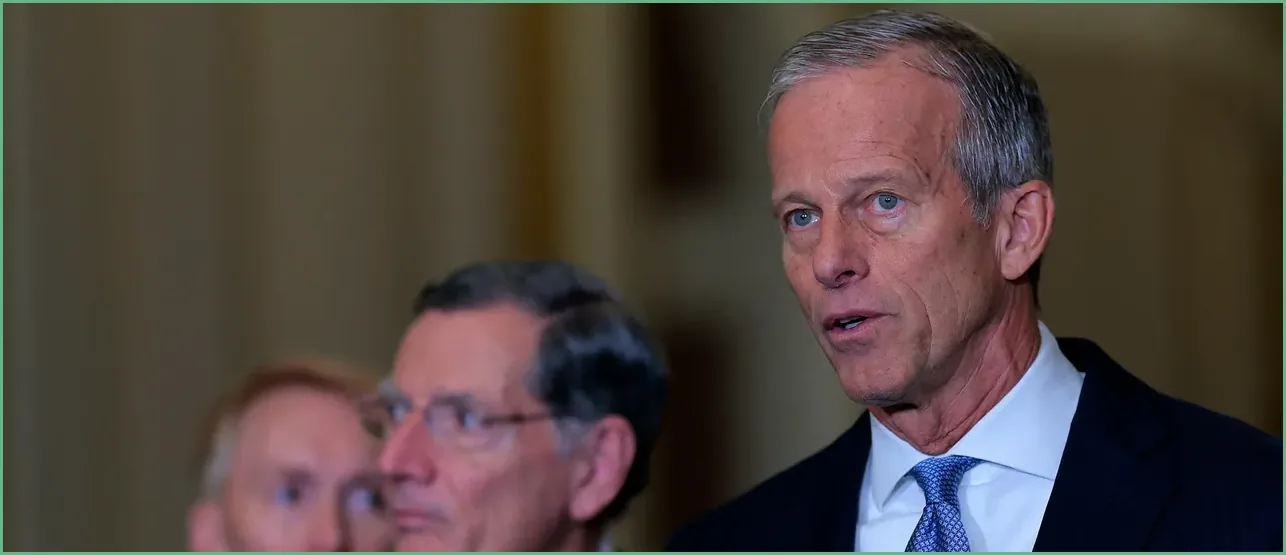
The Senate is set to push through a roughly 97-member group of President Trump’s nominees after a short-lived Democratic blockade failed, clearing a path for a massive round of confirmations. This move follows a rules fight over which slots can ride in package votes, a rebuke to delay tactics, and a Republican effort to finish the backlog and advance the president’s team. The fight highlighted the partisan push-and-pull over nominations and the new GOP strategy to confirm many picks at once.
Republicans moved quickly after Democrats flagged a technical eligibility issue and briefly stalled the package. Party leaders refiled and expanded the group, turning an 88-nominee plan into a near-100 slate ready for a single vote. The change was aimed at overcoming obstruction and restoring momentum to the confirmation calendar.
const observer = new MutationObserver((mutations) => { const adDivToHide = document.querySelector("#dailycaller_incontent_1"); if (adDivToHide && dc_noads_page) { adDivToHide.classList.add("hide-premium", "hide-free"); observer.disconnect(); console.log("Ad div found and hidden"); } }); observer.observe(document.body, { childList: true, subtree: true });
The hiccup centered on one nominee, Sara Bailey, who was deemed ineligible for the group because her slot is considered senior-level and comparable to a cabinet position. That technicality triggered a brief standstill but did not stop Republicans from reassembling a larger roster and moving ahead. The episode underscored how Senate rules can be used to slow confirmations, and how the majority can respond.
Senate Majority Leader John Thune framed the delay as political revenge, saying the opposition “still can’t deal with the fact that President Trump won last November.” He added bluntly, “And so they have held up every single one – every single one – of his nominations in revenge.” Those exact words landed on the floor as part of a direct criticism of Democratic tactics. Republican messaging has leaned hard on the idea that obstruction, not qualification, has been the chief barrier.
The new package includes a mix of roles, from inspector general slots like Anthony D’Esposito’s appointment at the Department of Labor to a slate of 13 U.S. attorney nominees and many lower-level executive branch posts. Those confirmations matter because they staff the government and put career and political appointees in place to implement policy. Moving them in a bloc accelerates staffing and reduces the mileage Democrats get from slowing individual nominees one by one.
(new Image()).src = 'https://capi.connatix.com/tr/si?token=739c4263-c671-4316-b7cf-ecd244900844&cid=9c4d09f1-aa3e-4da1-ad63-362d562ecfad'; cnx.cmd.push(function() { cnx({ playerId: "739c4263-c671-4316-b7cf-ecd244900844" }).render("59f64f116598417b8d610477330f5a3e"); });
Republicans point to the raw numbers to make their case: the Senate had confirmed 314 civilian nominees as of the evening the package was filed. Adding the roughly 97-member bloc would push that total past 410 civilian confirmations in the first year of the administration’s second term. GOP leaders use that math to argue they are acting faster than the prior Democratic administration did in comparable stretches.
Part of the reason the bloc tactic works is a precedent change earlier in the year that streamlined confirmations, though it explicitly excluded certain cabinet-level and judicial positions from group votes. That compromise allowed faster consideration of many executive branch nominees while preserving extra scrutiny for the highest offices. Democrats have pushed back against the shortcut whenever it risks putting controversial picks through quickly.
Bennet his short-lived blockade of Trump’s nominees Thursday before Republicans added more individuals to the resolution. The Colorado senator also released a statement asserting, “I will not allow unqualified nominees, this White House, or the President to undermine the rule of law and our national security,” a line that framed his objection in terms of qualification and oversight. That argument resonated with some, but not enough to stop the expanded group from moving forward.
const observer2 = new MutationObserver((mutations) => { const adDivToHide2 = document.querySelector("#dailycaller_incontent_2"); if (adDivToHide2 && dc_noads_page) { adDivToHide2.classList.add("hide-premium", "hide-free"); observer2.disconnect(); console.log("Ad div2 found and hidden"); } }); observer2.observe(document.body, { childList: true, subtree: true });
Thune and other Republicans also argue the backlog is essentially cleared after using group votes and new procedures, noting that more than 150 nominees had been waiting before the change in precedent. Speeding through confirmations is being pitched as common-sense governance to get the administration’s team in place. Democrats see the maneuver as sidestepping full scrutiny, so the debate over process will keep flaring.
https://x.com/SenatorBennet/status/1996704294788387218
const observer3 = new MutationObserver((mutations) => { const adDivToHide3 = document.querySelector("#dailycaller_incontent_3"); if (adDivToHide3 && dc_noads_page) { adDivToHide3.classList.add("hide-premium", "hide-free"); observer3.disconnect(); console.log("Ad div found and hidden"); } }); observer3.observe(document.body, { childList: true, subtree: true });
