
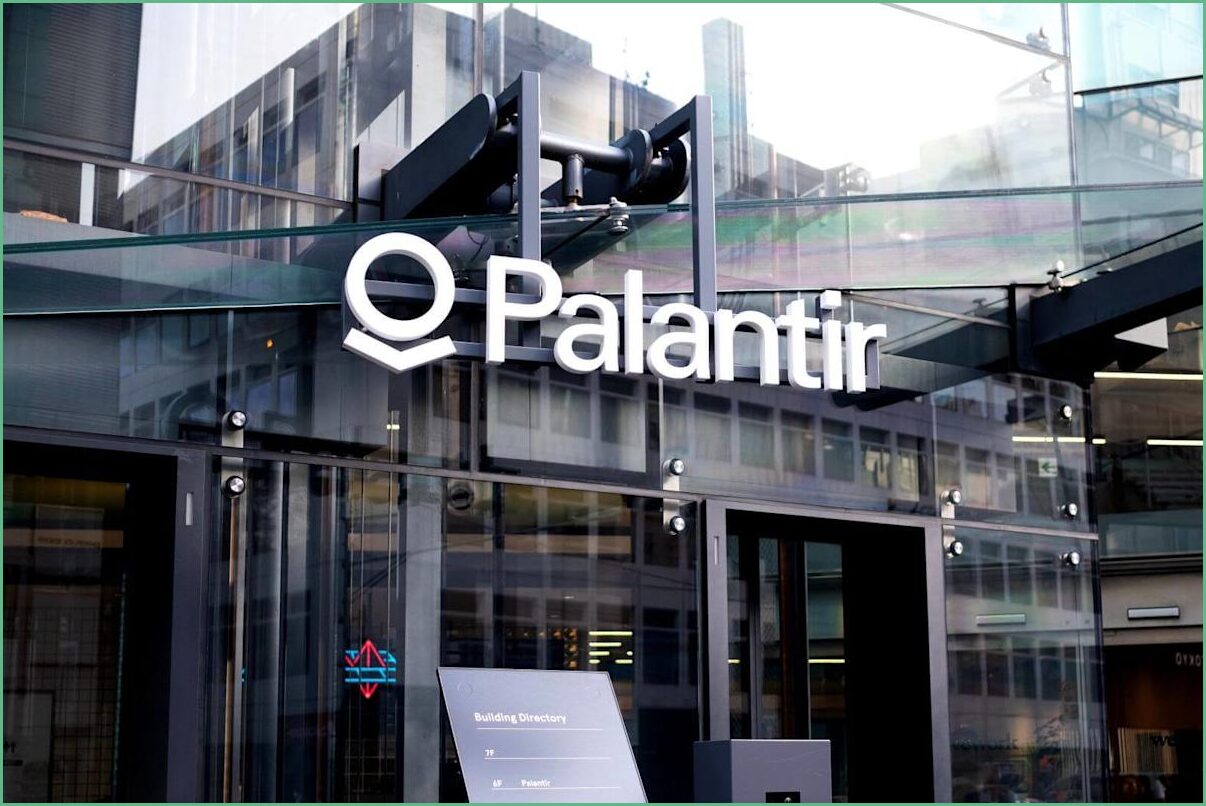
Palantir’s rise has gone from niche government work to a front-row seat in the AI boom, and this article breaks down why investors should circle February 2 on their calendars when the company reports fiscal 2025 fourth-quarter results. I’ll cover the company’s AI push, recent financial momentum, the valuation question, Wall Street’s mixed view, and why the Feb. 2 report matters for the next leg of the story. Read on for a clear, no-nonsense look at where Palantir stands right now and what to expect when the market closes on that date.
Palantir leaned hard into generative AI with its Artificial Intelligence Platform, or AIP, and that move is starting to show traction across both enterprise and government customers. AIP lets organizations embed generative models into operational workflows, which shortens decision cycles and automates analysis. That capability has become the company’s loudest argument for why it can compete with larger software names on growth and profitability.
Adoption for AIP accelerated through 2024 and into 2025, and management says more customers are using Palantir to run real operational work rather than just for analytics. Government deals, especially in defense and intelligence, still provide a stable base and long runway. At the same time, commercial customers are signing larger contracts and pushing total contract value much higher quarter after quarter.
Those contract wins show up in the numbers. Quarterly revenue jumped dramatically in recent reports, and U.S. commercial revenue showed particularly rapid expansion. Profitability has improved too, with net income rising sharply and adjusted earnings beating expectations, which for many investors is the clearest proof the business is scaling.
Palantir’s government business remains a bedrock, and that stability lets the company take risks as it expands commercial offerings. The company reported record total contract value in a recent quarter, with U.S. commercial deals growing especially fast. Customer count is rising, which suggests AIP adoption isn’t limited to a handful of marquee names but is spreading across industries.
All of that momentum has not erased the central debate: the valuation. PLTR trades at a steep premium on forward earnings and sales compared with sector medians, and those multiples fuel a lot of the skepticism you still hear from cautious investors. Paying for high growth is one thing, paying for expectations that may be baked in is another.
The premium valuation creates two camps. Growth investors argue the company is worth the price if AIP adoption keeps accelerating and margins stay healthy. Value and risk-conscious investors point to the sky-high multiples and worry about what a miss could do to the stock price, especially in a market that’s been sensitive to AI hype.
Short-term market moves have been a mixed bag, with the stock pulling back after a rip-roaring multi-year run. That pullback has created fresh debate about whether now is a buying opportunity or a sign of a top. Either way, the upcoming February 2 earnings release will be a key catalyst for whichever case investors favor.
Management set expectations going into Q4 with revenue guidance and raised full-year targets, including specific strength flagged in U.S. commercial revenue. Those forward numbers are part of what traders will parse closely on Feb. 2. Beat-and-raise scenarios usually send surprise upside while any conservative tweaks to guidance can trigger outsized reactions in a richly priced name.
Wall Street’s view of Palantir is split, which should surprise no one. Analysts are spread across strong buys, holds, and sells, and the consensus rating lands in the middle. Average price targets imply upside from current levels, while the most bullish projections assign substantially more room to run if execution continues at current speed.
Investors weighing a stake in PLTR need to balance execution risk against growth opportunity. The company is no longer a speculative research play; it’s delivering sizable revenue and improving margins. Still, rapid growth expectations mean any slowdown or contraction in government spending or commercial adoption could hit the stock hard.
Beyond top-line figures, watch contract structure and customer concentration when the results drop. Multi-year deals with large total contract value matter more than one-off sales, because they lock in recurring revenue and make future forecasting cleaner. A healthy mix of government and commercial multi-year agreements reduces a lot of headline risk.
Palantir’s cash position and profitability improvements give it room to invest in product and market expansion without burning cash. That financial flexibility is notable compared with many high-growth peers that still run large losses. If management keeps growing margins and converting deals into recurring revenue, the valuation debate will shift toward growth justification rather than skepticism.
Risk factors remain obvious: valuation, dependency on government contracts, and the need to sustain commercial adoption at scale. Any hiccup on those fronts could reset expectations quickly. Smart investors will look at Q4 for signs those risks are being managed rather than dismissed.
February 2 is the next big checkpoint, and it will reveal whether the company’s narrative can translate into sustained, measurable results. For investors, the decision after that report comes down to conviction in AIP and patience for multiple compression or expansion. Expect heightened volatility around the release and be ready for decisive price action based on guidance and contract disclosures.
