
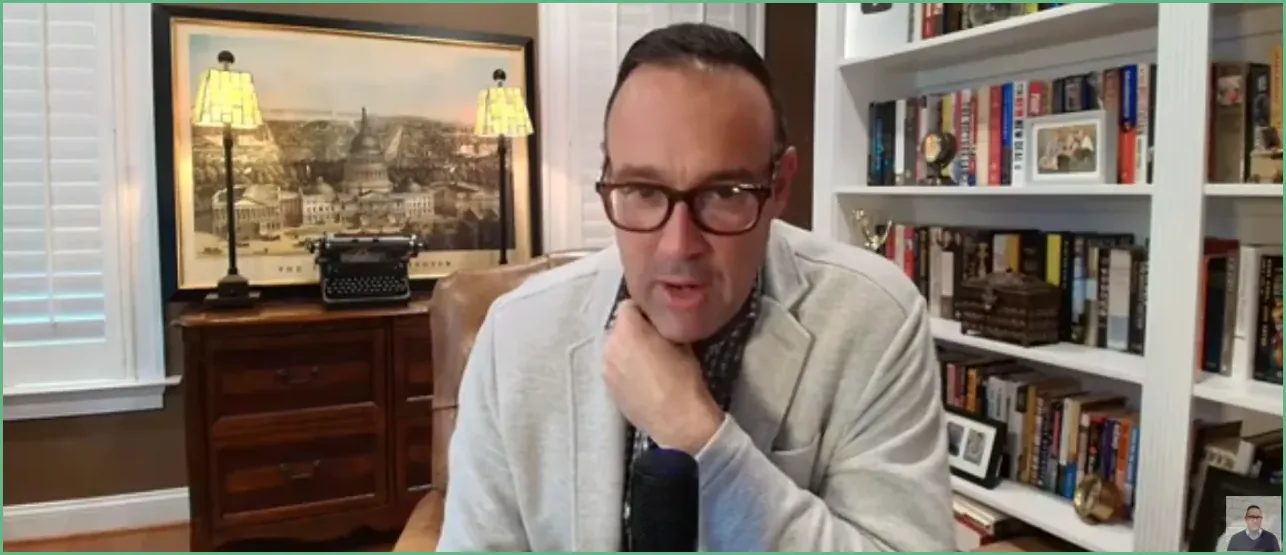
Chris Cillizza warned viewers that Democrats are misreading Vice President JD Vance, arguing Vance’s profile and polling strength make him a genuine threat for 2028. Cillizza pointed to fresh polling and high-profile endorsements to explain why Democrats should take Vance seriously. The piece traces the early back-and-forth in Republican circles, reactions from commentators, and what the numbers might mean for the coming primary. It presents a clear Republican-leaning take that treats Vance as a rising force rather than a marginal figure.
On his live stream, Cillizza made the blunt case that Democrats are underestimating Vance, and he repeated that assessment after reflecting on new polling. The Emerson survey gave Vance notable favorability and showed him competitive in early matchups, which Cillizza used to underline his point. Reacting to the poll on X, Cillizza that the numbers reinforced his view that Democrats fail to grasp “Vance’s appeal.”
For Republicans, the practical takeaway is simple: Vance is not a placeholder candidate or a novelty. He has a clear conservative brand, a working-class origin story that resonates with key voters, and a visibility that many rivals lack. That combination makes him particularly dangerous for Democrats who assume their usual playbook will neutralize him.
On the live stream Cillizza was candid about the intra-party field, saying, “I’m pretty bullish on JD Vance,” and adding, “I think Democrats underestimate JD Vance at their own peril, which I think they’re doing.” Those exact words carried weight because they came from a commentator who has followed national politics for years and can read both media narratives and polling trends. The quote cuts to the chase: don’t write him off.
There’s also chatter inside GOP circles about who could realistically challenge Vance for the nomination, and Cillizza noted one obvious name. He suggested Donald Trump Jr. might be the only Republican with a shot at outpacing Vance in the primary, though he doubted a campaign against Vance was likely given the existing relationships. That dynamic matters because it shapes who raises money, who organizes, and who decides to sit out or jump in early.
Public endorsements and comments from key figures add momentum to Vance’s story. President Trump has signaled support for Vance carrying the MAGA torch in 2028, and other influential Republicans have praised his potential. Those nods make it harder for Democrats to dismiss him as fringe and give GOP voters a clear signal that Vance is a mainstream, electable option in their field.
Analysts looking at early primary trends are also weighing historical patterns that favor early frontrunners, and some see Vance in that role. When commentators point out that early favorites often go on to win nominations, they are flagging a structural advantage Vance could exploit if he consolidates backing and avoids damaging fights. That scenario explains why Republican strategists are quietly taking steps to anticipate a Vance-led contest rather than assuming someone else will emerge.
Political operatives and pundits will keep parsing polls and endorsements as the calendar moves closer to 2028, but the message from Cillizza is straightforward. Democrats shouldn’t assume a weak spot where there isn’t one, and Republicans should prepare to back a strong nominee if Vance becomes the default choice.
WATCH:
