
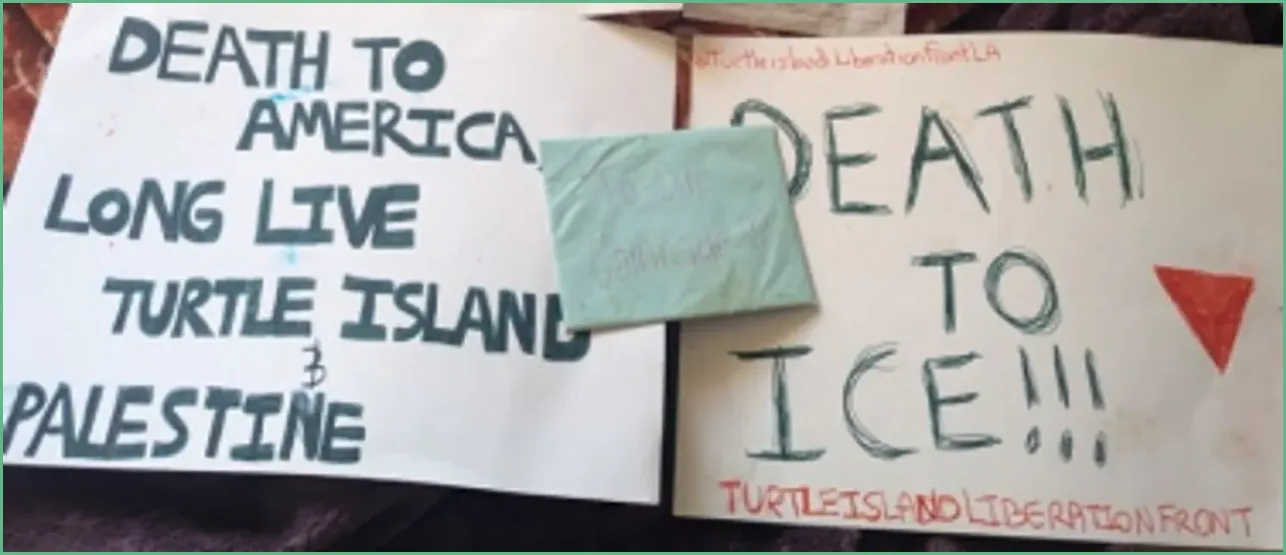
The FBI says undercover operatives and a paid informant infiltrated a small but dangerous leftist cell in California before a weekend raid stopped an alleged New Year’s Eve bombing plan. Court records released after the arrests show suspects openly discussed plans, kept what one called a “terrorist diary,” and handed over a document labeled “Operation Midnight Sun,” giving investigators the evidence they needed to act. This article lays out the key details, the evidence cited by the bureau, and why conservative leaders demanded a focused response to domestic left-wing terror.
The case centers on Turtle Island Liberation Front, a small group federal prosecutors say plotted synchronized bombings across Los Angeles at midnight on New Year’s Eve. Officials say an undercover FBI agent and a paid informant met repeatedly with members, gathering admissions and documents that tied suspects to explosive testing and concrete operational planning. The operation culminated in a coordinated arrest after surveillance and a desert meetup where authorities say the defendants tested bomb components.
According to the complaint, defendant Zachary Page told operatives he was “100,000 percent” sure the FBI was tracking the group ahead of the planned attack, a comment that undercuts any later claim of surprise. Audrey Carroll allegedly boasted in a message to the informant, “I kind of had this notebook where I wrote down multiple plans that never happened or got delayed,” followed by the exact line: “So it’s like / my terrorist diary / lmaooooo / I have to get rid of that.”
The informant also received a handwritten plan titled “Operation Midnight Sun,” which outlined target timing and locations, the kind of tangible evidence prosecutors need to prove conspiracy. That document, combined with observed travel to a remote campsite where alleged bomb-making parts were staged, gave agents probable cause to move. The bureau describes the informant as “reliable,” noting prior assistance in other matters and ongoing cooperation since 2021.
Federal counterterrorism experts and observers told conservative outlets this kind of infiltration is difficult but crucial, especially when left-wing cells emphasize operational security. “The amount of time these groups spend thinking about what they call ‘security culture’ is significant,” one analyst said, pointing to decades of tactics used to evade surveillance. Those precautions make the informant role more valuable and riskier, but also more essential to preventing real-world attacks.
Carroll allegedly said during a road trip, “What we’re doing will be considered a terrorist act,” according to the charging documents, an admission that fits the pattern agents described. The group’s public rhetoric also appears extreme: prosecutors highlighted social posts that read, “Death to America. Death to colonizers. Death to capitalism. Death to imperialism. Is not violent.” and then, “Support of these structures is.” Such language, paired with operational plans, moved this case to the top of DOJ priorities.
Department of Justice officials told reporters the probe followed directives from the Trump administration and Attorney General Pam Bondi to prioritize left-wing domestic terror threats. That political leadership gave federal law enforcement the green light to pursue cells that previous administrations sometimes deprioritized, and conservatives argue the results show that focus was warranted. The arrests will be used by allies to argue for continued emphasis on all violent extremism, not just one ideology.
Legal proceedings are already underway; court filings list conspiracy and possession of an unregistered explosive device among the charges, and defendants made their in court Monday. Lawyers for the accused have not been detailed in initial records, and the coming weeks will reveal how strong the government’s case appears when examined under cross-examination. For conservatives watching national security, the key question is whether prosecutors can maintain the evidence chain the informant helped create.
For now, law enforcement officials are pointing to the case as a win: operatives penetrated a secretive group, collected admissions and plans, and disrupted what prosecutors say could have been coordinated carnage in a major city. The episode underscores how a focused federal strategy aimed at emerging left-wing terror networks can produce arrests and remove dangerous actors from the streets. That outcome is likely to strengthen calls for sustained resources and clear directives for targeting violent domestic extremists across the ideological spectrum.

