
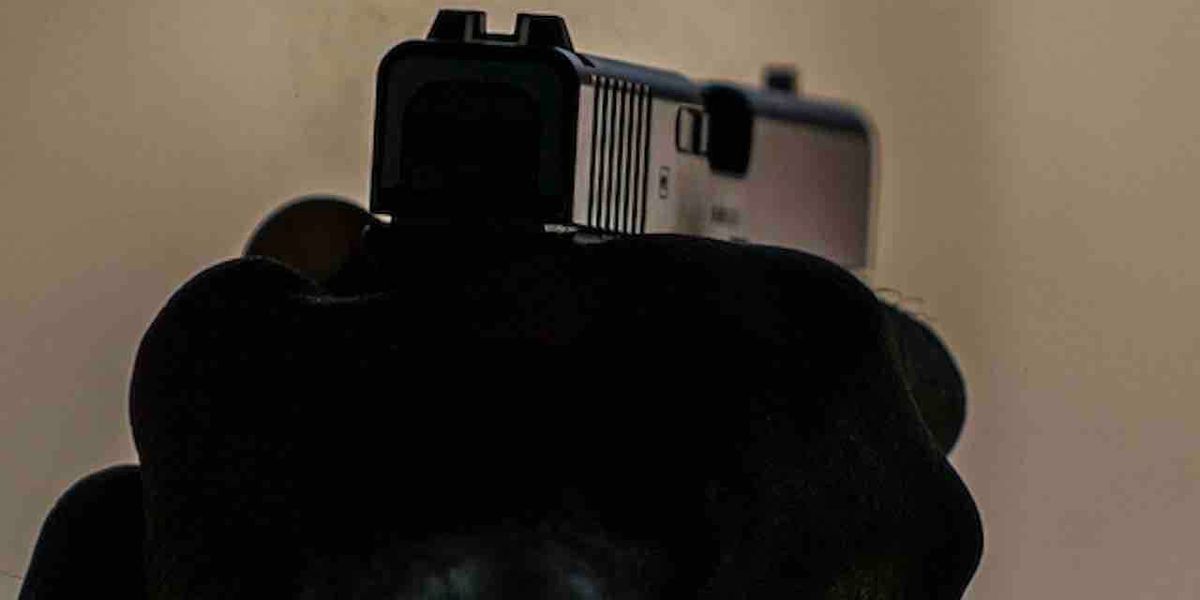
An overnight break-in in Oklahoma turned deadly after an elderly homeowner was jolted awake by an intruder and responded with gunfire. The case has put home security, self-defense, and the split-second pressure of a nighttime invasion back in the spotlight.
In many homes, the darkest hours are when people feel least prepared and most vulnerable. A sudden crash, a forced door, or the sound of someone moving where they should not be can turn a quiet night into a life-or-death moment in seconds.
According to the details in the case, the homeowner was asleep when the intruder entered the property. What followed was not a drawn-out confrontation, but a rapid and violent encounter that ended with the intruder shot and killed.
That kind of situation is exactly why so many Americans keep a firearm nearby. Supporters of gun rights say the Second Amendment is not an abstract idea, but a practical safeguard for ordinary people who may have only one chance to defend themselves when trouble comes through the door.
The age of the homeowner also adds another layer to the story. An elderly resident is not expected to physically overpower an attacker, especially in the middle of the night, and that reality makes the right to self-defense feel a lot less theoretical and a lot more immediate.
Home invasions carry a special kind of fear because they violate the most basic expectation of safety. A person can lock the windows, arm the alarms, and still understand that a determined criminal may ignore every boundary and force a confrontation inside the home itself.
Law enforcement responses in cases like this usually focus on the sequence of events, the location of everyone involved, and whether the homeowner faced an immediate threat. Those details matter, but they also tend to highlight how little time a person has to think when a stranger is breaking in and moving fast.
For many people, the story lands in the same place: when a criminal chooses to invade a home, the risk does not fall on the intruder alone. Families, seniors, and anyone sleeping behind a locked door can be left with no clean options, only the messy reality of defending themselves before the situation gets worse.
The broader crime problem keeps feeding that fear. When break-ins, robberies, and violent encounters stay in the headlines, more people look at personal protection not as a hobby or a statement, but as a basic part of responsible living.
That is why the debate around guns never really goes away. Critics and supporters may argue about policy in the abstract, but cases like this bring the discussion back to something far simpler: whether a homeowner should be expected to wait helplessly while a violent intruder closes the distance.
In moments like these, the issue is not politics in the usual polished sense. It is a flashlight in the dark, a door kicked open, an older man or woman forced to react, and the hard truth that some people only respect boundaries when they are met with force.
Police will sort through the scene, piece together the timeline, and determine exactly what happened inside that home. But for a lot of Americans, the larger lesson is already obvious, because the right to defend one’s own house means little if it disappears the second danger shows up at the threshold.
The details of one Oklahoma night are still enough to leave a mark. A sleeping homeowner, a violent intrusion, and a gun grabbed in a panic can turn a house into a battlefield in a matter of moments, and that is a reality no law-abiding family ever wants to face.
