
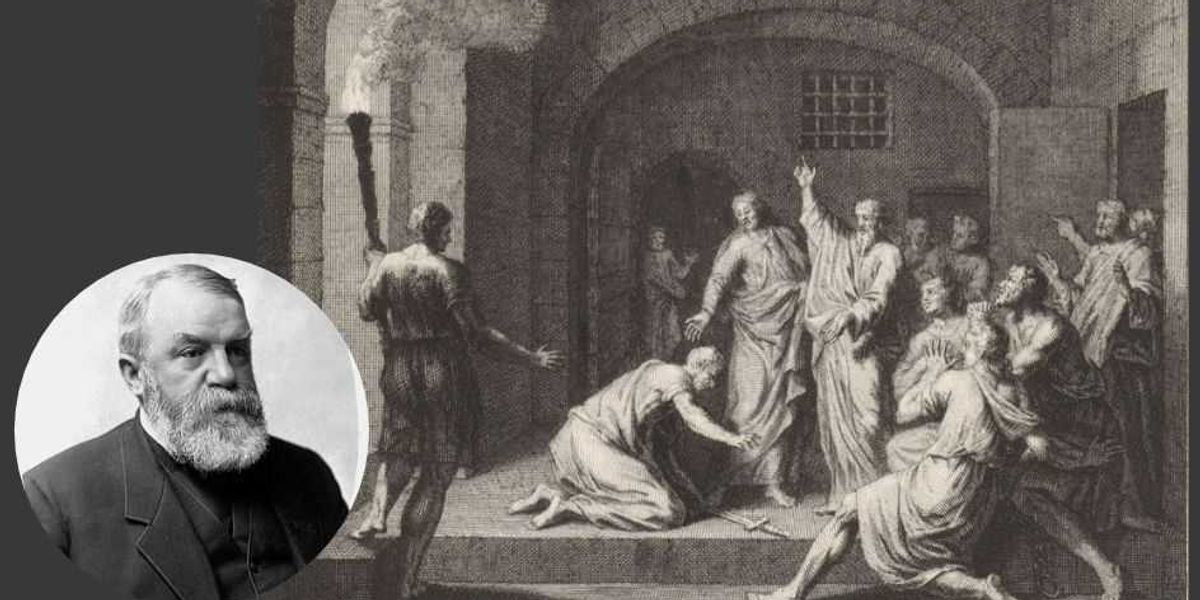
Thanksgiving can be loud, busy, and full of table talk, but D.L. Moody pushed it back toward something sharper and more personal. His words cut through the holiday noise and point straight at the heart of gratitude: not just counting blessings, but remembering the sacrifice behind them.
Moody’s message carried the kind of force that still lands today because it refuses to let thankfulness stay shallow. It asks for a response that is honest, humble, and rooted in faith, where gratitude is tied to grace and grace is tied to the cross.
For Moody, thanksgiving was never meant to be a polished holiday sentiment. It was a spiritual condition, one that grows when a person stops circling around comfort and starts facing the depth of what has been given.
That is why his most striking line still stands out: “He died for me”. In just four words, the whole shape of Christian gratitude comes into view, turning thanksgiving from a general mood into a deeply personal confession.
Moody’s approach is powerful because it does not treat gratitude like a seasonal accessory. It puts thanksgiving in the same room with sacrifice, mercy, and rescue, and suddenly the holiday feels less decorative and more demanding.
There is something bracing about that kind of honesty. It suggests that genuine thankfulness is not born from getting everything right, but from recognizing that the biggest gift was already given.
That idea gives Thanksgiving a different texture. Instead of centering only on abundance, it invites reflection on dependence, which can be a hard thing to admit in a culture that loves self-sufficiency.
Moody’s words also remind believers that gratitude should not stop at admiration. If “He died for me” is taken seriously, then thanksgiving becomes worship, and worship reshapes the way a person sees everything else.
There is a reason that simple truth endures. It is direct, memorable, and impossible to dress up without losing its power, which is exactly why it still resonates when the holiday rush starts to flatten meaning into routine.
Thanksgiving often gets framed by food, travel, football, and family drama, all of which have their place. But Moody’s insight pulls attention back to the center, where gratitude becomes less about atmosphere and more about memory, faith, and awe.
That shift matters because gratitude without depth fades fast. When thanksgiving is tied to sacrifice, it becomes sturdier, less dependent on mood, and more able to survive disappointment, stress, and ordinary days.
Moody’s perspective fits the season without being confined to it. It carries the kind of reminder people need long after the dishes are cleared and the leftovers are gone: the truest thanks are often the ones that come from remembering what could never have been earned.
