
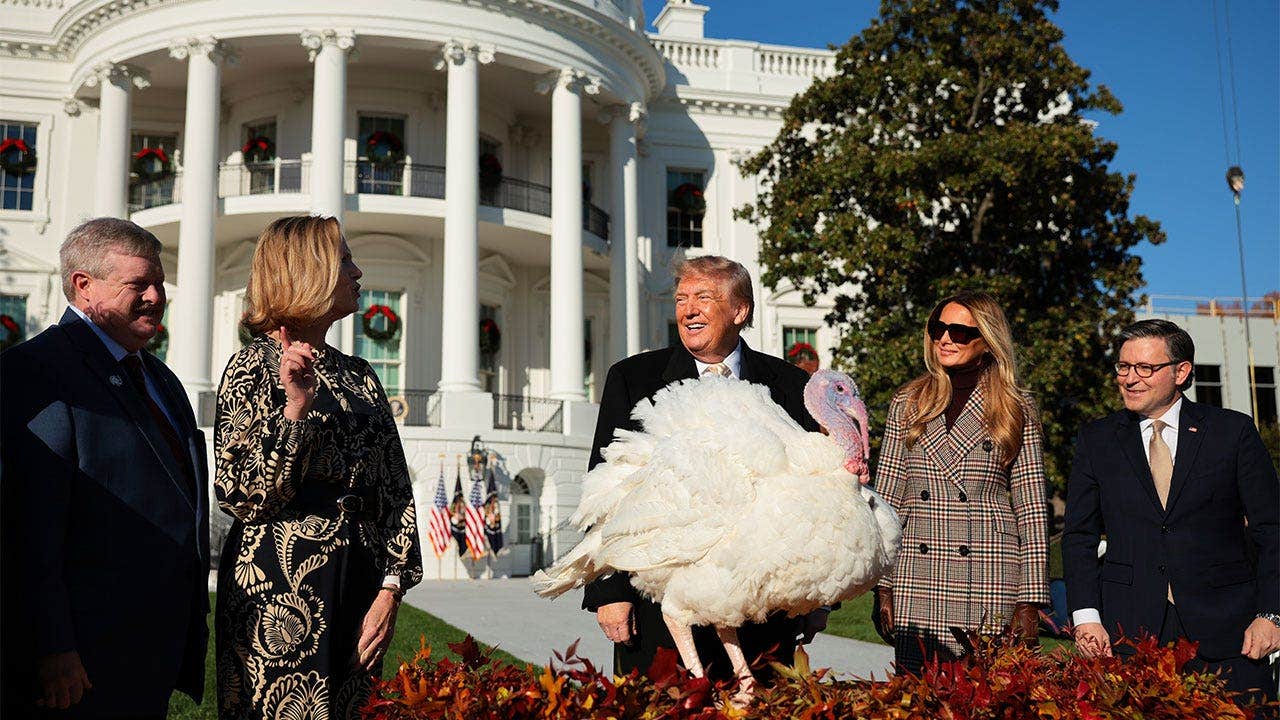
Trump turned a light holiday ritual into a loud show of strength, pausing the turkey pardon ceremony to praise U.S. troops watching the Strait of Hormuz. He used the White House moment to spotlight the pressure on Iran, the maritime blockade, and the wider fight over nuclear weapons and regional power.
At the South Lawn event, the president shifted from poultry politics to military applause without missing a beat. He thanked service members overseas and framed their mission as a hard line against Tehran, saying the U.S. would not let Iran reach the finish line on a nuclear weapon.
“We want to say a special thank you to them, the people that are guarding the strait know or the blockade we call it,” Trump said. “It’s a blockade, the greatest naval blockade in history.” That line landed with the kind of theatrical punch Trump often likes, mixing ceremony, military praise, and a jab at Iran in one shot.
He said the situation in the waterway had been tightly controlled and insisted Iranian ships had been stopped from moving through. In his telling, the only break came during a short pause in the standoff, after which trust in Tehran was off the table.
“Not one Iranian ship has gotten through to the blockade since we established it, other than we had a little moratorium. And we learned that you can’t trust them,” Trump said. “But not one ship from Iran has gotten through. Our naval blockade is the most incredible naval blockade, probably in the history of the world. It’s amazing.”
The remarks fit neatly into Trump’s broader message on Iran, which has centered on pressure, deterrence, and a blunt rejection of any nuclear breakout. He also argued that U.S. military action had badly weakened Iran’s conventional power while helping restore oil flows through the Strait of Hormuz.
That part of the speech gave the event a much sharper edge than the usual turkey-pardon pageantry. The annual tradition is normally all laughs, camera flashes, and a few corny jokes, but this year the president used it like a stage for national security messaging.
The timing made the contrast even stronger. One minute the crowd was watching a White House holiday ritual, and the next it was hearing about naval patrols, blockade enforcement, and the stakes of a regional showdown that has dragged on for months.
After the remarks, the focus snapped back to the birds. Trump pardoned Freedom and Feathers, with Feathers making a brief detour into the bushes before the ceremony wrapped and both turkeys were sent on to retire at Texas A&M University.
The whole scene was classic Trump, part ceremony, part rally, part foreign-policy flex. Even in a holiday setting, he made sure the message was loud: the U.S. military was on watch, Iran was being boxed in, and the White House wanted everybody to know it.
