
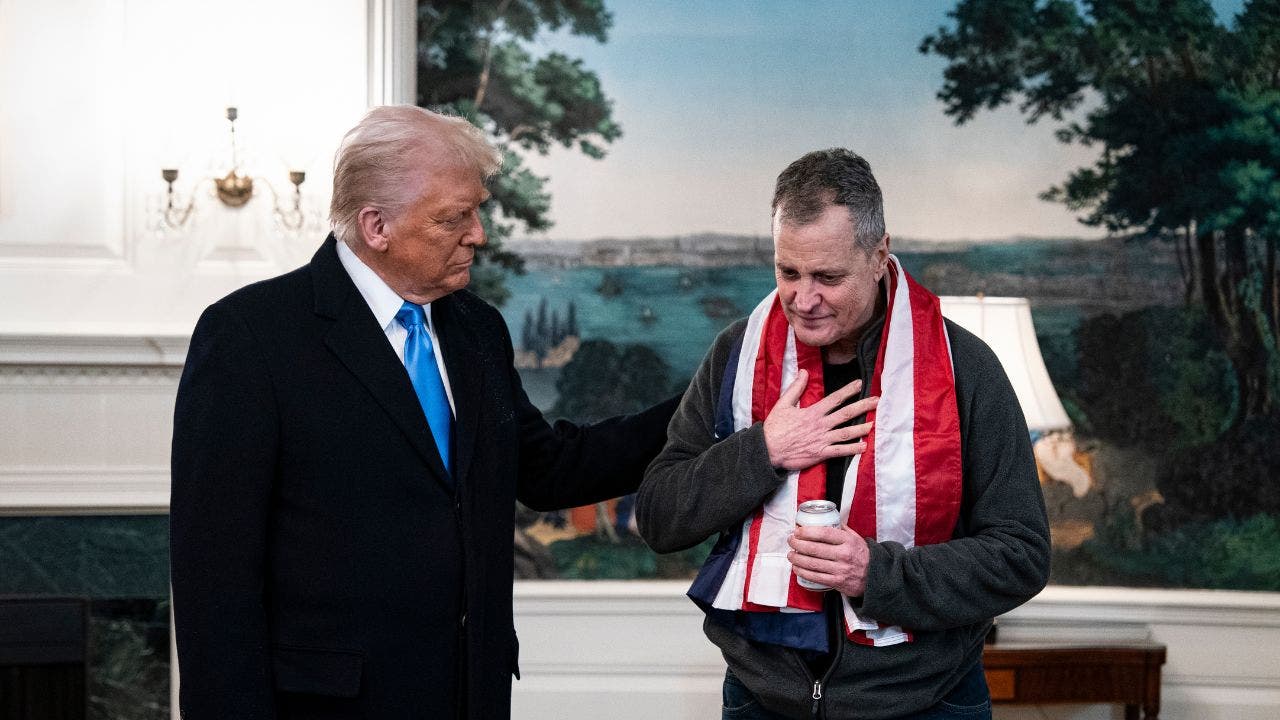
President Trump’s approach to Americans held abroad has been blunt, forceful, and built around one core idea: citizens come first. That mindset has pushed hostage recovery back to the center of U.S. policy, where families want it and where it belongs. The result has been a wave of releases that the administration treats not as lucky breaks, but as proof of a deeper principle.
In the old Roman worldview, a citizen was not a disposable piece on a board. If Rome lost one of its own to a foreign power, it responded with speed and muscle because the state was supposed to defend its people, not lecture them about patience. That attitude is the backbone of the argument being made here: a country earns respect when it shows it will not shrug off the fate of its own citizens.
That logic fits the Julius Caesar story perfectly. Captured by Cilician pirates as a young man, Caesar reportedly treated the whole ordeal like an insult waiting to be answered, and once he was free, he hunted the pirates down and had them crucified. Whether read as history, legend, or a little of both, the tale captures the kind of message strong states have always tried to send: seize one of ours, and the response will not be polite.
That same hard line is now being used to explain the Trump administration’s record on detainees and hostages. More than 100 unjustly detained Americans have come home, along with the final hostages from Gaza, living and dead. The point is not just the number, though it is striking, but the attitude behind it, which treats each case as urgent and personal rather than as a nuisance to be filed away.
The contrast with slower, more cautious diplomacy is part of what makes the case so sharp. Hostage cases can drag on for years when they get trapped in endless process, with meetings, memos, and risk reviews piling up while the captive sits in a cell. This administration leans the other way, treating delay itself as a failure and speed as a moral obligation.
That urgency also shows up in the kinds of pressure the White House is willing to apply. Venezuela, Russia, the Taliban, and Hamas have all faced a harder line, and an executive order now allows the State Department to label countries as state sponsors of wrongful detention and hit them with sanctions. In plain English, the message is simple: if a government grabs Americans to gain leverage, that move now carries a real cost.
Personal diplomacy matters too. The president’s direct style, which favors strong relationships and fast decisions over slow institutional drift, gives hostage talks a different rhythm. Embassies and envoys know the issue is not low priority paperwork, but something the president wants handled now, not after another round of waiting and excuses.
That helps explain why stalled cases suddenly move. Openings are seized quickly, backchannels are used aggressively, and pressure is kept on when talks start to freeze. The same approach is credited with bringing home people like Robert Gilman from Russia, Joseph St. Clair from Venezuela, and others who had been stuck far too long in the machinery of foreign detention.
The philosophy also reaches beyond the moment a plane lands on American soil. Recovery is treated as the start of the next phase, not the finish line, with support for healing, counseling, and the hard work of rebuilding after captivity. And when there is a chance to go after the people responsible, the administration signals that consequences do not stop at the border.
That is why the rhetoric around this issue has such bite. The idea is not just that America should bring its people home, but that the nation becomes less itself when it leaves one of them behind. Families of detainees want that kind of certainty, and the administration is betting that a country willing to fight for its own citizens projects more strength, not less.
