
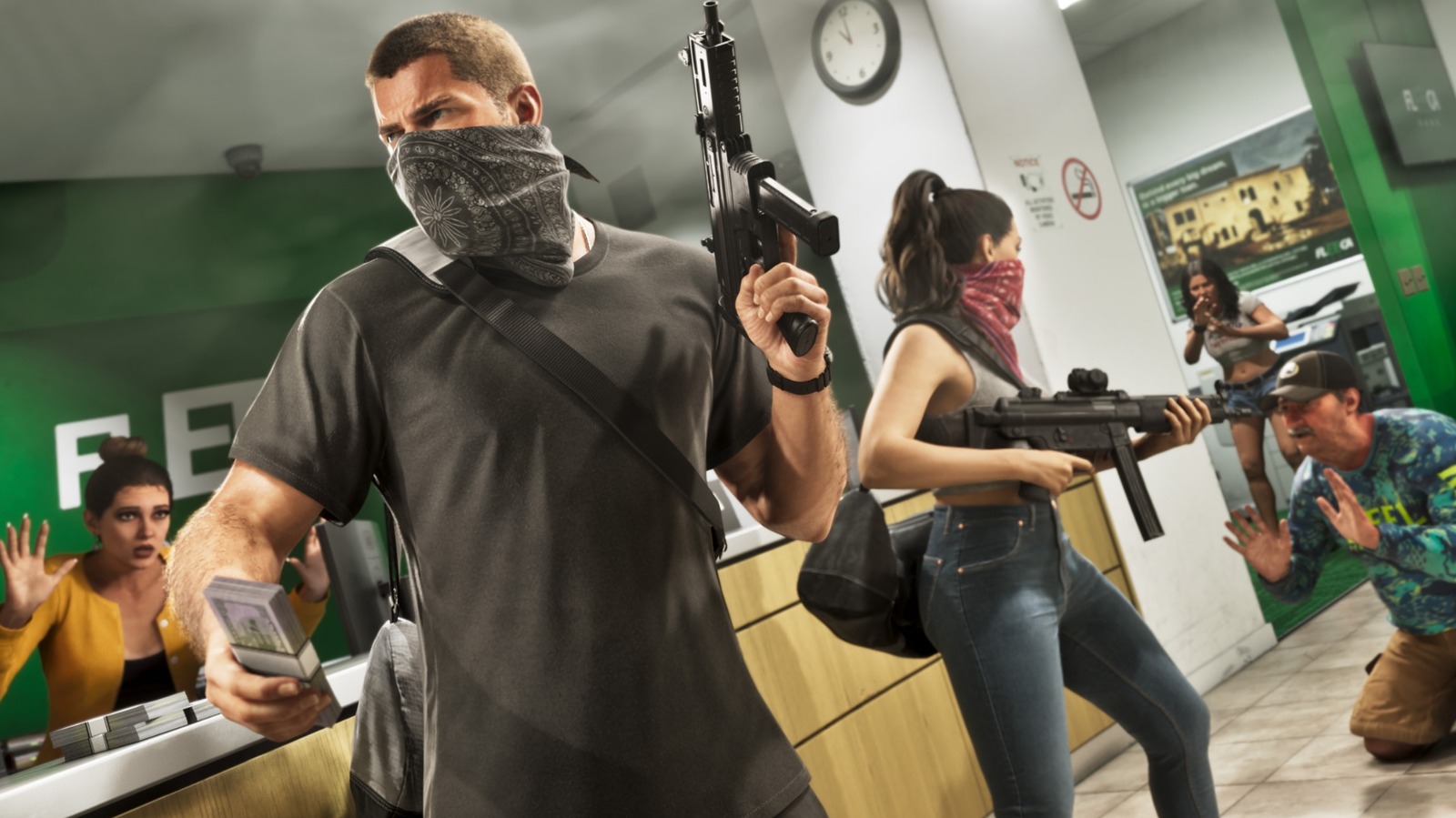
Grand Theft Auto 6 is already turning heads for sheer scale, and its visuals are part of that hype. But one of the more interesting questions around the game is not just how it looks overall, but whether it behaves differently on an HDR TV, where the display tech is supposed to add more punch, depth, and contrast.
Digital Foundry got an early look at the game and dug into how it performs on PlayStation 5 and PS5 Pro. Their comments on HDR pointed to a setup that sounds more complicated than flashy, with the game leaning on inverse tone mapping rather than a more traditional HDR approach. That matters because HDR can mean a lot of different things, and not every version delivers the same kind of visual payoff.
In this case, the game appears to use BT 2020 color space, which lines up with HDR broadcast standards in broad terms. Even so, color range alone does not tell the full story, because brightness and contrast handling are just as important, and those pieces do not always match up cleanly across formats. Digital Foundry also noted that the game reaches peak brightness around 1,500 nits, which is respectable, but still far from the upper reaches of what some HDR standards can support.
That can make the HDR discussion sound a little underwhelming at first, especially for anyone hoping for some dramatic secret sauce. Still, HDR is less about reinventing the image and more about enhancing what is already there, and Grand Theft Auto 6 already looks dense, detailed, and expensive in motion. When the base presentation is strong, the display tricks have less room to create a night-and-day difference.
Digital Foundry’s takeaway was not that the HDR implementation is broken or ugly. Quite the opposite, actually, since the game still looks stunning, with night scenes and bright highlights creating a contrast that feels almost unreal at times. The impression is that Rockstar may not be using the most advanced HDR path available, but the end result still lands hard because the underlying graphics are doing so much of the work.
That is why the whole thing should probably be kept in perspective. A display can sharpen the experience, but it is not going to turn a flat image into a masterpiece if the game itself is not already carrying serious visual weight. Here, the concern is not whether the image looks good, because it clearly does, but whether the HDR label is doing as much heavy lifting as people might assume.
If the game is played without an HDR TV, the visuals still hold up thanks to a native 1440p presentation and solid spatial upscaling. On PS5 Pro, Sony’s PSSR pushes the image closer to 4K and smooths things out even more, which helps keep the whole package feeling polished even if the HDR side is not especially fancy.
Performance is another part of the story, and it stays pretty steady around the game’s 30 FPS target. According to the early testing, that benchmark is held almost all the time on PS5 Pro and most of the time on PS5, which is exactly the kind of stability players want from a massive open-world release. For anyone choosing between systems, the bigger win may come from raw hardware muscle than from the TV’s HDR badge alone.
