
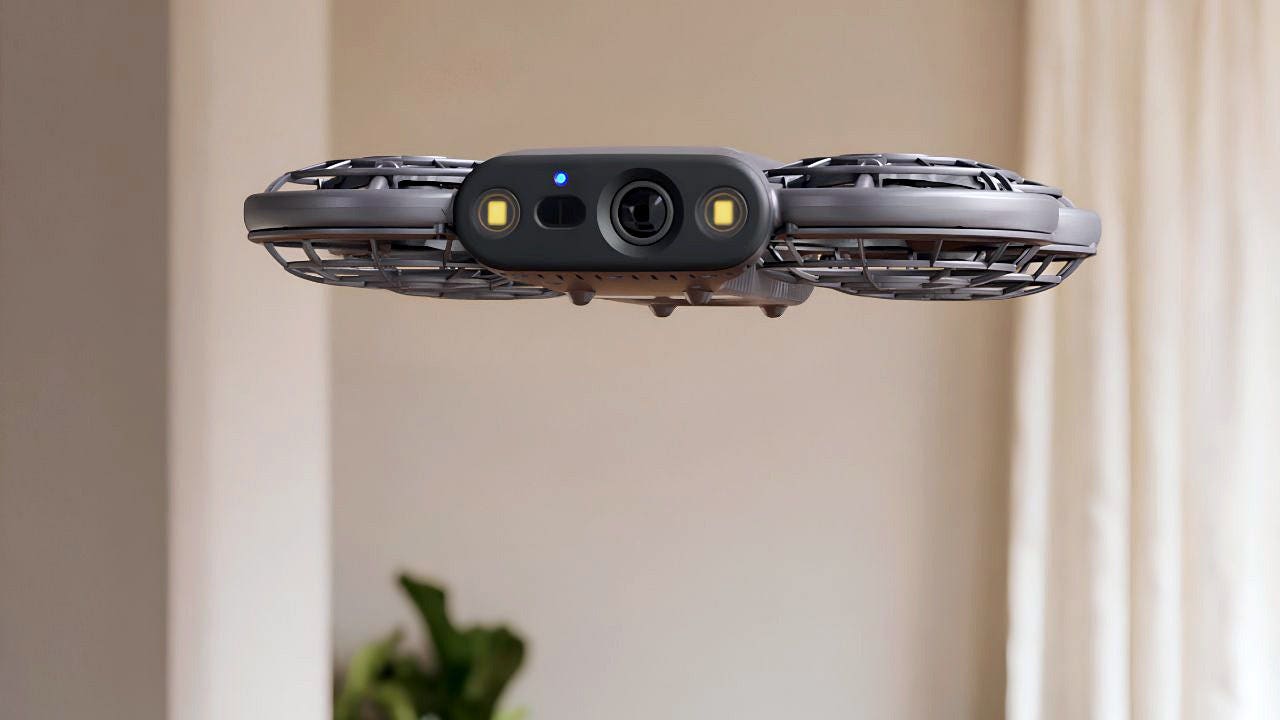
Ring’s latest home gadget is trying to do something that fixed cameras simply cannot. The Drone Cam is a flying indoor security camera built to move room to room, follow alerts, and give homeowners a live look at what is happening beyond a single angle. It promises more coverage, a compact design, and a price tag that is meant to feel surprisingly reachable for such a futuristic device.
The big idea is simple enough: let one camera cover more of the house by flying where it is needed. Ring says the Drone Cam uses AI to learn the layout of a home, build a digital map, and navigate around obstacles without being manually steered. That means it can be sent to specific spots, like a back door or hallway, or launch automatically when another Ring sensor picks up activity.
The concept is not brand new. Ring first floated a flying indoor camera years ago, and this latest version brings that dream back with updated AI navigation and a clearer product pitch. The company is betting that people want a camera that can do more than sit on a shelf and stare at one corner of a room.
On paper, the hardware is packed with the kind of features you would expect from a pricey smart-home device. Ring says the Drone Cam records in 2K, offers a wide field of view, can rotate to see a full room, and uses LED lights for low-light moments. It also makes an audible sound while flying, which Ring says is intentional so people know when it is moving around.
There are some notable limits, though. The drone does not include a microphone or speaker, so it cannot carry on a two-way conversation or pick up audio from what it sees. It also cannot stay airborne for long, with Ring advertising up to eight minutes of flight time before it heads back to its dock to recharge.
Navigation is where the whole idea will either impress people or frustrate them. Ring says the Drone Cam can avoid obstacles and adjust course, but surfaces like mirrors, glass, and highly reflective floors can cause trouble. Empty rooms and plain walls may also make things harder, which is a reminder that indoor flying tech still has plenty of real-world quirks to deal with.
The privacy side is the part many households will focus on first. Ring says the camera only records while it is flying, and it powers down once it returns to the dock. The company also says recordings are protected through its TAKE encryption system, though the setup still involves cloud processing for navigation and related features, which will matter to buyers who are sensitive about how home data is handled.
That privacy debate gets even more personal when the camera is moving through shared spaces. A flying device inside the home is a lot different from a camera mounted on a wall, especially if other people live there or visit often. Some will see convenience and better security, while others will see a camera that feels a little too present.
Price may be the easiest part to understand. Ring has set the Drone Cam at $249.99, and that includes the drone and its charging dock. But some features, like scheduled patrols and cloud recording, require a compatible subscription, which adds another layer of cost for anyone who wants the full experience.
Availability is still waiting on the final green light. Ring says the Drone Cam is expected to ship in the U.S. in early 2027, but it still needs FCC authorization before it can be sold. Until then, the product sits in that interesting space between flashy promise and practical reality, with plenty of people waiting to see whether a flying security camera can actually work as smoothly in a real house as it does in the demo videos.
