
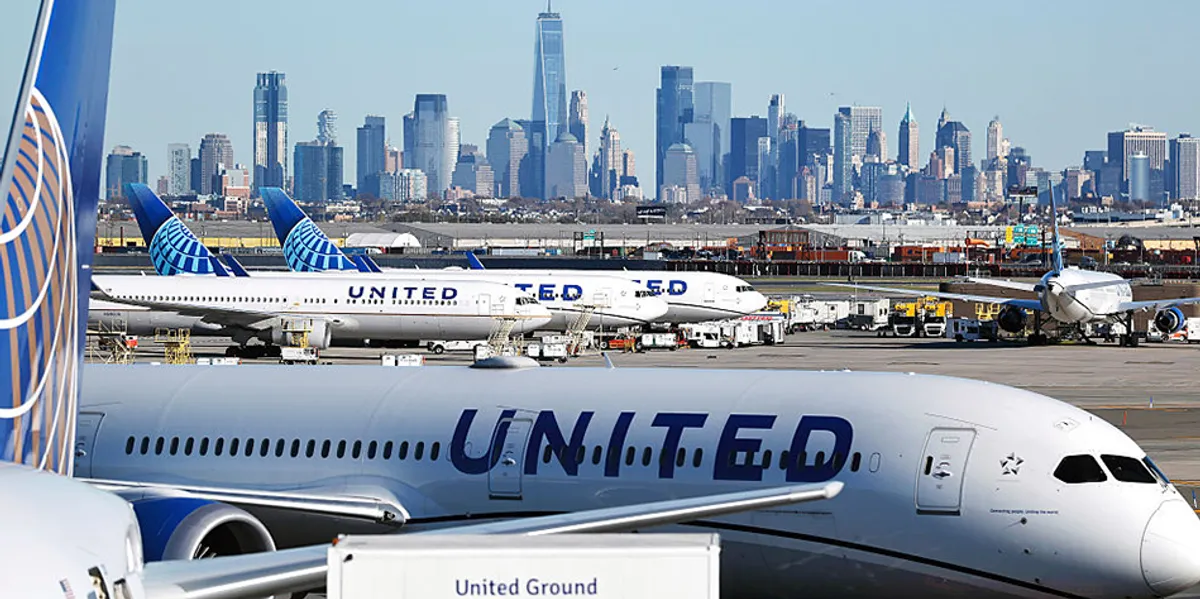
United Airlines ran into a fresh headache after a technology-related problem disrupted flights and left travelers dealing with delays that spread quickly through the system. The issue has already been fixed, but the ripple effect was wide enough to stir up more questions about reliability, timing, and how fragile airline operations can become when a key system stumbles.
Air travel has very little margin for error, and when one major carrier gets hit by a technical snag, the disruption can build fast. Passengers feel it first, crews have to scramble next, and airports end up absorbing the mess as departure boards start shifting and schedules get pushed around.
The problem comes at a time when airline performance is already under a sharper spotlight. Travelers have grown used to hearing about weather delays, staffing strain, and air traffic control slowdowns, but a technology issue cuts in a different way because it points to the backbone of the operation itself.
United said the issue was resolved, which is the part everyone wants to hear, but the bigger story is what it took to get there. Even a short-lived glitch can throw off aircraft rotations, leave crews out of position, and create a chain reaction that lingers long after the original problem disappears.
That kind of disruption hits especially hard because modern airlines depend on systems that keep everything synced. Scheduling, gate assignments, crew coordination, and flight dispatch all rely on constant digital precision, and when one piece slips, the whole machine can start to wobble.
For travelers, the practical impact is simple and frustrating: waiting, rebooking, and watching connections shrink to nothing. Some delays may look minor on paper, but for passengers trying to make a meeting, get home, or catch a connecting flight, a technical problem can turn a normal trip into a long day.
It also raises a bigger concern about resilience in a business that can get overwhelmed fast. Airlines pride themselves on scale and efficiency, but scale can work against them when systems falter because the same network that moves people quickly can spread a problem just as quickly.
There is also the matter of trust, which can be harder to rebuild than a timetable. Travelers do not expect perfection, but they do expect an airline to keep the operation steady, especially when the fault is internal and not caused by storms or outside interference.
United’s problem may be over, but the public memory of airline disruptions tends to stick around. Each new incident adds to the feeling that the industry is one bad moment away from another round of confusion, and that is a tough perception to shake when people are already wary about flying on a tight schedule.
The challenge now is whether the fix really stays fixed. If the airline can keep the operation smooth and avoid another breakdown, this will fade into the long list of travel annoyances, but if the same kind of issue keeps popping up, the conversation will move from an isolated glitch to a much bigger question about what is going wrong behind the scenes.
