
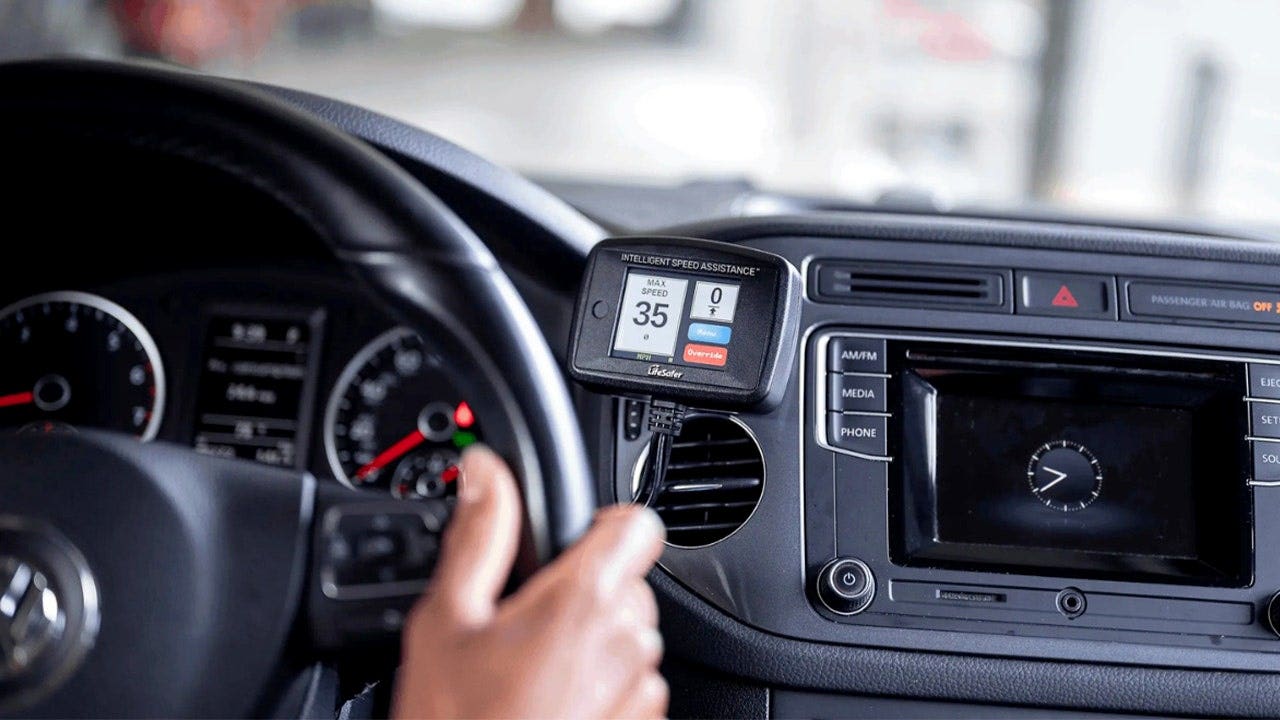
States are testing a blunt answer to reckless driving: put a digital leash on the car and stop repeat offenders from blasting past the limit. The idea sounds simple, but the reality is messier, with GPS-powered systems, court-ordered restrictions, emergency overrides, and a growing list of questions about safety, privacy, and trust.
Virginia has already started using Intelligent Speed Assistance for certain drivers, and Washington, D.C. has rolled out a similar approach. More places are watching closely, because the pitch is appealing on its face: instead of hoping a driver gets the message after another ticket, the car itself can stop the worst behavior before it turns deadly.
The technology behind these devices is called Intelligent Speed Assistance, or ISA. It uses GPS location data and digital maps to figure out the posted speed limit, then limits acceleration once the car reaches that threshold. It does not slam the brakes or kill the engine, but it can keep the vehicle from building more speed even when the driver is pressing the pedal.
That distinction matters. A car going downhill can still creep past the limit because gravity is still gravity, and some systems allow short override windows when extra acceleration is needed for safety. Newer cars already warn drivers when they are speeding, but these aftermarket devices go a step further by trying to stop the behavior instead of just pointing it out.
Virginia’s program is already active, with courts able to require the technology for certain offenses such as reckless driving and racing. In some cases, the state DMV can also require participation when a driver racks up too many demerit points, and eligible people may be able to keep restricted driving privileges instead of losing their license completely.
The rules are serious, though. Some participants have to install the device in every vehicle they own or co-own, and they also have to follow limits on which cars they are allowed to drive. There are installation and service fees too, even if financial help is available in some cases, which means the program is not just about punishment but also about keeping essential travel possible.
Washington, D.C. is using a similar model, and Washington state has passed legislation that will bring its own version online later. New York City is also floating a proposal that would target drivers with repeated school-zone speeding violations. These programs are different in scope, but they all point in the same direction: lawmakers are reaching for tech because ordinary penalties have not stopped dangerous driving.
That push is not without friction. GPS can be useful and impressively accurate, but it is still capable of getting confused, especially when roads run close together or maps are off. If a car mistakes a highway for a nearby side road, the limiter could apply a much lower speed cap than the one that actually belongs there.
Some Virginia users have reported exactly that kind of problem. Officials have acknowledged the complaints and said fixes are being worked on, but even a temporary location error can become a real headache if a driver needs to merge, pass safely, or react quickly in traffic. That is where a helpful tool starts looking a lot more like a liability.
There is also the issue of emergency overrides. Virginia’s proposed standards would allow a temporary override for a limited time, with a small amount of extra speed above the posted limit and only a few uses per trip. The idea is to keep the system from being too rigid, but it also means drivers may not get the burst of acceleration they expect when things get tense.
Supporters have a strong argument, and the numbers explain why. Speeding was tied to 11,288 traffic deaths in 2024, according to federal data, which is the kind of statistic that makes policymakers look for tougher tools. For repeat offenders who keep ignoring warnings and fines, a device that physically blocks extreme speed has obvious appeal.
Still, speed limiters are not a magic shield. A driver can still tailgate, cut people off, or make terrible choices without breaking the posted limit, and bad weather can turn a legal speed into a dangerous one in a hurry. The technology may help curb the most egregious speeding, but it does not replace judgment behind the wheel.
Privacy is another pressure point, and it is a big one. If a system needs GPS data to function, it also has the ability to collect a trail of location and compliance information, which raises questions about who sees it and how long it sticks around. Virginia’s proposed rules even go further, with reporting requirements tied to vehicle events and possible camera-based documentation in future installations.
That is where the debate gets bigger than traffic enforcement. It is no longer just about stopping a few reckless drivers, but about how much control software should have over a vehicle and how much data should follow the driver around. The technology may be aimed at the worst offenders now, but the questions it opens up reach far beyond them.
