
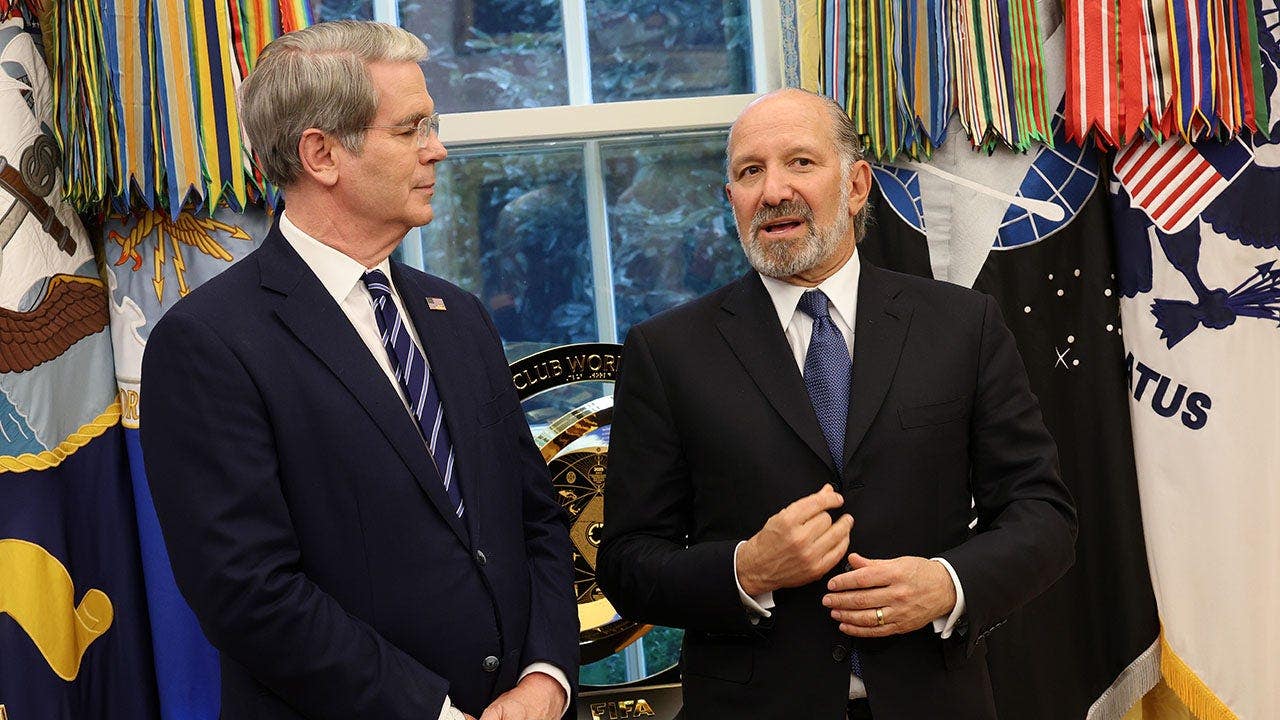
China tensions, AI chip restrictions, and cabinet infighting are all colliding at once as President Donald Trump heads into a set of high-pressure meetings in Asia. Scott Bessent and Howard Lutnick are both on the trip, even though they have been pulling in different directions over how hard the U.S. should lean on companies suspected of helping China get restricted technology.
Trump is carrying the dispute with him while he meets with Chinese President Xi Jinping and other regional leaders. The situation has turned a policy fight into a bigger political test, especially with advanced chips, trade controls, and national security all tied together in one messy package.
Trump publicly brushed off the idea that the disagreement is a crisis inside his team, but he also made clear he sees value in hearing both sides. On Monday, he said Lutnick may have slowed things down to avoid setting off a blowup with Beijing, while also stressing that relations with China are in a better place than many expected.
The flash point centers on Megaspeed, a Singapore-based company accused of helping Chinese firms gain access to restricted Nvidia chips. Reports say Lutnick resisted efforts to put the company on a trade blacklist, even though Trump had reportedly supported action against it earlier this year.
Bessent did not hide where he stood. He confirmed that several agencies, including Treasury, War, the U.S. Trade Representative, and State, had wanted Megaspeed added to the Entity List for months, though the Commerce Department controls the final paperwork.
The Commerce Department has also moved on a new rule aimed at keeping advanced American computing technology out of the hands of Chinese companies and other restricted foreign entities through data centers in third countries. Officials said the rule was written at the direction of Treasury and the National Security Council, which shows how tangled the process has become.
At the same time, Trump is standing by Lutnick. He said Monday that he is not considering a replacement and described him as someone who has done a very good job, despite the growing noise around the department’s handling of chip export issues.
The trip itself is loaded with heavy hitters. Along with Bessent and Lutnick, the delegation includes Marco Rubio, Stephen Miller, Jamieson Greer, and Kevin Hassett, all of whom are expected to be part of the broader trade and security conversations.
That matters because Trump is not just passing through for photo ops. He is expected to sit down for talks with Xi, take part in regional economic and security gatherings, and navigate a world where China, Russia, and North Korea keep pulling the conversation in different directions.
The Nvidia angle has added even more heat. The company and its leadership have come under fresh scrutiny after reports tied Jensen Huang to Alice Huang, a former Megaspeed executive suspected by U.S. intelligence of spying for China, a claim Megaspeed denies and says is being investigated by outside counsel.
Trump tried to cool that part of the story too, saying it has not been confirmed that she is a spy. That kind of caution leaves room for more review, but it also keeps the pressure on agencies that are trying to balance intelligence concerns with economic fallout.
Inside Washington, the paper trail is becoming just as important as the politics. Lutnick is set to testify before the Senate Banking Committee on Dec. 10, and lawmakers Elizabeth Warren and Chris Coons have already pressed the administration to preserve records tied to Nvidia chip exports and possible national security risks.
The deadline they set for written confirmation is tight, and the stakes are obvious. Every new detail about who knew what, and when, only sharpens the scrutiny around how the administration is handling one of the most sensitive tech fights in Washington right now.
For Trump, the challenge is familiar but sharper than ever: keep the China talks moving, keep the cabinet from publicly splintering, and keep control of a technology fight that has become a proxy battle over power, leverage, and who gets access to the future.
