
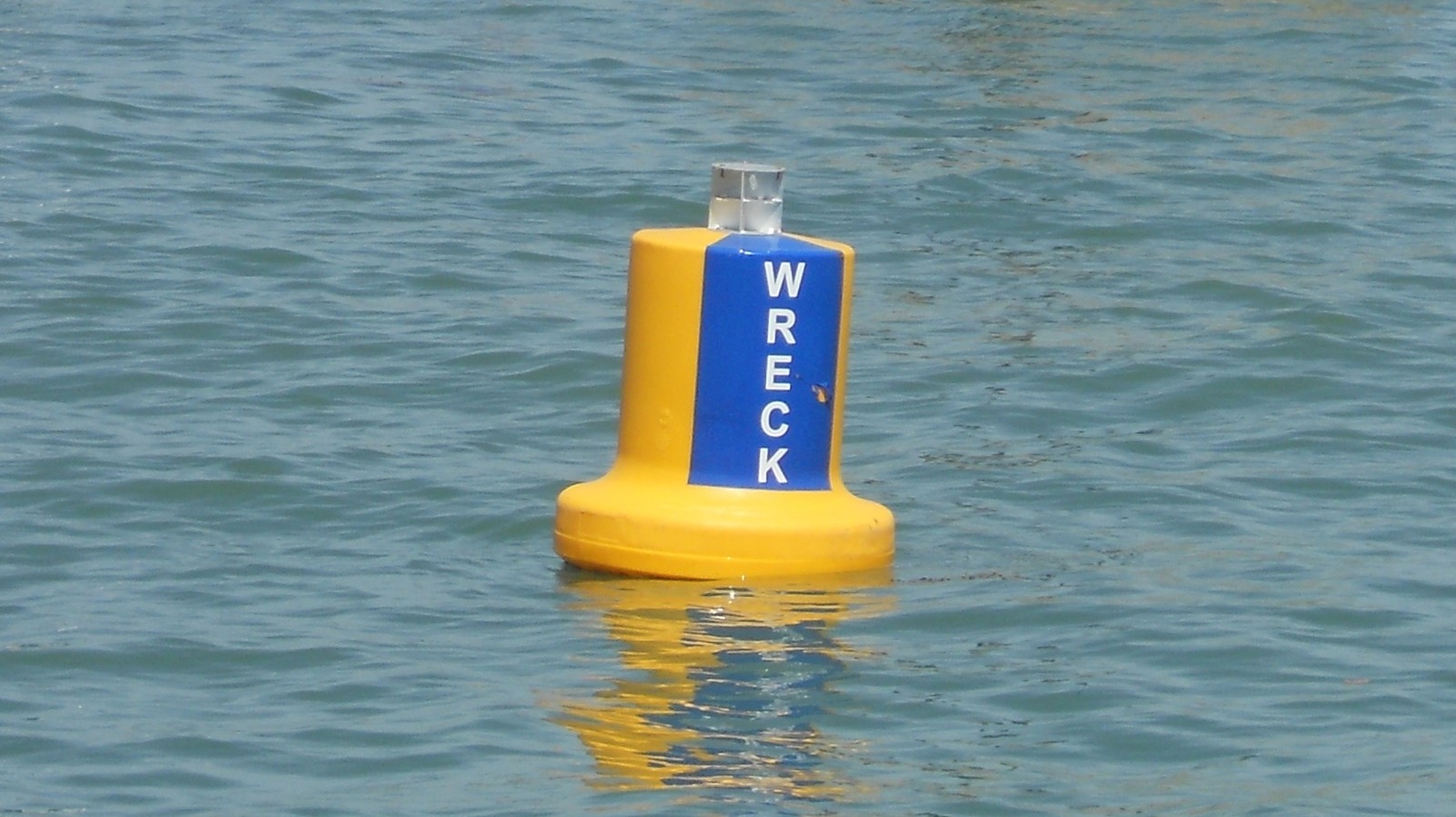
Boaters who can read buoy colors and patterns are already a step ahead on the water. Blue and yellow vertical stripes point to a specific kind of warning that matters fast, especially near wrecks or other fresh hazards. Knowing that signal can help keep a routine outing from turning into a bad day.
Among the many markers used at sea, this one stands out because it is tied to danger that may still be active. The buoyage system developed by the International Organization for Marine Aids to Navigation uses these striped buoys to flag an emergency wreck. That means the area is not just interesting or marked for reference, but something to steer clear of right away.
The pattern itself is part of the message. A buoy with these stripes will have an equal number of blue and yellow bands, usually four to eight in total, and it is typically shaped like a pillar or spar. On top of that, it often carries a yellow cross-shaped top mark, and it may even flash an alternating blue and yellow light.
That combination is not there to decorate the water. It is designed to make the buoy harder to miss and easier to recognize in changing light, rough weather, or a crowded channel. When a boater spots it, the smart move is simple: treat the area as a warning zone and give it space.
These markers are generally temporary, which is part of what makes them important. They are used to show new wrecks and other hazards that still need attention, and they can stay in place until the problem is properly handled. In some cases, that means the hazard gets removed, while in others the danger cannot be taken away and has to be managed through clear notice instead.
That temporary role is what sets them apart from marks that point to more permanent conditions. A wreck may have just happened, or a dangerous obstruction may have only recently been found. The buoy becomes the loud, floating warning sign that tells boaters the situation is not yet safe to ignore.
Reading buoy signals is a basic part of good seamanship, but it is easy to overlook the details when the water looks calm. A striped buoy, a solid yellow marker, or a black-and-white warning can each mean something very different. Missing that difference can lead to poor decisions at exactly the wrong moment.
Blue and yellow stripes are not the only signal that deserves attention, but they are one of the clearest reminders that navigation rules are there for a reason. When the water starts to feel familiar, that is often when the smallest marker matters most. Staying alert to these signs keeps a boater responsive, cautious, and far more likely to avoid trouble before it starts.
