
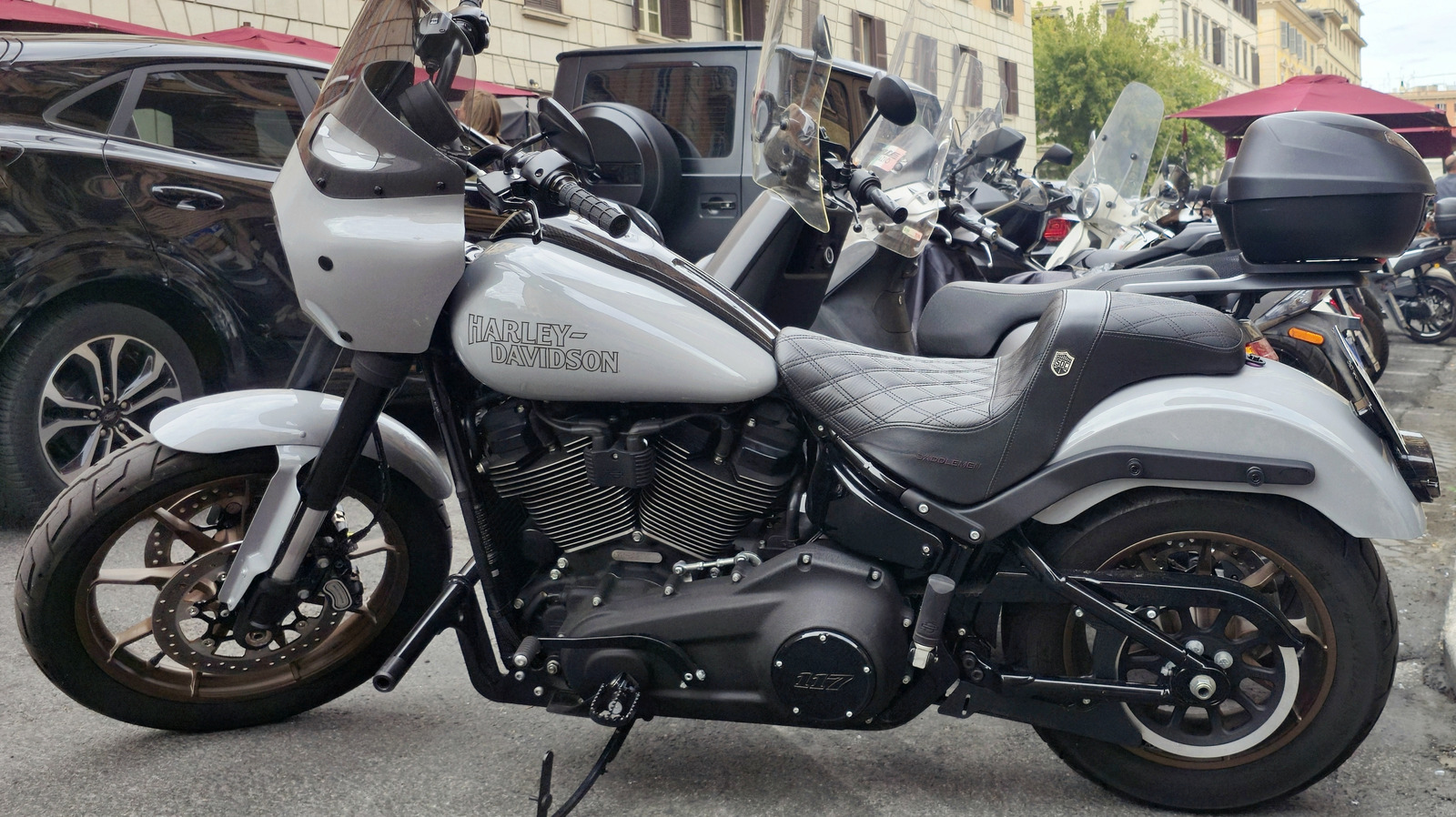
The primary and secondary drives on a Harley-Davidson are the quiet middlemen that move power from the engine to the rear wheel. The first one links the crankshaft to the clutch and transmission, while the second sends that power out to the wheel itself. Together, they shape how the bike feels when it rolls away, pulls hard, or settles into a steady cruise.
Harleys use a drivetrain setup built around the engine, clutch, transmission, and final drive components working as one system. The primary drive handles the first transfer of force inside the left side of the bike, where a chain and sprockets often connect the crankshaft to the clutch assembly. Once the clutch is engaged, power keeps moving into the transmission, which then passes it onward with whatever gear is selected.
The secondary drive takes over after that and finishes the job. On many modern Harleys, this is usually a belt drive, where a front pulley turns a toothed belt that spins a larger rear pulley attached to the wheel. Some models still use a chain, but the goal is the same: deliver the engine’s power to the rear wheel in a controlled, usable way.
That setup does more than just get the bike moving. It also affects the overall gear ratio, which has a big say in how the motorcycle accelerates and how hard the engine works at speed. A lower ratio can keep engine RPM down at a given road speed, while a higher ratio can make the bike jump off the line with more urgency.
Because the primary and secondary drives are fixed during normal riding, they give each Harley-Davidson its own personality. The transmission provides the changing gears, but these drives establish the baseline character the bike lives with every time the throttle opens. That is a big reason why two Harleys can feel distinctly different even when they share similar engine sizes.
Riders can also change that personality by swapping pulleys or sprockets, depending on the model and setup. A taller gearing choice may calm the bike down on the highway and make cruising feel smoother, while shorter gearing can sharpen throttle response and bring stronger acceleration. There is always a trade-off, and the right choice depends on whether the bike is meant for easy miles or quick punches of power.
That balance is part of what makes Harley-Davidson so easy to recognize and so hard to mistake for anything else. The drivetrain is not just mechanical background noise, it is one of the reasons the brand has such a specific feel on the road. Every twist of the throttle runs through that chain of parts, from engine to clutch to transmission to rear wheel, and the result is the kind of road behavior riders notice right away.
