
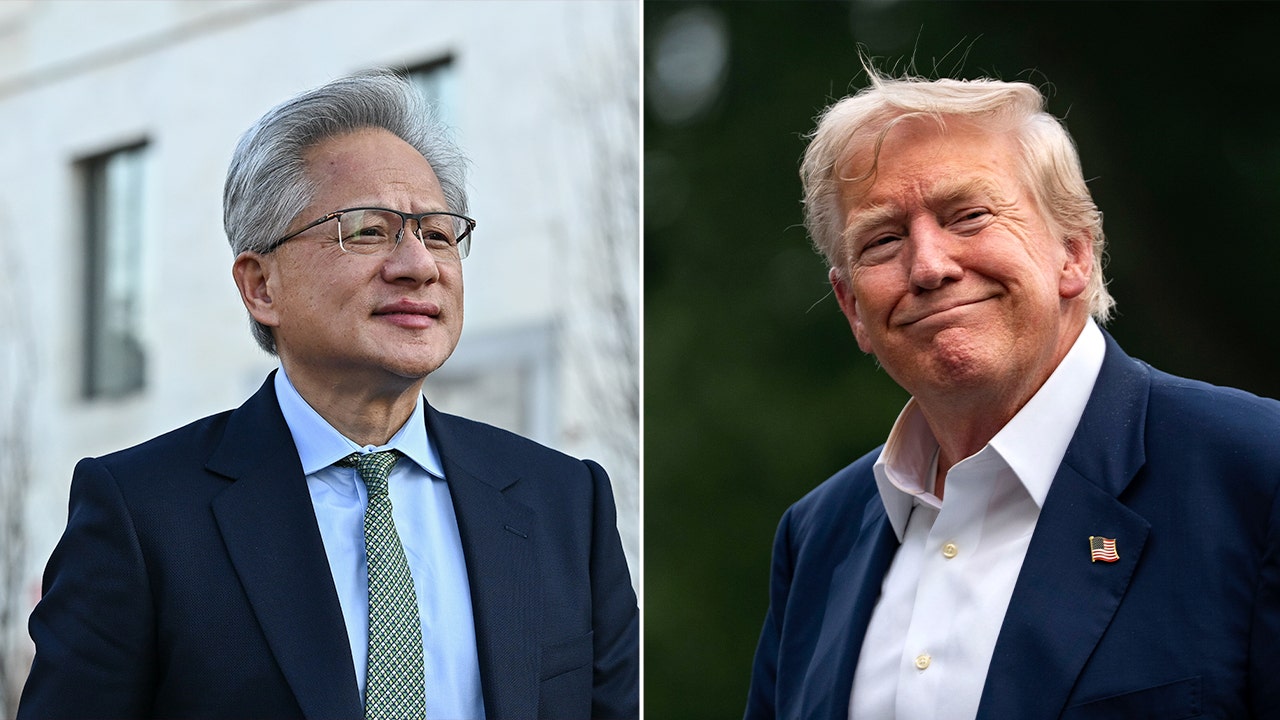
Trump threw his support behind a familiar Silicon Valley face after Jensen Huang’s sudden exit from Nvidia, and the reaction instantly turned a corporate shakeup into a bigger story about leadership, pressure, and national security. Nvidia has tapped Chief Financial Officer Colette Kress as interim CEO while the board weighs what comes next, and the whole moment has the feel of a company trying to steady itself while the spotlight gets hotter by the minute.
President Donald Trump suggested Thursday that former Apple CEO Tim Cook is the only person who should replace Huang at the chip giant. “NOW THAT Nvidia CEO JENSEN HUANG, who has done a fantastic job, has resigned, there is only one man to take his place – TIM COOK of Apple. A Legend replaces a Legend!” Trump wrote on Truth Social.
The comment landed at a tense time for Nvidia, which has been battling not just market pressure but a wave of attention around its leadership and its role in the artificial intelligence race. Huang, who co-founded the company in 1993, left after scrutiny tied to his personal conduct and questions that touched on sensitive security issues.
For a company like Nvidia, the CEO seat is not just another executive chair. It is a front-row position in one of the most important tech battles in the world, where every move gets dissected for business impact and geopolitical meaning.
Nvidia moved quickly to keep things from spiraling by naming Kress interim CEO and opening a search for a permanent replacement. The board is looking inside and outside the company, which signals that this is not going to be a rushed decision and that leadership credibility matters just as much as technical pedigree.
Cook’s name naturally drew attention because he spent 15 years leading Apple before stepping down in September and taking on the role of executive chairman. That kind of background makes him one of the few executives with the scale, discipline, and name recognition to even enter a conversation like this.
Still, there has been no indication that Cook is interested in moving over to Nvidia. Trump did not say whether there had been any contact, and the suggestion seemed more like a public declaration than a formal search process.
The fallout around Huang has been tied to reports of two extramarital affairs, including a relationship with a Chinese businesswoman whom U.S. authorities suspect of spying for Beijing. That detail gave the story an edge far beyond routine executive drama, especially because Nvidia sits at the center of the global artificial intelligence supply chain.
Questions about possible foreign access to sensitive information have naturally followed. China’s interest in advanced chips has already been a major flashpoint with the United States, so any hint of exposure around a top tech leader gets treated like a flashing warning light.
Even so, there has been no public evidence showing that Huang disclosed confidential information or that the woman in question obtained Nvidia secrets. The absence of proof does not erase the concerns, but it does keep the story in the realm of suspicion rather than confirmed breach.
Trump had previously defended Huang, saying Monday that he believed the executive’s explanation that he was unaware of the woman’s alleged intelligence ties. That earlier defense makes his sudden push for Cook even more striking, since it suggests the president sees this less as a scandal cleanup and more as a chance to put a stable, respected figure in charge.
Meanwhile, Nvidia’s stock and future now sit under a harsher spotlight, with investors watching closely for signs that the company can stay on course through the turmoil. Leadership transitions can rattle even the strongest names, and when the company at the center of the AI boom gets shaken, the ripple effect is impossible to ignore.
