
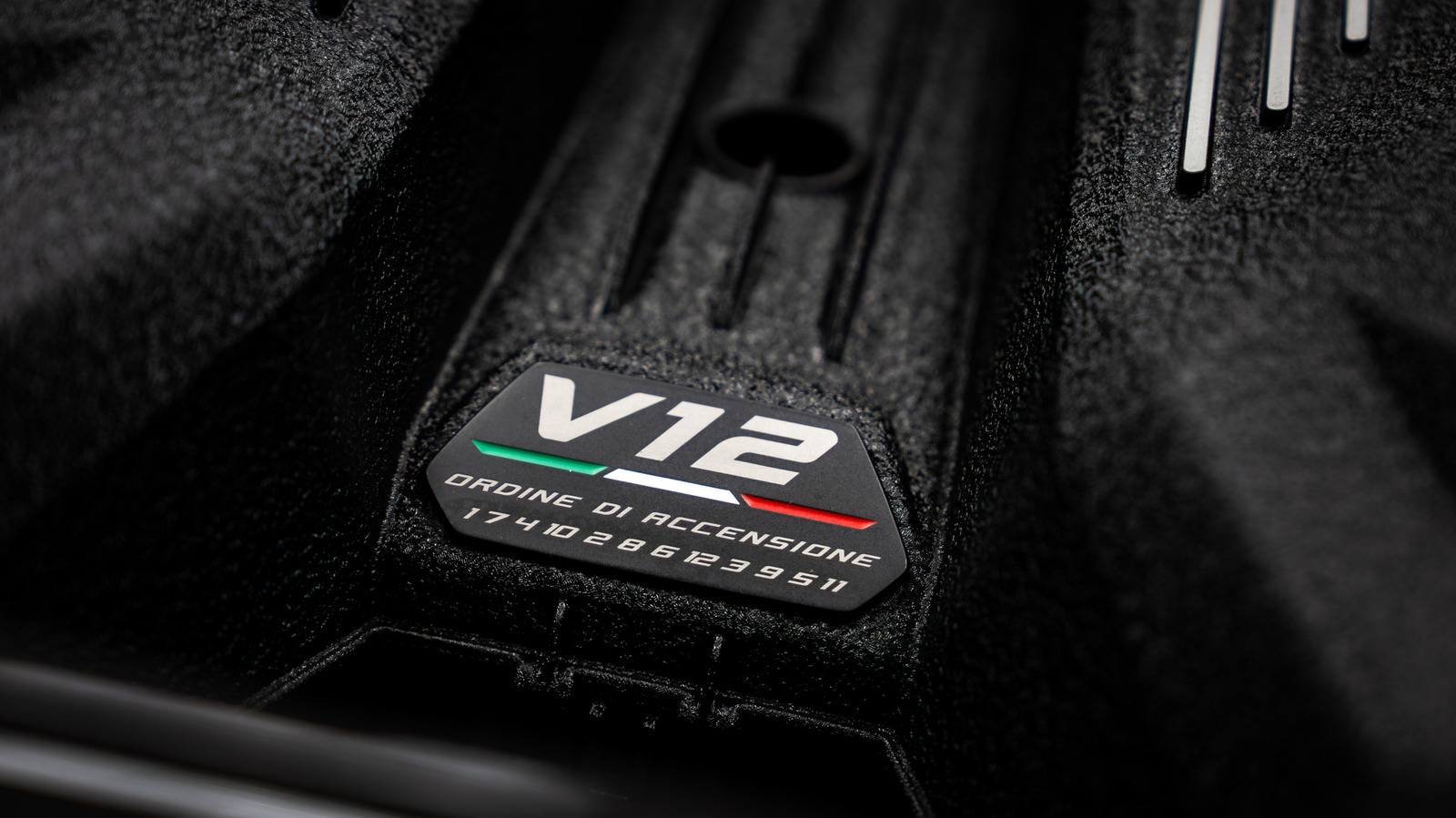
The V12 has a reputation for excess, but that does not automatically make it fragile. In the right hands, with enough engineering discipline and a little restraint, a 12-cylinder engine can be smooth, durable, and surprisingly long-lived. These three standouts show how Toyota, Mercedes-Benz, and Ferrari each built V12s that earned real respect for staying strong over the long haul.
Engine reliability is never a clean yes-or-no question. Every engine has weak spots somewhere in its life cycle, and the V12 lives in a tricky space where size, heat, fuel use, and complexity all have to be balanced carefully. That is why some V12s fade into obscurity fast while others keep piling on miles without turning into expensive paperweights.
Toyota’s 1GZ-FE is one of the most fascinating examples. It powered the G50-generation Century from 1997 to 2017, making it the only Japanese production V12 Toyota ever sold, and it was built with a 5.0-liter 60-degree layout, aluminum block and heads, a forged-steel crankshaft, and VVT-i. Officially it was rated at 276 horsepower and 355 lb-ft, though that figure was held down by Japan’s old gentleman’s agreement on advertised power.
What makes the 1GZ-FE special is not just the spec sheet, but the way it was overbuilt for calm, effortless use. Toyota used six-bolt main bearings, iridium plugs, and a slant-squish combustion chamber design, all of which helped create a tough, efficient, and very controlled engine. It was even engineered with separate ECUs for each bank, so the engine could keep operating on six cylinders if one side had trouble.
That kind of thinking explains why the Century’s V12 has a reputation for absurd longevity. Stories of rebuild-free mileage past 200,000 are common enough, and the sight of one still running near 300,000 miles is the kind of thing that makes enthusiasts stop and stare. For a car built around quiet luxury, the 1GZ-FE ended up being one of its loudest flexes, even if the engine itself barely raised its voice.
Mercedes-Benz took a different route with the M120, but the result was just as impressive. It arrived in 1991 in the W140 600 SE and 600 SEL, then carried on into the S600, with forged steel crankshaft and connecting rods riding on seven main bearings. That hardware gave the engine a serious durability edge under repeated stress, which is exactly what you want in a heavyweight luxury V12.
The block design is a big part of the story too. Mercedes skipped traditional cylinder liners and instead used an aluminum alloy with a high silicon content, so the machined cylinder walls themselves became the wear surface, cutting friction and helping heat move away more efficiently. The whole setup feels like classic Mercedes overengineering, the good kind that solves problems before they start.
The M120 also earned credibility by being more than just a luxury cruiser engine. It found a second life in the Pagani Zonda, which says plenty about the trust tuners and exotic builders placed in its bones. Plenty of high-mileage examples are still out there, and while no one calls it cheap to run, the M120 has a habit of proving that expensive does not have to mean delicate.
Ferrari’s F133 is the wild card here, because “reliable” and “Ferrari” usually do not show up in the same sentence without a little hesitation. Still, this V12 deserves the praise it gets, especially in the 550 Maranello and later the 575M, where it delivered a deeply satisfying blend of power and mechanical toughness. In 5.5-liter form it made 485 horsepower, and in 5.7-liter trim it climbed to 515 horsepower.
The F133 is the kind of engine that wins respect because it feels properly sorted rather than merely dramatic. It used four camshafts, 48 valves, dry-sump lubrication, and no hydraulic tappets, and specialists who work on them have long described the overall package as strong and more resilient than many exotics. Even when problems did show up, they were often peripheral, like a fuel cut-off solenoid, not a failure inside the V12 itself.
That does not mean ownership is carefree. The F133 still wants attention, from regular cambelt service to healthy cooling and sealing that keeps leaks at bay, but those are the sorts of demands that come with the territory when a car is this serious about performance. The payoff is an engine that feels alive every time it spins, with enough staying power to make a Ferrari V12 feel less like a lottery ticket and more like a well-built machine that just happens to wear a badge with a lot of history behind it.
