
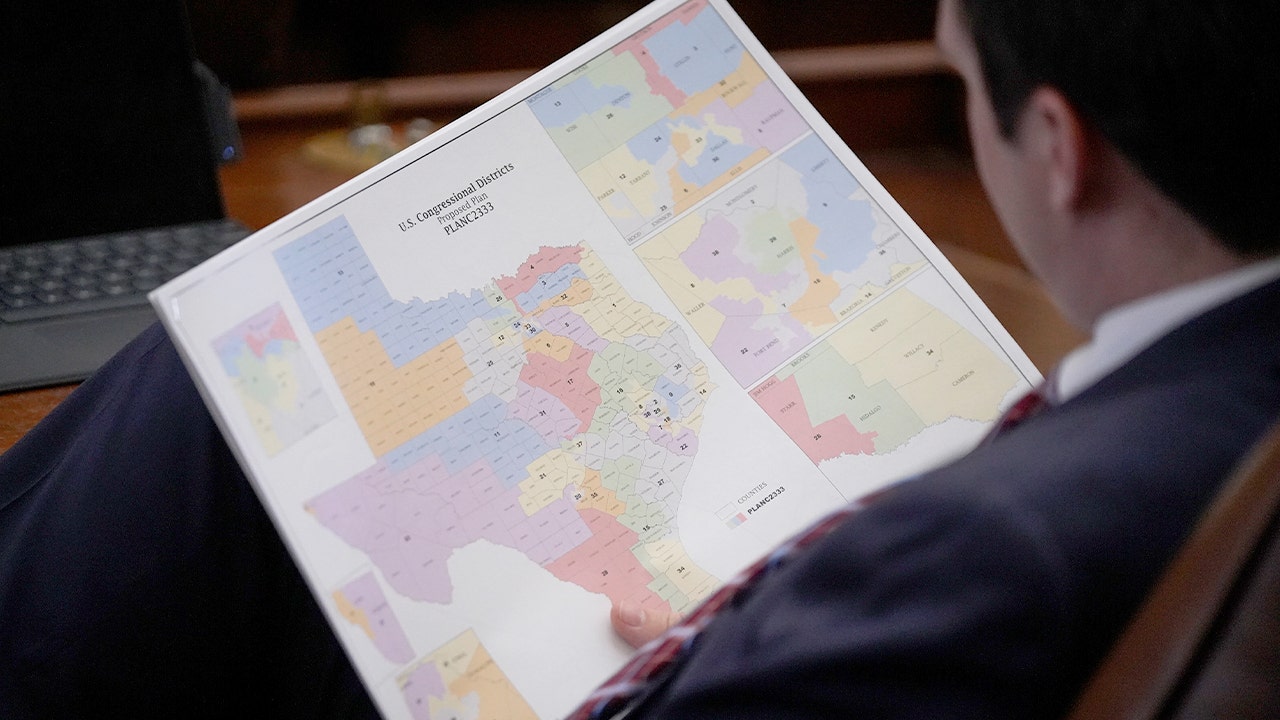
Republican redistricting strategies just hit a rough patch, and the fallout is making a lot of party insiders look twice at the map. From Indiana to North Carolina, Florida, and Texas, the expected gains never fully showed up, and in several places Democrats held or flipped seats that were supposed to be safer for the GOP.
That has given new weight to the Republicans who argued against pushing too hard on mid-decade map changes. The election results did not just frustrate White House pressure campaigns, they also made the holdouts look like they may have been reading the room better than the people demanding a redraw.
In Indiana, state Republicans faced heavy pressure to rewrite congressional boundaries in a way that would tilt the map further right. President Donald Trump and Vice President JD Vance both pushed the idea, but some state lawmakers stood firm and refused to go along.
Now those same lawmakers are pointing to the election as proof that their resistance may have saved the party from a bigger mess. Indiana Senate President Pro Tempore Rod Bray said a redraw could have badly weakened the GOP’s congressional delegation, leaving Republicans with far fewer seats than they have now.
Bray’s argument was simple enough. Packing and spreading voters the wrong way can turn a map into a trap, especially when safe-looking districts start carrying more risk than anyone expected. He also warned that incumbent lawmakers would have been forced to defend unfamiliar turf, which can scramble fundraising, local ties, and the whole campaign operation.
That kind of danger showed up in North Carolina, where Republicans tried to sharpen their edge but ended up learning how quickly the blade can slip. Former state House Speaker Tim Moore, who helped shape the GOP-friendly plan, still lost his own seat, a result that sent a clear message about overconfidence.
The same state also saw National Republican Congressional Committee Chairman Richard Hudson lose his district, while Democratic Rep. Don Davis survived even after Republican-leaning areas were added to his seat. That is the kind of result that makes mapmakers sweat, because the whole point of the redesign was supposed to be a better Republican hand at the table.
Political observers had already warned that the strategy could backfire if it stretched GOP voters too thin. The basic math is unforgiving: when a party spreads its strength around to squeeze out extra seats, it can end up weakening the very districts it thought were locked down.
Florida and Texas added more pain to the picture. In Florida, Democratic incumbents Jared Moskowitz and Lois Frankel held on despite Republican hopes that the new lines would improve the party’s odds, and Pia Dandiya won a redrawn district that had been seen as highly favorable territory for Republicans.
Texas did not hand Republicans the clean gains they wanted either. Democrats Henry Cuellar and Vicente Gonzalez both survived in border districts that had been redrawn to help the GOP, which made the whole effort look less like a master plan and more like a gamble that never paid off.
What makes the result so striking is that the strategy was meant to lock in advantages before the midterms got hot. Instead, Republicans ended up watching Democrats survive in places that had been carefully shaped to be tougher for them, and that raises a nasty question about whether the redraws helped anyone at all.
Some analysts say the maps may not have caused the losses so much as failed to stop a bigger Democratic wave. That distinction matters, but it does not make the outcome any easier for Republicans trying to explain why all the effort produced so little reward.
University of Indianapolis political scientist Laura Merrifield Wilson said the rejected Indiana plan might have actually made things worse for Republicans by adding more Democratic voters into districts that already looked vulnerable. That is the kind of warning that lands harder after election night, when theory turns into receipts.
Wilson also pointed out that Democrats flipped only one of Indiana’s nine congressional districts, which suggests the state was already sitting on a knife edge. If the redrawing had gone ahead, the effect could have been to tip more seats into play instead of protecting them.
Bray said the map would have pulled Democratic strongholds into more districts, thinning out Republican strength across the state. He argued that once you start scattering urban votes into a bunch of different seats, you can end up diluting the party you meant to help and making several districts less secure at once.
That warning was not just about election math. It was also about political reality, where local loyalty, donor networks, and name recognition matter just as much as the lines on a page.
There was also a price for saying no to the White House. Indiana Republicans who opposed the redraw faced primary backlash, and several of them lost, which showed that standing on principle can still come with a bruise or two.
Even so, Bray said the rejected plan would have been a bad move from the start. His view was that Indiana voters did not want the upheaval, and the election results gave him a strong case for believing the state dodged a bullet.
That leaves Republicans stuck with an uncomfortable choice. Either the aggressive map-making spread GOP voters too thin and opened the door for Democrats, or the Democratic surge was strong enough to beat even carefully engineered districts.
Either way, the message is hard to ignore. Redistricting can look like a clean tactical win on paper, but once voters actually show up, the whole thing can snap in a direction nobody planned for.
