
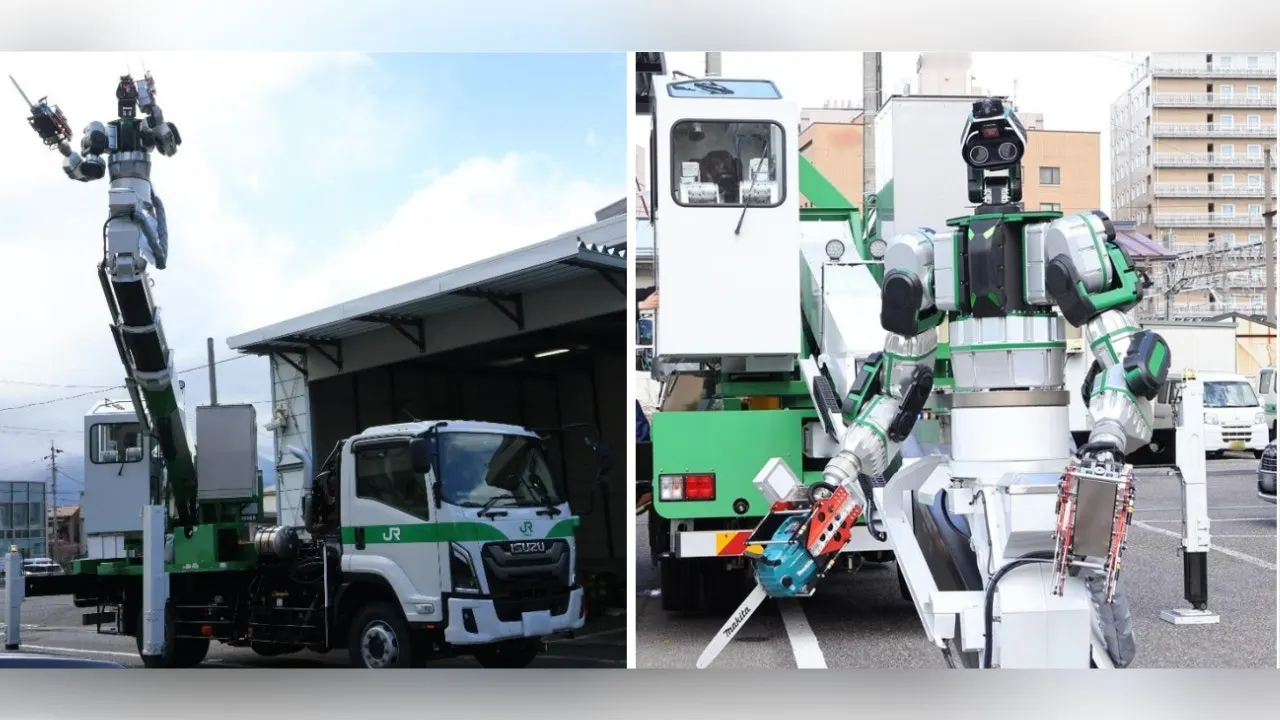
• A chainsaw robot is handling dangerous rail-side cutting work in Japan.
• The machine helps clear overgrown branches near train tracks.
• A human operator still controls the robot from a safe distance.
• Rail companies are using robotics to reduce risk and ease labor shortages.
• AI may expand what these machines can do, but full autonomy is not here yet.
If a robot with a chainsaw sounds like something built for a sci-fi nightmare, the reality is a lot more practical. In Japan, a towering remotely operated machine is trimming branches along railway lines so trains can keep moving safely. The setup looks intense, but the job behind it is straightforward: keep vegetation from turning into a hazard.
The robot is being used by JR East to handle maintenance work that would otherwise put workers in a risky spot. Instead of sending someone up high with heavy cutting gear, the machine does the hard physical part while a person controls it from a safer place. That mix of muscle and distance is exactly why the robot has drawn so much attention.
The machine has a name, ZIZAI ZX-3, and it is built for work along the Koumi Line in central Japan. One arm holds the branch steady while the other runs the chainsaw, letting the robot cut in a more controlled way than a person dangling over the tracks. Mounted on a specialized vehicle, it can reach into places that would be awkward, tiring, or flat-out dangerous for a crew on foot.
Even with its scary look, the robot is not operating on its own. A trained operator directs the movements and decides when the cutting starts, which matters a lot when the work zone sits right next to active rail lines. A small mistake around that kind of equipment could cause serious damage, so human judgment still sits at the center of the job.
That human control also makes the technology easier to trust. Nippon Signal, the Japanese manufacturer behind the machine, designed it to simplify remote operation while still giving workers a serious upgrade in safety. The current focus is cutting back trees and branches, but the company has said it wants the system to take on more maintenance tasks down the road.
The bigger story here is not just the robot itself, but why rail companies are turning to machines like it. Keeping tracks clear takes constant effort, and overgrown branches can interfere with passing trains or force crews into dangerous positions. In a country dealing with a shortage of skilled workers, tools that reduce strain and improve safety are becoming a lot more attractive.
JR East has also been adjusting how some of this maintenance gets done. Since 2022, certain jobs along the Koumi Line have shifted into daytime hours instead of overnight work, which sometimes means temporarily suspending train service. That is never popular with passengers, but it can make the work safer and more manageable for the crews doing it.
AI is part of the conversation too, which opens the door to even more interesting possibilities. JR East has been investing in artificial intelligence and robotics across its operations, including tools that could help inspect equipment and infrastructure. That naturally raises the question of whether a future version of this machine could spot dangerous vegetation and act with less direct guidance.
For now, though, that future is only a possibility. The ZX-3 still depends on a human operator, and there is no announced plan for fully autonomous chainsaw work near the rails. That caution makes sense, because once a robot starts handling powerful tools in unpredictable conditions, safety stops being optional and becomes everything.
There is also a broader lesson hiding inside this very odd-looking machine. Remote robotics may not grab headlines the way flashy humanoid demos do, but it is often the workhorse technology that matters most. A robot like this can keep people away from the worst hazards while still getting the job done, and that is a big deal in industries where one bad move can turn dangerous fast.
The ripple effects could reach beyond railroads. Utilities, construction crews, and other industries regularly deal with hard-to-reach work that can be risky for humans. Machines built to handle those tasks from a distance could make jobs safer, faster, and less punishing, while also changing the skills workers need on the job.
There is still plenty of reason to keep a close eye on the technology. A chainsaw is not the kind of tool that leaves much room for sloppy control, and every new layer of automation adds another set of questions. For now, though, the ZX-3 stands out because it does something simple and important: it takes a nasty job and keeps people out of the line of danger.

1 Comment
Need this in the US big time esp for So CA RR area