
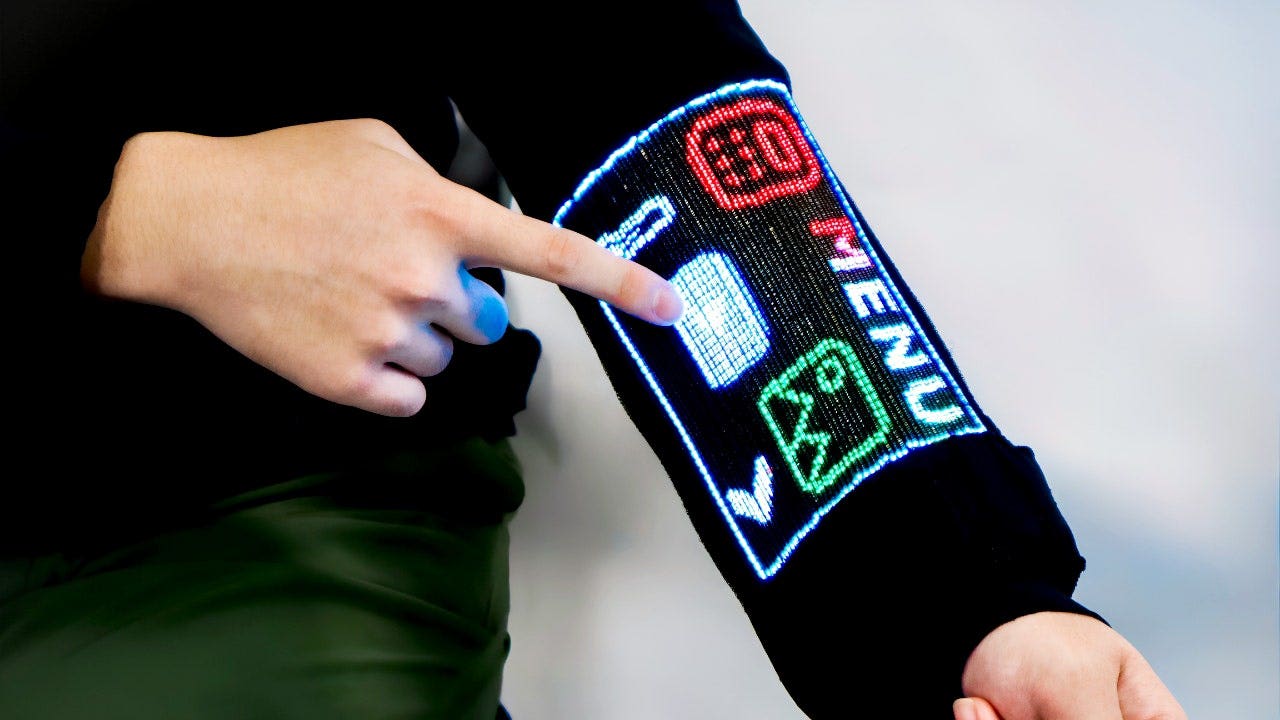
Scientists are pushing wearable tech in a bold new direction, and the latest idea is straight out of science fiction: a shirt sleeve that doubles as a touchscreen. Built with electronic fibers woven directly into fabric, the prototype can display images, play video, sense touch, and even survive repeated trips through the wash. The concept is still early, but it points to clothing that could one day do far more than simply cover the body.
Researchers at the National University of Singapore created what they say is the first touchscreen built right into a garment. Instead of attaching a screen to fabric, they embedded tiny LEDs and touch-sensitive layers inside the fibers themselves. That lets the sleeve react when someone presses it, almost like a miniature tablet stitched into clothing.
The prototype uses 54 specialized fibers in the forearm area of a sleeve, with each fiber containing 96 LEDs. Together, they form a 96-by-54-pixel display measuring about 6.6 by 4.1 inches. It is not a giant screen by any stretch, but it is enough to show pictures, basic animations, and other simple content in a wearable format.
What makes the project stand out is how the fibers were built to move with the body. The fabric bends naturally, and each fiber has its own control path, so one failure does not knock out the whole display. The researchers also designed a manufacturing method that links thousands of microchips and electrical connections, which is a big step toward making smart clothing more than just a one-off lab demo.
The sleeve is already capable of more than just lighting up. It can show a photo gallery, run a calculator, act as a digital compass, and display body temperature readings from a sensor under the arm. It can also play video, handle synchronized audio, and respond to voice commands, which gives it a surprising amount of personality for a piece of clothing.
The display refreshes at 30 frames per second with 8-bit color, dropping a bit when audio is synced with video. That is not exactly movie-theater quality, but it is impressive for a textile. The system can also receive images over Bluetooth, adjust brightness based on ambient light, and rotate content when the wearer changes position.
Durability was a major question from the start, and the team put the material through serious testing. According to the researchers, the display held up after 50 detergent washes in a regular machine and kept working after 1,000 bending cycles. The fabric also stayed breathable, which matters a lot if the goal is clothing people might actually want to wear.
That does not mean the tech is ready for closets everywhere. The current setup still relies on an external battery and separate control electronics, which keeps it from being truly self-contained. The resolution is also limited compared with today’s phones, so this is more about practical interaction than flashy visuals.
Even so, the possibilities are hard to ignore. A jacket sleeve could eventually show directions while someone is walking through a city, or a workout shirt could display fitness data on the fly. Since the system is built into the fibers, it opens the door to clothing that feels familiar while quietly acting like a connected device.
Health monitoring may be one of the most compelling uses. The current prototype already shows temperature sensing, and the researchers believe electronic textiles could eventually track more physiological signals. That could make health data easier to see at a glance, especially for people who want quick access without opening an app or reaching for another gadget.
There is also plenty of room for smarter features down the road. The research team says future versions could pair sensors with on-device AI, which might help interpret readings or tailor information to a person’s activity. Thinner fibers may also work with standard weaving equipment, making it easier to fold this technology into normal clothing designs instead of inventing an entirely new wardrobe.
For now, the touchscreen shirt is still a prototype, but it carries a clear message: wearable technology is moving beyond watches and wristbands. If researchers can improve power, boost resolution, and keep the fabric comfortable, a sleeve that taps back may not sound so strange for long. The next big screen could be the one already hanging in the closet.
