
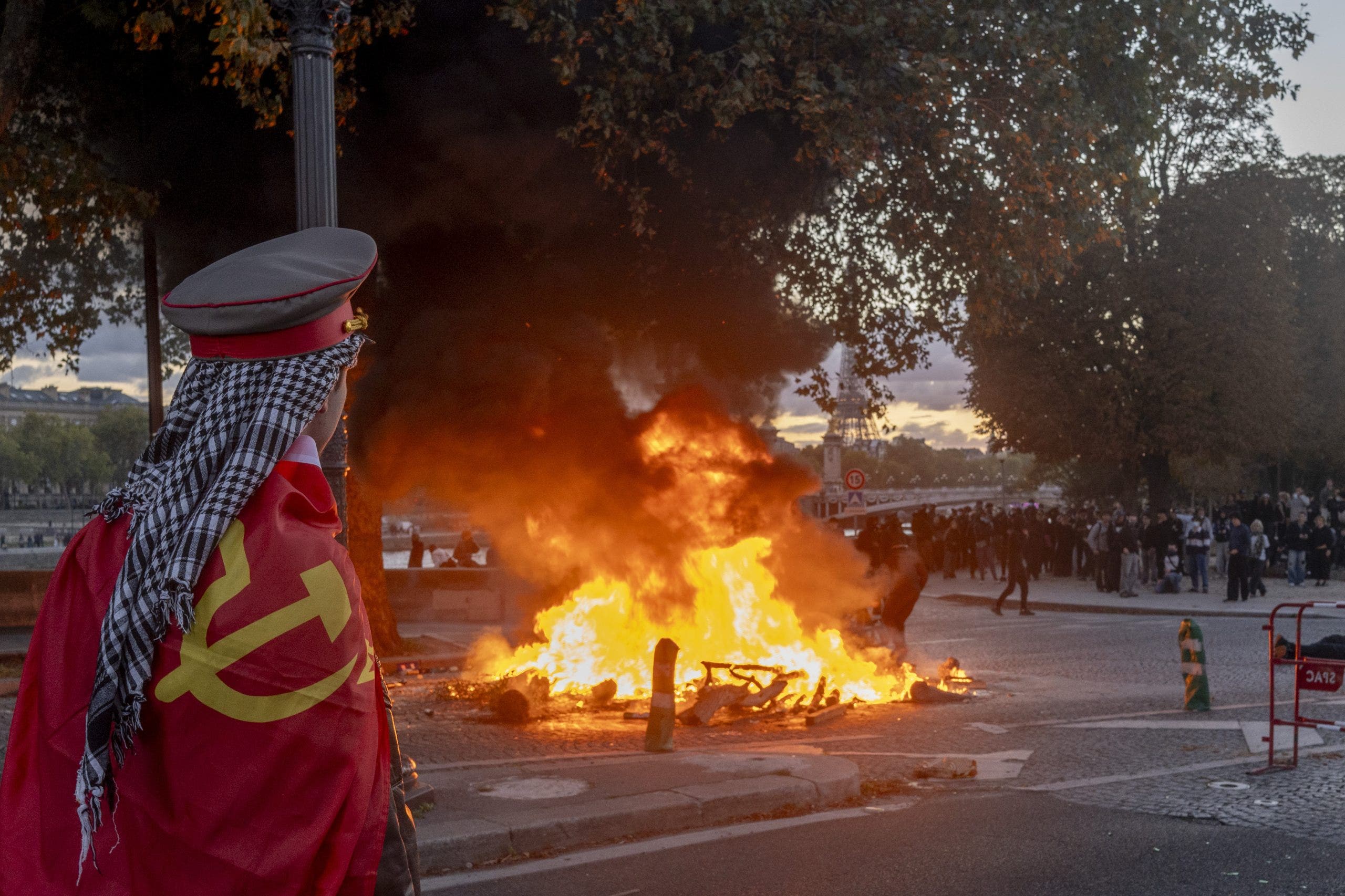
France is dealing with the kind of security embarrassment that can rattle a government fast. Officials badly missed the size and intensity of the protest wave, and what started as mass demonstrations quickly turned into a mess of fires, looting, injuries, arrests, and political fallout.
Authorities now face a blunt question: how did so many warning signs get ignored? The failure has already triggered resignation offers, a security review, and fresh criticism of a system that was supposed to stay ahead of the chaos.
More than 550,000 people took part in 110 marches across the country on Saturday, according to France’s Interior Ministry. That number was far above the intelligence estimate of roughly 200,000, while organizers claimed turnout was even higher at 800,000.
The crowds were not all violent, but the damage was severe. Cars burned, public buildings were attacked, and more than 1,500 stores were reportedly ransacked or wrecked as unrest spread through major cities and smaller ones alike.
In Limoges, rioters went after a 19th-century city hall and set it on fire, causing the roof to collapse. By Monday, the Louvre was still closed after student protesters blocked access, showing how the disruption kept rolling well beyond the first night of violence.
The security response was stretched thin from the start. Around 60,000 police, gendarmes, and other personnel were deployed nationwide, yet nearly 1,000 officers and firefighters were injured, at least 2,400 people were arrested, and French officials estimated that about 3,000 businesses suffered damage.
As the unrest jumped from one flashpoint to another, masked rioters smashed storefronts, lit fires, and fought with police. In some places, officers were unable to stop looters from moving through commercial districts even while they tried to hold the line against the larger crowds.
Interior Minister Laurent Nuñez did not try to dress up the failure. “Yes, Saturday, in certain large cities, we lost control,” he said, adding that officials had shown a “lack of anticipation” and badly underestimated both the scale of the protests and the violent groups hiding inside them.
Nuñez offered his resignation to Macron, but the president rejected it and ordered a review of what the Élysée described as planning and intelligence failures. Justice Minister Gérald Darmanin was even more pointed when he said, “We unquestionably failed,” and singled out intelligence and France’s difficulty tracking the ultra-left.
The unrest did not appear out of nowhere, either. It began in September with high school students protesting teacher shortages, crumbling buildings, and poor classroom conditions, then widened as teachers, labor unions, and other frustrated groups joined in over living costs and weak public services.
That momentum had already started to turn ugly. Students set fires at schools, cars were torched, and clashes with riot police became more common, all while arrests piled up and intelligence services were tracking the shift in tone.
At an Oct. 1 crisis meeting, intelligence officials reportedly described the movement as having reached a “tipping point” from school blockades into urban violence. They pointed to the hard-left France Unbowed party and its allies, but within two weeks, the scale of Saturday’s turnout still caught the government flat-footed.
The protests pulled together students, trade unionists, Yellow Vest veterans, and other groups under a loose “convergence of struggles.” Most marched peacefully, but smaller bands broke away to loot shops, torch vehicles, and clash with police, turning a broad public grievance into a street-level disaster.
The violence also fed a broader political fight, especially over immigration and public order. President Donald Trump blamed France’s migration policies, while French leaders focused instead on ultra-left militants and criminals exploiting anger tied to education, costs, and public services.
That split matters because the images from France are landing in a country already on edge heading into the 2027 presidential race. Marine Le Pen’s National Rally has seized on the chaos to argue that Macron’s government has lost control, and the debate over policing, immigration, and declining purchasing power is only getting sharper.
Burned-out storefronts and damaged landmarks are making the government look weak at exactly the wrong time. Macron cannot run for a third consecutive term, and voters are already signaling that security, immigration, and daily costs are front and center in their minds.
