
• Nationwide demonstrations on the October 7 anniversary
• Protests tied to Columbia, UCLA, and other campuses
• Chants and slogans that inflamed tensions
• The role of activist networks and organizing groups
• Reactions to the Hamas attack and its lasting trauma
On the anniversary of the October 7 Hamas attack on Israel, rallies tied to anti-Israel activism broke out in several cities and on major campuses, turning a day of remembrance into a new flashpoint. In New York, California, and beyond, demonstrators gathered with Palestinian flags, shouted hardline slogans, and leaned into the same confrontational energy that has fueled campus protests for years.
At Washington Square Park, NYU Students for Justice in Palestine staged a walkout as part of what they called a “NYU WEEK OF RAGE.” The message was blunt and unapologetic, with organizers saying they remained “steadfast in our commitment to Palestinian liberation.”
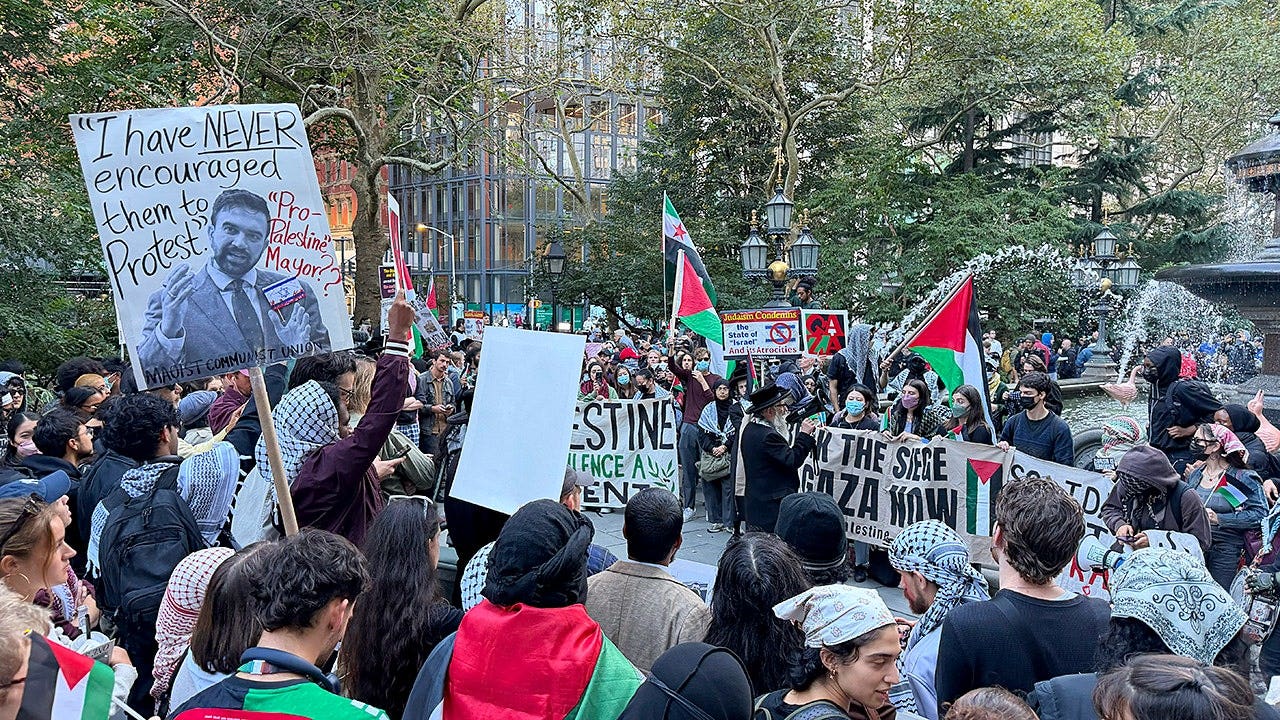
That same day, groups moved from place to place in New York City, gathering first near Columbia University and later at City Hall. At Columbia, heavy security surrounded the gates as protesters chanted “globalize the intifada” through a megaphone, a phrase that has drawn fierce criticism for its militant edge and its place in these demonstrations.
The protests did not stay confined to the university setting. By afternoon, some of the same activists had shifted toward Mayor Zohran Mamdani’s office at City Hall, filling the Financial District with chants and Palestinian flags. Mamdani also weighed in on the anniversary, saying he grieved with those affected by the violence while accusing Israel of an “ongoing genocide in Gaza.”
Across the country, UCLA saw similar organizing, with Students for Justice in Palestine mobilizing at Bruin Plaza on the Los Angeles campus. At UC Davis, some demonstrators openly celebrated the attack and referred to October 7 as the “anniversary of the al-Aqsa Flood,” a phrase tied to Hamas’s name for the assault.
The anniversary was impossible to separate from the massacre itself. On October 7, 2023, Hamas-led terrorists crossed into southern Israel, stormed a music festival, and killed about 1,200 people while abducting more than 250 others into Gaza.
That brutality still hangs over every protest held in its shadow. For many Jewish communities, the date is about grief, memory, and the raw reality of families still dealing with loss, injury, and hostages who were taken during the attack.
What stood out on Wednesday was how coordinated the protest machine looked. Groups linked to the Singham network, along with organizations like the People’s Forum and CodePink, kept showing up in overlapping events and helped build a larger public show of force around the anniversary.
The People’s Forum and Shut it Down 4 Palestine were also planning another march for the weekend, describing it as a stand against continued violence in Gaza. That kind of scheduling is not random, and it has become part of a familiar pattern where the most symbolic dates are used to maximize attention and pressure.
Behind all of it is a bigger infrastructure that has drawn growing scrutiny. Fox News Digital has reported on heavy funding tied to Neville Roy Singham and on federal interest in his finances, while activists connected to his network continue to appear at anti-Israel, anti-ICE, and pro-Iran events.
Trauma psychologist Dr. Orli Peter said demonstrations on this date do more than send a political message. She argued they manipulate public emotion and disrupt mourning at the exact moment Jewish families are trying to remember the dead and process the horror of what happened.
That tension was visible everywhere, from campus gates to city streets. The anniversary brought out people who wanted to honor the victims, and it also brought out activists determined to dominate the day with chants, marches, and a message that made the grief around October 7 feel even more raw.
