
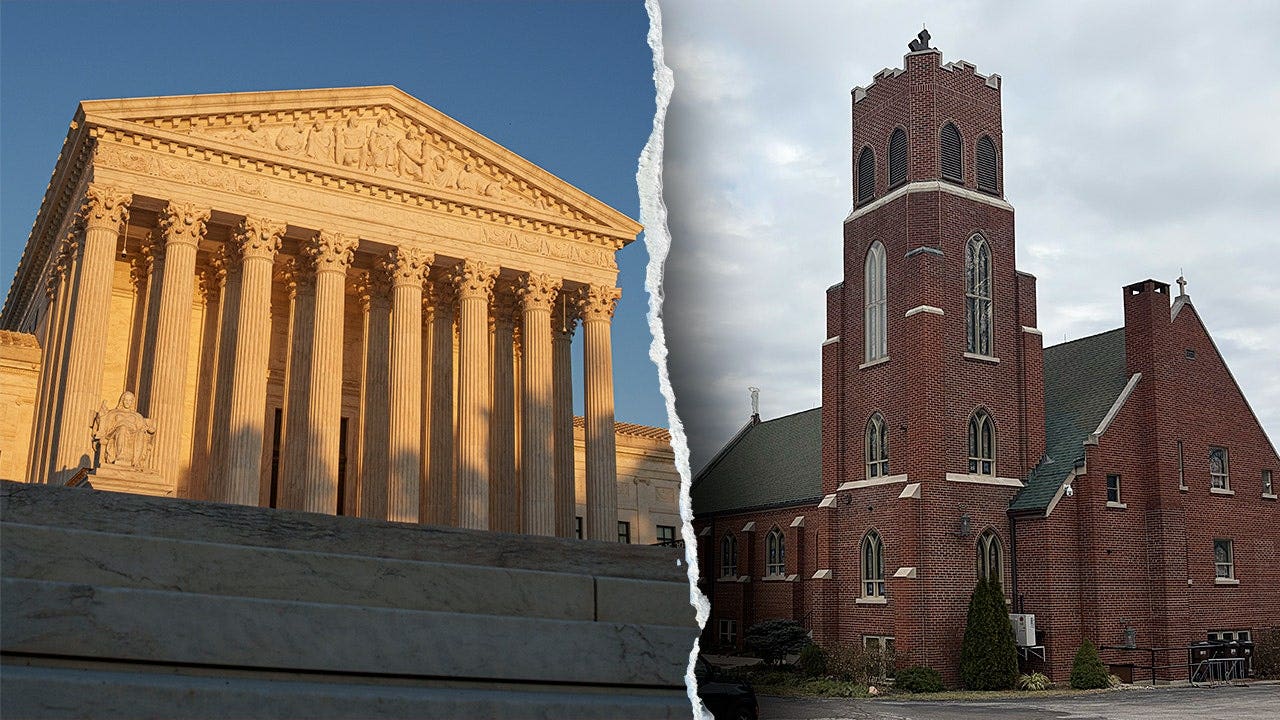
The Supreme Court has agreed to take up a Kentucky church dispute that reaches far beyond one small prayer grotto. At stake is how much protection religious groups get when local zoning rules stand in the way of building on their own land, and the answer could ripple through land-use fights nationwide.
The case centers on the Missionaries of St. John the Baptist, a Catholic religious order that wants to build a prayer grotto behind St. John Church in Park Hills, Kentucky. The plan calls for a shrine to the Virgin Mary, a plaza, a walking path, and a retaining wall, all wrapped into a project that would cover about 600 square feet, about the size of a swimming pool.
The church has been on the property for nearly a century, long before Park Hills adopted its zoning ordinance in 1974. In 2021, the group sought a conditional-use permit and variance for the grotto, tying the project to devotion to the Virgin Mary and the Lourdes apparition associated with Saint Bernadette.
Local officials initially approved the request, but the fight did not end there. Nearby property owners Joel and Elizabeth Frederic challenged the decision in Kentucky state court, turning a neighborhood land-use dispute into a major religious liberty case.
A trial court sided with the church, but the Kentucky Court of Appeals reversed course and said the board had gone too far in approving the project. The state’s highest court later upheld the ruling on the federal religious land-use claim, pushing the church to seek help from the Supreme Court.
The legal battleground is the Religious Land Use and Institutionalized Persons Act, better known as RLUIPA. The law was designed to keep government from placing heavy burdens on religious exercise through land-use restrictions, and that is exactly where this case lands.
The justices agreed to hear only one question, and it is the one that matters most here: whether blocking a religious institution from building a religious structure on its own property amounts to a “substantial burden” on religious exercise. That phrase has become the center of a nationwide split in how courts read the statute.
Supporters of the church say the problem is bigger than one grotto and one town. They argue that lower courts have taken different paths for years, leaving religious groups with uneven protection depending on where they live and how a local board or court interprets the law.
That unevenness is what has religious liberty advocates pressing for a clear national rule. If the Supreme Court sharpens the meaning of “substantial burden,” future fights over churches, synagogues, ministries, and other faith groups could look very different from state to state.
The Frederics, for their part, have pushed back on the idea that the law is in chaos. They say courts already use similar factors in these disputes and that different outcomes often come down to different facts, not a broken legal standard.
They also argue the church did not prove there were no other places for the grotto. That point matters because land-use cases often hinge on whether a religious group truly has nowhere else to go or whether the dispute is really about preference and convenience.
The broader tension in the case is easy to see. On one side is a local government’s power to manage property use and zoning, which matters for orderly development and neighborhood planning. On the other side is the federal promise that religious exercise should not be squeezed out by red tape or arbitrary limits.
That is why the case has drawn attention well beyond Kentucky. If the Court leans toward a broader reading of RLUIPA, religious institutions could find stronger footing when they want to expand, build, or add sacred space on land they already own.
If the Court goes the other way, local governments may have more room to block religious projects even when the property belongs to a church or ministry. Either way, the fight over a modest grotto has become a test of how far religious freedom reaches when zoning boards say no.
